Tag: FlashShip Fulfillment

  • POD Upsell Strategy: Are Bookmarks the Key to Higher AOV?

    POD Upsell Strategy: Are Bookmarks the Key to Higher AOV?

    In the context of rising advertising costs and intensifying competition across platforms like Etsy, Amazon, and TikTok Shop, optimizing Average Order Value (AOV) has become a critical factor for Print on Demand sellers. Upselling is no longer optional it is a must-have strategy to maintain profitability and scale sustainably.

    Among compact and easy-to-implement products, bookmarks are emerging as a promising option. But are bookmarks truly an effective upsell product for POD, or just an “add-on” with little real impact? This article will help you understand their potential and how to leverage them effectively.

    POD Upsell Strategy Are Bookmarks the Key to Higher AOV

    What Is a Bookmark in POD? An Overview of a “Small but Mighty” Product

    Within the Print on Demand ecosystem, alongside popular items like T-shirts and mugs, bookmarks are emerging as a highly promising niche product. To implement an effective business strategy, sellers must first understand the nature and key product variations of this item.

    What is a bookmark in the Print on Demand model?

    In POD, a bookmark is more than just a simple page marker. It is a personalized accessory produced based on actual customer orders. Typically, bookmarks come in standard sizes ranging from 2×6 inches to 2×8 inches, making them suitable for most book formats.

    The core difference between POD bookmarks and mass-produced bookmarks sold in bookstores lies in their uniqueness. With the POD model, customers (or sellers) can:

    • Maximize personalization: Print names, personal images, or inspirational quotes that reflect individual identity.
    • Target deep niches: Focus on specific communities such as pet lovers, book enthusiasts, or themes like spirituality and zodiac signs.
    • Use diverse materials: Beyond paper, POD bookmarks can be made from a variety of more durable and premium materials. 

    Popular Types of Bookmarks in POD Today

    Depending on brand positioning and target customers, sellers can choose from the following material options to add to their store:

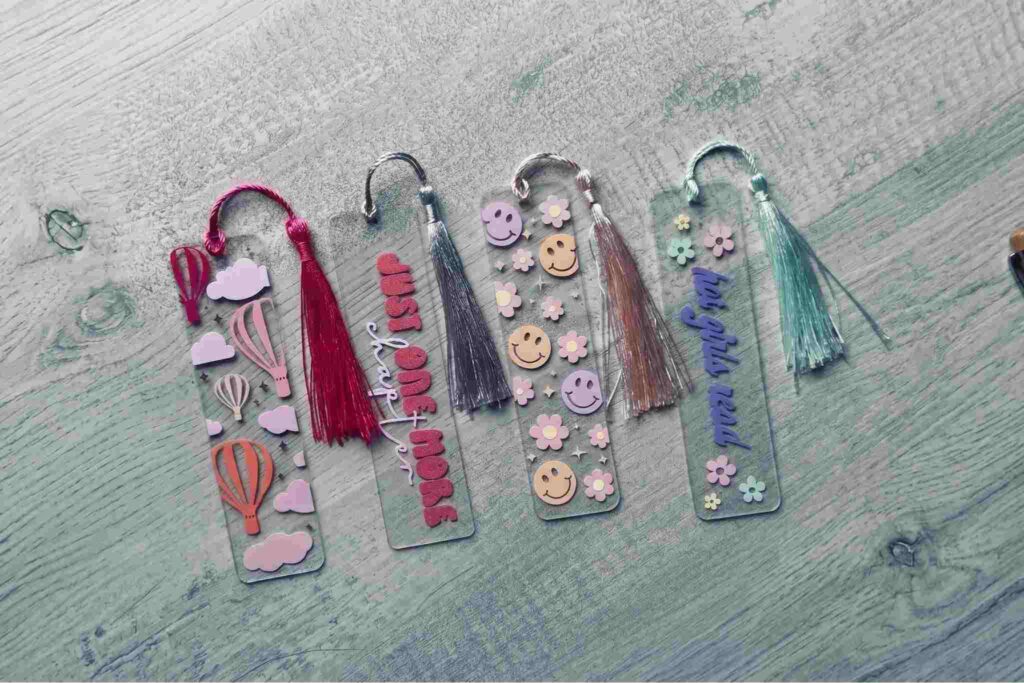
    • Acrylic Bookmark: This is a best-seller thanks to its modern and elegant appearance. Acrylic allows for high-resolution printing and can create eye-catching 3D effects. It is especially suitable for printing family photos or pet images.
    • Wooden Bookmark: Known for its vintage and handcrafted feel. Wooden bookmarks are favored by book lovers for their rustic charm, warmth, and strong emotional value, making them ideal as gifts for special occasions.
    • Metal/Premium Bookmark: This is the high-end segment, typically made from aluminum or stainless steel. Although more expensive, these bookmarks offer near-lifetime durability and are often chosen as luxury gifts or meaningful keepsakes.

    Why Are Bookmarks a “Promising Candidate” for POD Sellers?

    The reasons bookmarks are highly recommended lie in their strong alignment with the nature of the Print on Demand industry:

    • Low production cost (base cost): Makes it easier for sellers to price competitively and run promotions.
    • Simple design requirements: With a small surface area, sellers don’t need to invest excessive time in complex mockups or designs.
    • Fast and efficient shipping: Lightweight, compact, and non-fragile, reducing shipping risks and optimizing delivery costs.
    • Perfect for personalization trends: Easily customized with names or special dates, appealing strongly to Western customers who value personalized products.

    Why Are Bookmarks Considered a High-Potential Upsell Product for POD Sellers?

    In a POD business strategy, finding a product that can increase order value without creating friction for customers is a real challenge. Bookmarks offer a near-perfect solution. Below are five core reasons why this small item can become a powerful profit-driving engine for your store.

    Low Cost

    The golden rule of upselling is simple: the add-on product must be affordable enough that customers don’t hesitate. Bookmarks meet this requirement perfectly.

    • Base cost: Typically ranges from $3 to $5
    • Retail price: Around $9 to $15

    When customers are already willing to spend $25 to $40 on a main product like a hoodie or canvas, adding a small extra amount for a cute bookmark becomes an effortless decision. It creates almost no friction during checkout, allowing you to generate additional net profit per order naturally.

    Sustainably Increasing AOV (Average Order Value)

    A common mistake many sellers make with upselling is offering products that are too expensive, which can make customers feel overwhelmed and abandon their carts. Bookmarks, however, are different:

    • No hesitation required: Customers don’t need to check size charts or worry about fabric quality
    • Optimized conversion rate: As a small complementary item, it doesn’t prolong the checkout process

    For sellers scaling ads, even a modest AOV increase of $5 to $7 from bookmarks can significantly improve ROAS, making advertising campaigns more efficient and profitable.

    The Power of Personalization and Emotion

    In the POD industry, emotion is what drives sales. Bookmarks are a “small but emotional” product compact in size but rich in meaning. Their personalization potential is highly flexible:

    • Printing images of beloved pets
    • Adding names or special milestone dates
    • Including motivational quotes for every reading moment

    Highly personalized products tend to achieve significantly higher conversion rates than mass-produced items. They also increase customer retention, as buyers are more satisfied with the emotional value and overall experience.

    Adaptability Across Multiple Niches

    One of the biggest advantages of bookmarks is their versatility. Sellers don’t need to develop new products for each niche they can simply repurpose existing designs for bookmarks:

    • Book lovers: Quotes about the love of reading
    • Teachers / Mom & Family: Meaningful gifts for teachers or loved ones
    • Pets: Cute dog and cat designs
    • Spiritual / Quotes: Inspirational or philosophical messages

    By leveraging winning niches, sellers can save design time and scale quickly across their entire store.

    Optimizing Operational Costs and Risks

    From an operational perspective, bookmarks are one of the most “low-maintenance” products in the POD catalog:

    • Highly durable: Not fragile like ceramic mugs and not prone to wrinkles like apparel
    • Simple packaging: Can be shipped in a small envelope or included with the main package
    • Low refund rate: Minimal technical issues or size-related errors due to its simplicity

    With these advantages, bookmarks truly act as a “secret weapon” that any POD seller aiming to optimize profits should not overlook.

    When Are Bookmarks Not a Good Upsell Option for Sellers?

    Although bookmarks are considered a promising upsell product, there is no one-size-fits-all formula in the POD business. Applying bookmarks as an upsell mechanically, without considering the specific context, can make them invisible to customers or even dilute your sales funnel. Below are common mistakes that can cause this strategy to fail.

    Complete Misalignment with the Main Product and Niche

    The core principle of upselling is relevance. Customers are only willing to spend more when the additional product enhances the value of the main item or aligns with their interests at that moment.

    For example, if you are selling gym tank tops or products targeted at technical or mechanical audiences, offering a bookmark as an upsell may feel irrelevant. Without a clear connection in usage or interest, customers will not perceive any added value, resulting in near-zero add-to-cart rates.

    This not only wastes valuable display space but can also disrupt the customer’s buying journey.

    Unattractive Design with No Clear Hook

    Because bookmarks have a relatively small printable area, any design flaw becomes highly noticeable. Ineffective bookmarks often suffer from issues such as dull visuals, unclear layouts, or a lack of personalization.

    In the POD industry, if a small product like a bookmark lacks a strong “hook” (emotional trigger) or does not reflect the buyer’s personal identity, it will be perceived as a cheap souvenir and quickly ignored.

    Poor Upsell Placement Strategy

    Execution plays a decisive role in up to 50% of success. Many sellers make the mistake of placing upsell offers too late in the customer journey or failing to highlight the benefits of adding the product.

    If you don’t create a sense of urgency or make the offer visually compelling at key touchpoints such as the product page or cart customers will simply skip it and proceed to checkout with only the main item.

    Ineffective Pricing Strategy

    Pricing is a double-edged sword in upselling. If the price is too low, customers may question the product’s quality and feel it’s not worth adding to their order. On the other hand, if the price is too high, it creates a financial barrier and eliminates impulse buying behavior.

    The sweet spot for a POD bookmark typically ranges from $9.99 to $14.99. Pricing beyond this range without a clear upgrade in material or value proposition can reduce the product’s competitiveness.

    Misalignment with Brand Positioning

    For POD brands targeting the premium segment, offering low-cost paper or plastic bookmarks as add-ons can dilute the overall perceived value of the brand. In such cases, if sellers still want to implement this strategy, they must invest in higher-end options such as laser-engraved metal bookmarks or leather bookmarks.

    If the product quality cannot match the brand’s positioning, it is wiser to skip this item and focus on other premium add-on products instead.

    How to Effectively Implement Bookmark Upselling for POD Sellers

    After understanding the potential of bookmarks, the next and most crucial step is turning theory into real profit. To make this small product truly generate revenue, sellers need a well-structured strategy that aligns with customer psychology and the buying journey.

    Smart Bundle Strategy and Design Synchronization

    Instead of presenting bookmarks as standalone products, leverage a bundle strategy. Combining bookmarks with core items like T-shirts, mugs, or canvas prints creates a more complete product set. An effective approach is to offer promotions such as: Buy any two items and get a bookmark at a special price.

    The real power lies in synchronized personalization. For example, if a customer orders a T-shirt featuring their pet along with its name, suggesting a bookmark with the same design style and the pet’s name creates the feeling of a unique, personalized gift set made just for them. This not only increases order value but also enhances customer satisfaction.

    Optimizing Upsell Touchpoints in the Customer Journey

    Sellers need to present offers at the right moments. There are three key touchpoints to implement upselling effectively:

    • Product page: Use add-on features to display upsell options right below the “Add to Cart” button.
    • Cart page: Encourage customers to complete their set (e.g., Complete your set) to unlock discounts or qualify for free shipping.
    • Post-purchase upsell: Use apps to offer a limited-time discount (e.g., within 10 minutes after checkout). At this stage, customers are in a heightened emotional state and more likely to make additional purchases.

    Investing in Real Visuals and Storytelling

    In the POD market of 2026, basic mockups are no longer persuasive enough to convince customers. To build trust, sellers should use real images, close-up product videos, or lifestyle photos in cozy reading settings. Authentic visuals help customers clearly understand the product’s material and size.

    Beyond visuals, storytelling is key. Instead of focusing solely on features, highlight emotional value for example: A small companion that stays with you through every chapter, or A memory you can hold onto. When a product carries a story, conversion rates improve significantly.

    Finally, position bookmarks as a stepping stone within your AOV value ladder, combining them with other products to maximize revenue per visitor.

    Bookmarks may not be a “hero product” that drives explosive revenue overnight, but they are one of the smartest, most stable, and easiest upsell options to implement in the Print on Demand model. With low costs, high personalization potential, and flexibility across multiple niches, bookmarks can effectively help sellers increase AOV without negatively impacting conversion rates.

    However, the effectiveness of bookmarks does not lie in the product itself, but in how you implement them from choosing the right niche and creating compelling designs to placing upsell offers at the right moments in the customer journey. When positioned correctly within your sales strategy, bookmarks act as a “small but essential piece” that helps optimize overall revenue.

    In an increasingly competitive POD market, successful sellers don’t just focus on core products they also leverage upsell opportunities to maximize the value of each order. And bookmarks, when used strategically, can become an indispensable part of your sustainable growth system.

  • What to Sell for Summer POD? Top Trending Products in 2026 to Boost Sales Fast

    What to Sell for Summer POD? Top Trending Products in 2026 to Boost Sales Fast

    What to sell for summer POD is a critical question for any Print on Demand seller entering the mid-year growth phase. With rising consumer demand in the U.S. market and seasonally shifting buying behavior, choosing the right products not only helps boost orders quickly but also lays the foundation for sustainable scaling.

    In this article, we will analyze the Summer 2026 POD market trends, evaluate real growth potential, and highlight “must-have” products that can help sellers maximize revenue.

    What to Sell for Summer POD Top Trending Products in 2026 to Boost Sales Fast

    What’s New in the Summer 2026 POD Market Trends?

    The Shift from “Beautiful Design” to “Product-Market Fit”

    In previous years, many sellers focused on creating visually appealing designs to attract customers. However, 2026 marks a clear shift: the key deciding factor is no longer design alone, but how well the product aligns with real customer needs.

    Summer shoppers are not just looking for attractive products; they want items that directly support their activities such as traveling, going to the beach, outdoor picnics, or seasonal home decoration. As a result, highly functional, easy-to-use, and context-relevant products are gaining a clear advantage.

    Personalization Remains a Key Driver

    Personalization is no longer a competitive edge it has become a standard in POD. Especially during the summer season, products featuring personalized elements such as names, family messages, or travel memories tend to achieve significantly higher conversion rates.

    Sellers need to shift from a “selling products” mindset to “selling personalized experiences,” where each order carries clear emotional value.

    The Rise of Lifestyle Content

    The growth of platforms like TikTok Shop and Reels has made lifestyle content a key factor in driving sales. Instead of relying solely on basic mockups, sellers need to invest in images and videos that showcase products in real-life contexts such as beaches, travel experiences, or family settings.

    This approach not only improves conversion rates but also helps content perform better within platform algorithms.

    The Trend of Bundling and Increasing AOV

    Rising advertising costs are pushing sellers to maximize the value of each order. One of the most noticeable trends is bundling multiple products together, especially smaller items like keychains, magnets, or ornaments.

    Is Summer POD Really a High-Potential Selling Season?

    In the minds of many POD sellers, Q4 with Christmas and Black Friday is always considered the peak sales period. However, moving into 2026, eCommerce experts emphasize that summer is actually the most overlooked “gold mine.”

    If you’re still holding onto the mindset of slowing down after Q4, you are essentially giving away a massive market share to your competitors. So why is summer the ideal time to scale your orders?

    Consumer Demand Surges with the Heat of Travel Season

    Summer 2026 marks a significant shift in consumer spending behavior. People are not just shopping they are investing in outdoor experiences. From beach trips and hiking adventures to camping getaways, the demand for apparel and related accessories is rapidly increasing.

    Data from major platforms such as Etsy, Amazon, and especially TikTok Shop shows that traffic begins to heat up as early as May. In addition, major U.S. holidays like Memorial Day and Independence Day (July 4th) create massive shopping peaks. This presents a great opportunity for FlashShip sellers to launch designs that reflect patriotic spirit or cater to family outdoor activities.

    Emotion-Driven and Experience-Based Purchasing Behavior

    Unlike the more practical shopping mindset of Q4 (often driven by obligation gift-giving), summer purchases are highly personal and emotionally driven. Customers look for products tied to memories such as a family T-shirt for a long-awaited vacation or a personalized tumbler for a group of friends going on a trekking trip.

    The strength of POD lies in its flexibility. Personalization enables sellers to connect directly with customers’ emotional touchpoints. When your product tells a story about a vacation or reflects the buyer’s lifestyle and interests, conversion rates can increase significantly.

    A “Blue Ocean” with Lower Competition and a Longer Selling Window

    Interestingly, despite its strong potential, the level of competition during summer remains significantly lower than the intense “red ocean” battle of the year-end holiday season. This creates a “blue ocean” opportunity for both new sellers and those looking to scale, with more reasonable advertising costs (CPM, CPC).

    Unlike short-lived events such as Valentine’s Day, the summer season lasts for 3-4 months. This extended timeframe allows sellers to gather sufficient data for A/B testing from optimizing listings to refining audience targeting helping you identify winning products and scale sustainably before entering the highly competitive Q4 rush.

    Top 5+ “Must-Have” POD Products for Summer 2026

    What to Sell for Summer POD Top Trending Products in 2026 to Boost Sales Fast

    To lead the Print-on-Demand race in Summer 2026, choosing the right “weapons” is a decisive factor. Instead of spreading budgets too thin, smart sellers on FlashShip are focusing on high-utility product categories that align with shifting consumer behavior.

    Below are the “golden” products that can help you break through and boost your revenue.

    Tank Top

    There’s no doubt that tank tops are a must-have core product. With their sleeveless, breathable design, they are a top choice for activities like gym workouts, running, or beach outings.

    • Advantages: The simple blank makes it easy for sellers to create designs and test quickly. With a reasonable base cost, tank tops are ideal for scaling ads aggressively while maintaining healthy profit margins.

    Lightweight T-Shirts

    In 2026, customers are no longer buying T-shirts just for attractive prints they are buying for comfort. Lightweight T-shirts (thin cotton) are becoming the dominant trend.

    • Strategy: Focus on designs that capture a strong vacation vibe such as Family Vacation, Beach Party, or Summer Camp. A T-shirt that is both breathable and personalized will easily become a best-selling item in customers’ carts.

    Beach Towel

    Beach towels are highly practical accessories that many sellers tend to overlook. In reality, they are a “gold mine” thanks to their large printable area, allowing for vibrant and creative designs.

    • Why sell it: Beach towels are easy to personalize with names and typically have a higher average order value (AOV) compared to standard apparel, helping you optimize advertising costs more effectively.

    Suncatcher

    If you’re targeting female audiences on Etsy or TikTok, suncatchers (window light-catching ornaments/decals) are a must-have product.

    • Key appeal: With their ability to create shimmering light effects when sunlight passes through, suncatchers are perfect for producing viral video content. As a decorative item with strong visual appeal, they tap directly into the aesthetic preferences and home decor interests of female customers.

    Tote Bag

    From grocery runs and shopping to carrying essentials for beach trips, tote bags are an everyday staple with high usage frequency during summer.

    • Advantage: Tote bags are easy to bundle with T-shirts or beach towels to create a complete “travel combo,” naturally increasing average order value without requiring heavy upselling efforts.

    Magnet & Keychain

    Don’t underestimate small items like magnets and keychains. In the context of rising advertising costs, these are ideal “satellite products” for upselling at checkout. They have low production costs, lightweight shipping, and serve as perfect souvenirs for summer trips.

    Summer POD Product Selection Strategy for Breakthrough Growth

    To succeed in Summer 2026, POD sellers need to shift from intuition-based product selection to a strategy driven by data and user behavior. Below are four key pillars to help you optimize your product catalog effectively.

    Prioritize Products Based on Real Usage Behavior

    Instead of asking, “Does this design look good?”, ask: “Where will customers use this product during summer?” Products tied to outdoor activities such as beach trips, picnics, travel, or seasonal home decoration tend to achieve higher conversion rates. Your product should solve a real need within the context of the summer season.

    Bundle Strategy: A Powerful Lever to Boost AOV

    With rising advertising costs, increasing average order value (AOV) becomes essential. Combine core products with smaller accessories to create compelling bundles:

    • Tank top + Keychain: A perfect combo for gym-goers
    • T-shirt + Magnet: An ideal souvenir set for family trips
    • Tote bag + Suncatcher: A summer vibe combo tailored for female customers 

    Optimize Your Product Catalog by Seller Level

    • For Beginners: Start with tank tops or T-shirts. These are safe, easy-to-design products that allow for quick testing to identify winning items.
    • For Intermediate Sellers: Focus on optimizing lifestyle visuals and combining apparel with accessories to increase competitiveness.
    • For Scaling Sellers: Build full seasonal collections. Emphasize branding and advanced upsell strategies to maximize profit per customer.

    Prioritize Fulfillment Speed and SLA

    Summer travel has a limited timeframe customers don’t want to receive a swimsuit after their vacation has already ended. Prioritize products with fast production times and stable supply from reliable platforms like FlashShip.

    Maintaining strong SLA performance (order processing time) not only reduces refund rates but also improves your store’s credibility and ranking across eCommerce platforms.

    What to sell for summer POD is no longer a difficult question if you clearly understand market trends and customer behavior in 2026. Choosing the right summer POD products from apparel like tank tops and T-shirts to home decor items and upsell accessories will not only help sellers increase orders quickly but also optimize sustainable revenue.

    In an increasingly competitive landscape, the advantage lies not in offering more products, but in choosing the right products, at the right time, with the right strategy. Sellers who prepare early, test quickly, and continuously optimize will have the opportunity to capture market share before the peak season begins.

    If you are looking for an effective direction for the mid-year sales season, start now with high-potential summer POD products and build a well-structured strategy from today. This is the perfect time to accelerate and lay a strong foundation for scaling throughout 2026.

  • America 250 POD: Why Sellers Should Start Preparing as Early as March

    America 250 POD: Why Sellers Should Start Preparing as Early as March

    America 250 POD is quickly becoming a trending keyword within the Print on Demand seller community as the United States prepares to celebrate its 250th Independence anniversary in 2026. This is not only a historically significant event, but also a massive sales season, with consumer demand expected to surge across the entire U.S. market.

    However, not every seller will be able to capitalize on this opportunity, especially those who start too late. So why should POD sellers begin preparing as early as March to get ahead of the America 250 trend and maximize revenue? This article will walk you through the strategy, timeline, and execution plan needed to ensure you don’t miss out on one of the most important growth periods of the year.

    America 250 POD Why Sellers Should Start Preparing as Early as March

    What Is America 250? Why Is It a “Once-in-a-Century” Opportunity for POD Sellers?

    The Concept of America 250

    America 250 refers to the celebration of the 250th anniversary of the signing of the United States Declaration of Independence (1776–2026). This is far more than a typical Fourth of July holiday. It marks the nation’s Semiquincentennial, a historic milestone of national significance, with billions of dollars invested by the U.S. government to promote and organize celebrations across all 50 states.

    Why Is This a “Gold Mine” for POD Sellers?

    1. A Surge in National Pride: Americans are well known for their strong sense of patriotism. As the 250th milestone approaches, the demand for self-expression through apparel and home décor is expected to skyrocket, potentially increasing 5–10 times compared to previous years.
    2. Massive Consumer Spending: According to market reports, major national celebrations in the U.S. are consistently accompanied by waves of spending on gifts, home goods, and coordinated outfits.
    3. Long-Term Trend Effect: Unlike short-lived trends, America 250 is expected to sustain momentum from mid-2025 through the end of 2026. Starting early means you are building a long-term “revenue engine” rather than chasing a temporary spike.

    America 250: Why This Is an Unmissable “Gold Mine” for POD Sellers

    In the POD business landscape, choosing the right timing and market can account for up to 80% of success. America 250 is not just a holiday, but a global economic phenomenon. Below are three core reasons that explain the powerful appeal of this “mega trend.”

    A Surge in Demand for Patriotic Products

    American consumers are well known for their strong sense of national pride. During major “National Pride” occasions, they are willing to spend generously on products that reflect their personal identity. Popular POD items include:

    • T-shirts featuring the American flag: Stylized or vintage-inspired designs
    • Products with patriotic slogans: Inspirational quotes about freedom and history
    • Historically themed gifts: Home décor items or mugs featuring the Founding Fathers

    With the 250th anniversary milestone, this demand is expected to go far beyond normal levels, potentially creating an unprecedented shopping boom in the history of eCommerce.

    A Once-in-a-Lifetime Event

    Unlike the annual Independence Day on July 4th, America 250 (the Semiquincentennial) marks a 250-year historical milestone an event that most people may only witness once in their lifetime. This “limited” and “unique” nature leads to:

    • Explosive consumer spending: Customers become less price-sensitive when it comes to commemorative products.
    • Willingness to pay for meaningful value: Buyers prioritize collectible or highly personalized items.
    • Amplified media effect: Major brands and the U.S. government will invest billions of dollars in marketing, allowing POD sellers to ride the wave of massive demand without having to spend heavily on demand generation.

    A Record-Breaking Sales Window

    Typically, holidays like Halloween or Christmas generate peak demand for only about a month. However, America 250 offers an exceptionally long sales cycle, starting to gain traction in April, peaking in July, and even extending its momentum through the end of 2026.

    This extended window provides significant advantages for sellers:

    • Ample time for A/B testing: You can experiment with multiple designs to identify winning products.
    • Sustainable scaling opportunities: Once you find a winning design, you can scale ads continuously for months instead of just a few short weeks.
    • Long-term brand building: This is the perfect opportunity to position your store as a go-to destination for patriotic products and build a loyal customer base for future seasons. 

    Why March Is the “Golden Timing” for POD Sellers to Launch Their America 250 Campaign

    In the Print on Demand business, the difference between a seller who reaches thousands of orders and one who fails often comes down to timing. For a once-in-a-generation event like America 250, starting preparation in March is no longer optional it is essential to capture and dominate the market.

    The Golden Window for Testing (A/B Testing) Designs and Products

    In the POD world, the idea that “uploading means selling” is just a myth. Finding a winning product requires a serious testing process:

    • Test multiple niches: From retro 1776 styles to modern 2026 concepts
    • Test design styles: Between minimalism and maximalism, which resonates more with customers this year?
    • Optimize pricing and mockups: Find the right balance between profitability and conversion

    If you wait until May to start, you’ll be at a disadvantage, lacking sufficient data to identify winning designs. This often leads to wasted ad spend on underperforming products.

    Building Trust and Optimizing SEO for Listings

    Algorithms on platforms like Amazon, Etsy, and Google do not rank your products at the top instantly. A listing needs time to be indexed and to build credibility.

    • Launch products in March: By the peak season in May–June, your listings will already have stable impressions and click data
    • Gain a competitive edge: While latecomers rush to publish listings close to the holiday and pay high ad costs to rank, you can secure top positions organically with strong SEO performance and listing quality 

    Collecting Ad Data to Scale Effectively

    Advertising runs on data, not intuition. You typically need at least 2–4 weeks for the learning phase, where algorithms optimize your audience targeting and creatives. Starting in March allows you to build a solid data foundation, so you can confidently scale your budget 5x or even 10x in June without worrying about campaign instability or wasted conversion costs.

    Avoiding Cost Surges and Intense Competition

    As the Fourth of July approaches, the POD market becomes increasingly competitive:

    • CPM (Cost per Mille) skyrockets: Thousands of major brands pour money into marketing
    • Market saturation: Customers are overwhelmed by a flood of similar ads

    By having a stable listing system and an established customer base from as early as March, you can maintain a healthy ROAS (Return on Ad Spend) despite market fluctuations and rising competition.

    Control Your Fulfillment System – Avoid the “Order Collapse” Disaster

    A critical mistake many sellers make is scaling too quickly without validating their production capacity. On strict platforms like TikTok Shop and Amazon:

    • Shipping & SLA compliance: Even a 1–2 day delay during peak season can lead to permanent store suspension
    • Quality control: Starting early allows you to choose a reliable fulfillment partner (such as FlashShip), test fabric quality, print results, and packing speed

    Conclusion: March is the turning point that determines whether you lead the trend or chase it. Don’t let this once-in-a-generation opportunity slip away simply due to late preparation.

    The Golden Roadmap: A Proven Timeline to Fully Capitalize on the America 250 Mega Event

    In the POD business, success is not determined by design alone, but by speed and timing. To conquer the 250-year milestone of U.S. history, you need a well-structured action plan from the very beginning. Below is a practical timeline to help you optimize cash flow and unlock explosive sales growth.

    March: Research & Foundation Setup Phase

    This is the “golden” period to build the framework for your entire campaign. Instead of rushing for sales, focus on:

    • In-depth niche research: Analyze potential segments such as Patriotic themes, Veterans, Family, or Humor elements tied to the 250th celebration
    • Competitor analysis: Use spy tools on Etsy and Amazon to identify emerging design trends
    • Design concept development: Define the core visual style for your store

    Goal: Set a clear direction and prepare a high-quality content pipeline.

    April: Product Testing Phase – “Testing the Waters”

    April is when you start entering the market to measure real customer response:

    • Launch listings at scale: Publish all prepared designs across your store
    • Run low-budget ads: Test campaigns to gather data on click-through rate (CTR) and conversion rate (CR)

    Goal: Identify winning designs those that truly resonate with U.S. customers so you can focus your resources effectively.

    May: Controlled Scaling – Accelerating Toward the Finish Line

    With data gathered from April, this is the time to hit the gas:

    • Increase ad budgets: Allocate more spend to designs that performed well during testing
    • Replicate winning designs: Expand successful concepts across other product lines such as mugs, flags, or hoodies
    • Optimize conversion rate: Refine product descriptions and mockups to drive faster purchasing decisions

    June – July: Peak Season – Harvest Time

    This is when U.S. consumer demand reaches its peak leading up to the big celebration:

    • Scale ads aggressively: Maximize your ad budget to capture as much market share as possible
    • Apply upsell & bundle strategies: Encourage customers to purchase in sets (e.g., family bundles) or add complementary items to increase average order value (AOV)

    Goal: Maximize revenue while ensuring smooth fulfillment operations with a reliable partner like FlashShip.

    Recommended POD Product Categories to Dominate America 250

    To succeed in the America 250 campaign, product selection is just as important as design. Below are three core product categories that every POD seller should include in their store to effectively capture market demand and maximize sales.

    Apparel – The “Undisputed King” of Every Campaign

    Apparel consistently remains the highest-demand category, as Americans love wearing designs that express national pride during parades and backyard BBQs.

    • Patriotic T-shirts: Focus on 100% cotton tees with vintage 1776 styles or modern designs celebrating the 2026 milestone
    • Summer tank tops: With peak demand in July, tank tops are perfect for outdoor activities
    • Lightweight hoodies: Ideal for evening fireworks when temperatures cool down

    Why choose this category? Apparel is easy to scale, ideal for A/B testing, and offers the broadest customer base.

    Home Décor – The AOV Boosting Strategy

    Don’t stop at apparel. Americans allocate a significant budget to decorating their homes during major events like the Semiquincentennial. This product category can significantly increase your profit margins:

    • Wooden Signs & Yard Signs: Items featuring “America 250th Anniversary” messaging are must-haves for front yards and home entrances
    • Canvas & Acrylic Décor: Wall art inspired by historical themes, such as the original 13 colonies or the American eagle

    Advantages: The average order value (AOV) for home décor is typically 30%–50% higher than apparel, making it ideal for ad campaigns targeting homeowners.

    Small Items – The “Secret Weapon” for Profit Optimization (Upsell)

    Small but powerful, these products help you maximize store traffic without significantly increasing marketing costs:

    • Keychains & Magnets: Compact, affordable, and highly symbolic souvenir items
    • Car Ornaments: Hanging car accessories featuring flag elements or stylized “250” designs

    Winning strategy: Apply bundling techniques. For example, offer a free keychain for orders over $50 or upsell a magnet at checkout. This approach helps you maximize profit per customer effectively.

    Critical Mistakes That Cause Sellers to Miss the 250-Year “Golden Season”

    Despite the massive market opportunity, many sellers still fail due to the following mistakes:

    • Copyright infringement: Although “America 250” is a public event, official logos from the commemorative committee may be trademarked. Instead, create designs based on universal symbols such as the American eagle, the Liberty Bell, or the Founding Fathers.
    • Overly generic designs: Simply copying and pasting designs from 2024 will not capture attention. America 250 demands fresh, refined, and collectible concepts.
    • Ignoring personalization: Personalization is a key trend in POD. A shirt featuring a family name along with “Celebrating 250 Years of Freedom” will significantly outperform a generic, pre-made design.
    • Choosing low-quality fulfillment: U.S. customers have high expectations for fabric quality and shipping speed during peak seasons. Cutting costs by choosing unreliable production partners can lead to high refund rates and damage your store reputation.

    America 250 POD is not just a commemorative event, but also a rare revenue growth opportunity for Print on Demand sellers in 2026. With its massive scale, surging market demand, and extended sales window, sellers who prepare early will gain a significant advantage in product readiness, data insights, and scaling capability.

    Starting as early as March not only gives you enough time to research, test, and optimize, but also builds a solid foundation for breakout performance during the peak season. In contrast, late starters will face higher advertising costs, intense competition, and greater operational risks.

    If you are looking for a strong growth opportunity in 2026, America 250 is a moment you simply cannot afford to miss. Start today, build a well-structured strategy, and prepare thoroughly to capture the market when the peak season arrives.

  • BASIC DTF: A New Production Line Redefining Cost Efficiency in Print on Demand

    BASIC DTF: A New Production Line Redefining Cost Efficiency in Print on Demand

    Over the past few years, Print on Demand has no longer been an “easy-win” playground. As advertising costs continue to rise, markets become saturated more quickly, and trend life cycles grow increasingly shorter, POD sellers are forced to confront a core question: how can products be tested faster and at lower cost while still maintaining the ability to scale when positive signals appear?

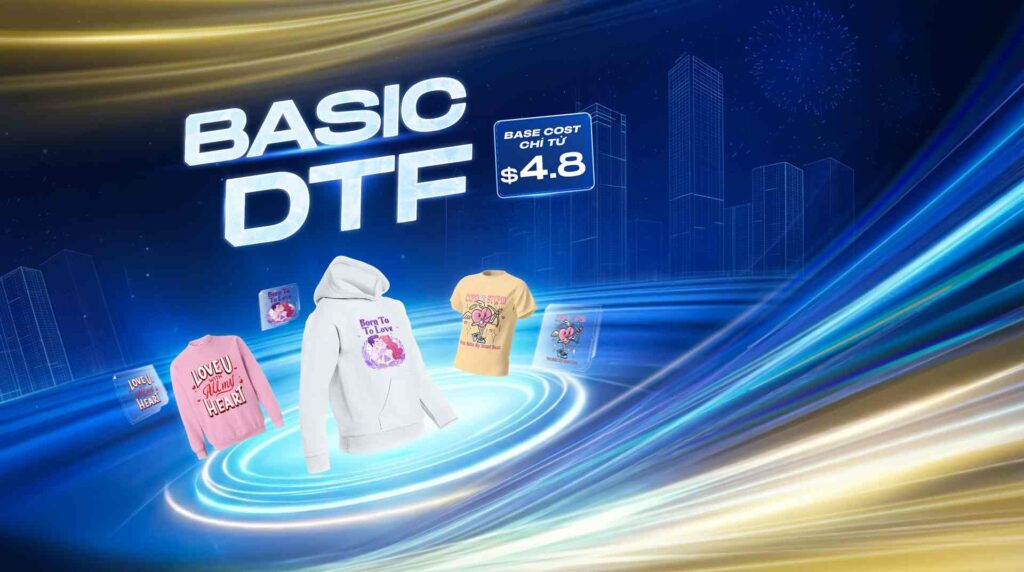
    The launch of the BASIC DTF production line is seen as a direct answer to this challenge. Rather than positioning itself as a premium solution or focusing on visual branding, BASIC DTF concentrates on what sellers care about most in the early and mid stages of their business journey: cost efficiency, flexibility, and scalability.

    BASIC DTF

    What Is BASIC DTF?

    BASIC DTF is a production line that applies Direct to Film (DTF) printing technology, a method in which designs are printed onto a specialized film and then heat-pressed onto garments. DTF technology is already well known within the POD community for its flexibility and its ability to accommodate a wide range of designs and fabric types.

    What sets BASIC DTF apart is not the printing technology itself, but the way the production process is structured and optimized. This approach enables a lower base cost, making BASIC DTF ideal for market testing and for scaling large order volumes within a short period of time.

    Why Did BASIC DTF Emerge at the Right Time?

    In recent years, the operational reality faced by POD sellers has revealed an increasingly clear paradox: sellers are required to test more frequently in order to identify winning products, yet the cost of each test continues to rise. The POD market no longer leaves room for intuitive or high-risk experimentation. Shorter trend life cycles, rapidly changing consumer behavior, and intensifying competition have made testing designs, niches, and messaging a mandatory activity for sellers who want to survive and grow.

    However, high production base costs have become a major barrier during the testing phase. When printing costs account for a large portion of the selling price, sellers are forced to think carefully before launching new products. As a result, design testing is no longer conducted as broadly or consistently as before, and is often delayed due to risk concerns. At the same time, advertising budgets are quickly depleted when the remaining margin after production costs is insufficient to sustain extended testing campaigns. The consequence is that many sellers recognize market signals but hesitate to scale or scale too slowly ultimately losing valuable timing advantages.

    In this context, the core challenge is not about finding more new trends, but about optimizing input costs so that testing becomes financially safer. Sellers need a production line that allows them to experiment with more ideas, accept a higher failure rate, and still maintain overall risk control. This is precisely the gap that BASIC DTF was designed to fill.

    BASIC DTF was developed as a production line with low input costs, a streamlined workflow, and sufficient stability to support commercial sales. Rather than positioning itself in the premium segment, this line directly addresses sellers’ core challenge: how to test faster, at lower cost, and scale more easily when a product shows positive signals. When base costs are reduced to a reasonable level, testing no longer feels like financial pressure it becomes a natural part of a sustainable growth strategy.

    For this reason, the emergence of BASIC DTF is not accidental. It reflects the real needs of today’s POD market: a practical, flexible production solution aligned with test-and-scale strategies in a highly competitive environment.

    Core Advantages of BASIC DTF

    In today’s POD landscape, choosing a production line is no longer just about printing technology it directly determines a seller’s ability to test products, optimize costs, and scale operations. BASIC DTF is built around these core advantages, designed to meet the real operational needs of POD sellers.

    First and foremost, low base cost is the most prominent advantage of BASIC DTF. With base costs starting from $4.8, sellers can test a wider range of designs within the same budget without excessive cost pressure. This allows for a higher acceptable failure rate when searching for winning products, while also optimizing advertising strategies in the early stages. When testing costs are kept under control, decisions around design, niche selection, and scaling are no longer driven by intuition, but guided by real performance data.

    In addition, BASIC DTF does not require a minimum order quantity (MOQ), providing significant flexibility for sellers at all scales. Whether a seller is fulfilling just a few orders per day or entering a rapid growth phase, production costs remain optimized. This flexibility is especially critical in the POD environment, where demand can shift quickly with trends and seasonal changes.

    In terms of quality, although positioned as a “Basic” line, BASIC DTF fully meets the standards required for commercial sales. Print clarity, strong adhesion, and compatibility with typography, graphic designs, and simple layouts allow sellers to confidently fulfill large volumes in short timeframes.

    A common concern when sellers consider low-base cost production lines is whether material quality is compromised. With BASIC DTF, the answer lies in smart cost optimization, not in lowering input standards.

    The films, inks, and garment blanks used in BASIC DTF follow the same quality standards applied across FlashShip’s other production lines. The difference does not come from using cheaper materials, but from a more streamlined production process that eliminates unnecessary steps for fast testing and scaling objectives.

    As a result, BASIC DTF prints maintain the necessary sharpness, adhesion, and stability for commercial sales particularly well-suited for text-based designs, simple graphics, or ad-optimized layouts. Sellers can confidently run large-scale tests without worrying about print quality falling below customer expectations.

    In other words, BASIC DTF is a cost-optimized line through process efficiency, not a line that sacrifices quality for lower pricing. This is what enables sellers to manage financial risk while maintaining a quality level that is safe and reliable for selling, testing, and scaling in a highly competitive POD market.

    Finally, thanks to its optimized workflow, BASIC DTF allows sellers to scale more easily and reduce operational pressure. When campaigns show positive signals, increasing order volume, launching promotions, bundles, or upsells becomes faster and more controllable. In a highly competitive market, this speed of response is what creates a true competitive advantage for POD sellers.

    Which Sellers Is BASIC DTF Best Suited For?

    Within the Print on Demand ecosystem, not every seller needs to start with premium production lines. In reality, most growth journeys begin in the testing phase, where cost control and risk management play a decisive role. BASIC DTF was developed specifically to serve this need.

    First, this production line is well suited for new POD sellers who are still getting familiar with the market. Without sufficient sales data, high testing costs can create unnecessary pressure and limit experimentation. BASIC DTF allows new sellers to enter the market more safely, test more ideas, and learn faster.

    In addition, sellers who frequently test niches, trends, and designs will see clear benefits. With constant experimentation as part of their strategy, lower production costs enable sellers to expand their testing scope while maintaining healthy cash flow an increasingly important advantage as trend life cycles continue to shorten.

    BASIC DTF is also ideal for sellers looking to expand their product catalog without letting production costs scale proportionally with the number of listings. Furthermore, sellers running short-term campaigns that prioritize speed and efficiency can leverage this line to scale quickly once a product shows positive signals.

    BASIC DTF is not designed to “polish brand image,” but rather to help sellers identify winning products faster and optimize overall business performance.

    The Role of BASIC DTF in a Long-Term POD Strategy

    In modern Print on Demand strategies, sellers no longer rely on a single production line for their entire business. Instead, the prevailing approach is to segment production lines based on specific use cases, allowing sellers to optimize both short-term costs and long-term value. Within this framework, BASIC DTF plays a foundational role in the testing and growth stages.

    With its low input costs and flexible operations, BASIC DTF is positioned as a cost-efficient line for testing and scaling. Sellers can continuously experiment with designs, niches, and advertising campaigns without placing excessive pressure on cash flow. Once a product demonstrates consistent sales performance, sellers can proactively transition to higher-quality production lines to enhance customer experience, increase average order value, and build a sustainable brand.

    This approach enables POD sellers to manage risk more effectively, make data-driven decisions, and maintain stable long-term growth rather than being locked into a single, fixed production model.

    In this broader strategy, BASIC DTF serves as the testing and growth foundation, helping sellers minimize risk and optimize cash flow before expanding into higher-tier segments with FlashShip. BASIC DTF is not a production line designed to “showcase technology,” but a practical solution that accurately reflects how POD sellers operate in today’s highly competitive environment. With its low base cost, high flexibility, and clear positioning for testing and scaling, BASIC DTF offers sellers a strategic option: better cost control, faster decision-making, and more proactive scalability. In a market where speed and efficiency determine success, BASIC DTF is not just a new production line it is a move aligned with the realities of modern POD business operations.

  • Best POD Products to Boost Your Sales This Valentine’s Day 2026

    Best POD Products to Boost Your Sales This Valentine’s Day 2026

    Valentine’s Day 2026 is expected to be one of the most explosive shopping seasons in the U.S. market, especially for POD products. The demand for personalized gifts continues to rise sharply as consumer behavior shifts toward emotionally meaningful items that can be customized for each relationship. This presents a strong opportunity for sellers to expand their product lineup, increase conversion rates, and accelerate revenue growth early in the year. This article highlights the top POD products to sell for Valentine’s Day 2026, the key criteria for selecting the right items, and strategic recommendations to help sellers optimize their stores and stay ahead of the competition during this major gifting season.

    valentine 2026

    Why Valentine’s Day 2026 Is a “Golden Season” for POD Sellers

    Valentine’s Day has always been one of the strongest consumer-spending holidays in the United States, ranking just below Christmas and Mother’s Day. As we enter 2026, the market is experiencing notable shifts in buying behavior, design trends, and the demand for personalized products creating a significant opportunity for POD sellers to capture growth and expand their revenue during this peak season.

    A Record Surge in Personalized Gift Demand

    In the 2026 shopping landscape, U.S. consumers are gradually turning away from mass-produced gifts commonly found in retail stores. Instead, they are seeking products that carry stronger personal meaning and emotional value. According to reputable e-commerce reports, POD products that offer customization options such as personal names, anniversaries, messages, or uploaded photos of couples and pets consistently achieve conversion rates 20–30% higher than non-personalized items. POD is the only model that can fulfill this demand for unique, one-of-a-kind gifts at an affordable cost, giving sellers a clear advantage in winning customers’ hearts.

    Strong Consumer Spending on Emotional and Diverse Relationship-Based Gifts

    The idea that Valentine’s Day is only for romantic couples has become outdated. In the U.S. and EU markets, February 14 has evolved into a celebration of all kinds of relationships. This creates an opportunity for POD sellers to scale into multiple promising niches, including:

    • Galentine’s Day: Women buying gifts for their best friends.
    • Family Love: Parents buying for children, and children showing appreciation to their parents.
    • Pet Lovers: A massive and fast-growing segment where customers are willing to spend generously on shirts, mugs, and personalized items featuring their pets.
    • Self-Love: A rising trend in which single individuals purchase gifts to reward themselves.

    By diversifying customer segments, sellers avoid relying on a single niche and can maximize revenue across the same store.

    A Growth Catalyst for Q1/2026

    Valentine’s Day falls in the middle of Q1, making it a prime opportunity for sellers to maintain momentum after the year-end holiday season.

    • Kickstart revenue: It helps eliminate the “post–New Year slowdown” and quickly revive sales activity.
    • Test niches and designs: This period is ideal for experimenting with new design concepts. Winning designs from Valentine’s Day can easily be adapted and redesigned to continue selling well for upcoming occasions like Mother’s Day and Father’s Day.
    • Leverage existing customer data: The large customer base accumulated during Q4 2025 becomes valuable fuel for targeted email marketing and remarketing campaigns for Valentine’s Day.

    A Significant Competitive Advantage When Fulfilling in the United States

    Valentine’s Day is an extremely time-sensitive holiday. No customer wants to receive a February 14 gift on February 15. For this reason, shipping time becomes a critical factor that directly influences purchasing decisions. Sellers who work with fulfillment partners that operate production facilities in the U.S. (such as FlashShip) gain a substantial competitive edge:

    • Shortened delivery times of only 2–5 business days.
    • Increased buyer trust and reduced cart abandonment during peak shopping days.
    • Elimination of common risks such as customs delays or international shipping bottlenecks often seen with low-cost overseas logistics.

    Criteria for Choosing POD Products That Sell Well for Valentine’s Day 2026

    Not every product is suitable for Valentine’s Day. To optimize conversion rates, sellers should base their selection on the following five strategic criteria:

    Aligns With Gift-Giving Needs

    Valentine’s Day is a season of giving. Customers are not buying for themselves they are buying to give to someone special. Therefore, a winning product must effectively address the gifting needs of various recipient groups. Do not limit your focus to just couple gifts. Market data shows that over 80% of Valentine’s purchasing behavior in the U.S. revolves around these segments:

    • Families (spouses, children gifting parents).
    • Pet lovers (customers who love to buy gifts featuring their pets).
    • Best friends or roommates.
    • Coworkers.

    The more audiences a product can serve (multi-niche), the greater the opportunity to scale campaigns and increase conversions.

    Deep Personalization Capabilities

    In 2026, personalization is no longer just a trend it is a required standard. The ability to customize a product is the key to triggering customer emotion, which leads to faster “Add to Cart” decisions. The most compelling customization features include:

    • Photo upload: Real couple photos or pet photos.
    • Text customization: Names, anniversaries, geographic coordinates, meaningful messages.
    • Character customization: Selecting cartoon or chibi-style characters that resemble real appearance (skin tone, hairstyle, etc.).

    Products that support these features transform a simple item into a one-of-a-kind gift, making customers perceive the product as far more valuable than its actual price.

    Optimized Base Cost

    Although customers are willing to spend more during the holidays, sellers still need to manage their financial strategy carefully. Valentine’s Day is a period when advertising costs (CPM, CPC) typically rise. Choosing products with a reasonable base cost and high quality allows sellers to:

    • Easily set competitive retail prices.
    • Maintain a safe profit margin to offset ad losses during the testing phase.
    • Confidently scale budgets once a winning design is identified.

    Versatility and Year-Round Sales Potential

    A smart product is one that does not “expire” after February 14. Sellers should prioritize product lines with a long lifecycle that can be easily redesigned for other major occasions throughout the year, such as:

    • Anniversary
    • Birthday
    • Wedding or Engagement
    • Christmas and Mother’s Day

    This allows sellers to reuse assets such as mockups and store setups while maintaining steady, evergreen revenue year-round.

    Optimized for Fast U.S. Shipping

    This is a critical factor. Valentine’s Day has a strict deadline, and customers often shop at the very last minute. Products that are small, lightweight, easy to package, and fulfilled within the United States provide key advantages:

    • Significantly shorter delivery times (2–5 business days).
    • Lower shipping costs.
    • Reduced risk of disputes or chargebacks caused by late deliveries one of the biggest concerns for sellers during any holiday season.

    Top Best-Selling POD Products for Valentine’s Day 2026

    Below is a list of products predicted to be the hottest for Valentine’s Day 2026, based on U.S. buyer data, 2026 design trends, and holiday shopping behavior.

    Category 1: Home Decor – Meaningful Keepsake Gifts

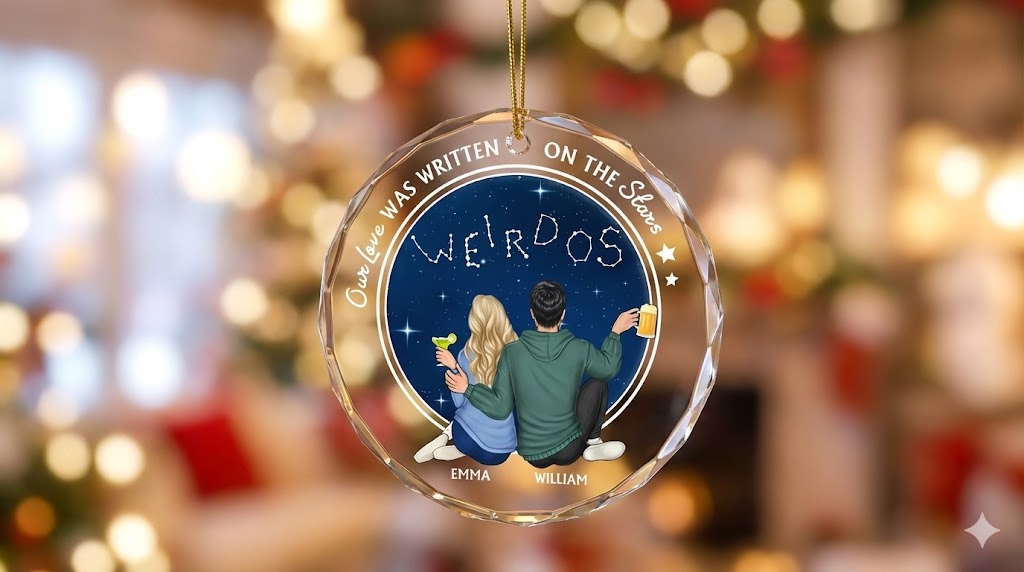
    Glass Ornament POD

    Acrylic Plaque

    This has been a rising star over the past two years and is expected to remain a dominant product throughout 2026.

    Why it sells well: Its transparent, modern, and premium look resembles glass but is lighter and more durable.

    Design ideas:

    • Song Plaque: A music-player style layout featuring the couple’s favorite song along with their photo.
    • Map Plaque: A heart-shaped map showing the couple’s significant geographic location.
    • Calendar Plaque: A calendar-style design highlighting the special date of their relationship.

    Sales tip: Offer an LED wooden base as an add-on. The LED light makes the acrylic plaque shine beautifully at night and significantly increases the average order value (AOV).

    Custom Canvas & Poster

    Although considered classic products, their demand has never declined.

    2026 Trends:

    • Star Map: “What did the night sky look like when you said yes?”
    • Street Map: A city map combined with the initials of the couple’s names.
    • Watercolor Portrait: Transforming a real photo into an artistic watercolor-style illustration.

    Pillow & Blanket

    Perfect for couples who live together or are in long-distance relationships (a warm, comforting gift).

    Design ideas:  “Reserved for [Name]”, “Hug this pillow until you can hug me

    Category 2: Apparel – Couple Fashion (But with Subtlety)

    It’s time to stop selling outdated “King & Queen” shirts. Valentine’s Day 2026 is all about subtle, sophisticated couple looks.

    Embroidered Sweatshirt/Hoodie

    Embroidery creates a high-end, durable feel compared to standard printing.

    Design ideas:

    • Roman numeral date embroidered on the sleeve.
    • Small initials embroidered on the left chest.
    • Minimalist line-art embroidery converted from a real couple photo.

    Target audience: Gen Z, who are highly drawn to this minimalist aesthetic on TikTok.

    Unisex T-Shirt (Retro 90s Style)

    Design idea: Bootleg Rap Tee. Create a design using the partner’s photo in the style of a 90s rap poster. This trend is extremely humorous and very popular among men buying gifts for their girlfriends.

    Underwear

    This is a highly profitable “dark horse” niche.

    • Design idea: Men’s boxers printed all over with the girlfriend’s face.
    • Why it sells well: It’s funny, personal, inexpensive, and perfect as a playful gag gift, yet still practical.

    Category 3: Jewelry & Accessories – Small Gifts with Big Meaning

    Message Card Jewelry

    This is one of the most powerful POD “weapons” during holiday seasons. A necklace or bracelet is paired with a premium gift box and a message card featuring a heartfelt note.

    • Advantages: Low base cost, high selling price (thanks to emotional value), and inexpensive, fast shipping.
    • Niches:  “To My Wife,” “To My Soulmate,” “To My Girlfriend.”

    Couple Keychains

    A low-cost product that works extremely well for upsells.

    Design ideas: Puzzle piece keychains, Spotify code designs (scannable to play a song), anniversary date as a license plate graphic.

    Category 4: Drinkware – Love-Themed Cups

    Color-Changing Mug

    • How it works: The mug appears black, but when hot water is poured in, the hidden image or message reveals itself.
    • Marketing idea: Create a TikTok video pouring hot water into the mug to reveal the message “Will you marry me?” or a funny photo of the partner. This type of content goes viral very quickly.

    Tumbler

    Perfect for couples who enjoy traveling or camping.

    Valentine’s Day 2026 is expected to remain one of the most important shopping seasons for the U.S. POD market, where demand for personalized gifts continues to grow and consumer behavior increasingly favors products with emotional value. Choosing the right product categories, staying ahead of design trends, and optimizing the shopping experience will help sellers boost conversion rates and achieve sustainable revenue growth. Product lines such as couple apparel, mugs, ornaments, suncatchers, acrylic plaques, keychains, and blankets all hold strong potential and are well-suited to become core offerings for the upcoming Valentine season.

    To fully seize this opportunity, sellers should begin preparing from late December, finalize their product lineup, refine mockups, and ensure a stable fulfillment workflow. Starting operations early will help secure a competitive advantage and maximize performance for Valentine’s Day 2026.

  • A Complete Guide to Free Mockup Sources for POD Sellers

    A Complete Guide to Free Mockup Sources for POD Sellers

    In the Print on Demand business, mockups are not just illustrative images they directly influence attractiveness, conversion rates, and the overall sales performance of every listing. A high-quality mockup makes your product look more professional, builds trust with U.S. customers, and significantly boosts CTR on Etsy, Amazon, Shopify, and TikTok Shop. However, not all sellers are ready to invest in paid mockups at the beginning.

    This article provides a comprehensive roundup of free mockup sources for POD sellers, along with key criteria for choosing market-ready mockups and important copyright considerations. With these resources, you can confidently launch hundreds of listings without unnecessary costs.

    Mockup

    Why Do POD Sellers Need High-Quality Mockups?

    In the highly competitive POD industry where apparel blanks and printing technologies across fulfillment providers are becoming increasingly similar what truly sets you apart? The answer lies in visual presentation: your mockups.

    For a POD seller, a mockup is not just an illustrative image; it is an emotional connector, a silent salesperson, and a decisive factor that determines whether a campaign succeeds or fails. Below are three core reasons why investing in high-quality mockups is a step you simply cannot afford to skip.

    Mockups Are the Key Driver of Conversion Rates

    In e-commerce, the biggest barrier is that customers cannot touch, feel, or try the product. As a result, up to 90% of their purchasing decision depends entirely on the images they see. This is even more critical for POD sellers, whose sales rely heavily on the uniqueness and appeal of their printed designs. Mockups, therefore, play an indispensable role.

    A high-quality mockup solves four major challenges:

    • Product Visualization: Helps customers clearly imagine what the shirt, mug, or other item will look like in real life.
    • Building Trust: Polished visuals make your store appear professional and reliable.
    • Boosting CTR: Among thousands of ads on Facebook or TikTok, an eye-catching mockup is the only thing that makes customers stop scrolling and click.
    • Reducing Return Rates: When a mockup accurately reflects the product’s shape and color, customers are less likely to feel disappointed upon receiving it significantly lowering disputes and returns.

    Mockups Create a Distinct Competitive Advantage

    Imagine a customer searching for the keyword “Funny Cat Shirt” on Etsy, Amazon, or eBay. Thousands of listings appear, many with similar designs. Why would they choose yours over someone else’s?

    The mockup is what creates that scroll-stopping difference. In a fiercely competitive environment, high-quality mockups help you:

    • Tell a product story: A hoodie photographed in a cozy winter camping scene evokes far more emotion than a shirt floating on a plain white background.
    • Define your brand identity: A consistent mockup style whether vintage, modern, or minimal helps customers remember your brand longer.

    A mockup isn’t just for showing the design; it is how you sell a feeling and a lifestyle to your customers.

    Mockups Help You Scale Quickly Without Production Costs

    One of the greatest advantages of the POD model is that you don’t need inventory and mockups are the most powerful tool supporting this benefit. Instead of spending thousands of dollars and weeks of time printing samples, renting a studio, and hiring models, sellers can rely on high-quality mockups (paid or free) to:

    • Test the market (A/B testing): Experiment with different shirt colors and print placements to see which version converts best.
    • Diversify listings: Create hundreds of product variations within just a few hours.
    • Produce ad creatives instantly: Have ready-to-use visuals for Facebook, Instagram, and Pinterest ads as soon as your design idea is complete.

    For newbies or sellers looking to scale quickly, mockups are truly a lifesaver minimizing operational costs while still ensuring professional, high-quality visuals.

    Criteria for Choosing Free Mockups

    In the journey of conquering the U.S. POD market, finding free mockups is an excellent way to optimize costs. However, “free” does not mean “low-effort.” U.S. customers have very specific aesthetic preferences and high expectations for visual quality.

    To maintain strong conversion rates (CR) and avoid operational risks, sellers must strictly follow these six golden criteria when selecting mockups:

    Prioritize High Resolution (Minimum 3000px)

    In the U.S. market, online shopping demands visual authenticity. A mockup that appears pixelated, blurry, or noisy immediately signals “low-quality product” to customers.
    Always choose files with a resolution of 3000 pixels or higher. This ensures that when customers use the Zoom feature on Etsy or Amazon to inspect print details or fabric texture, the image remains sharp building strong trust from the very first glance.

    Match the Aesthetic Preferences of U.S. Buyers

    This is the most important factor, yet often overlooked by sellers. Avoid using mockups with a distinctly Asian visual style when selling to a Western audience. The U.S. market strongly prefers:

    • Minimalist lifestyle aesthetics: Clean, simple, and elegant.
    • Natural lighting: Creates an authentic, unedited look.
    • Neutral backgrounds: Such as wooden surfaces, canvas fabric, marble countertops, or beige/white sofas.

    Avoid:

    • Overly colorful or busy backgrounds
    • Harsh studio lighting
    • Models whose appearance does not match Western consumer expectations

    Choosing the right mockup style is essential for increasing trust and maximizing conversion rates.

    Easy to Customize

    For sellers working in Photoshop, having Smart Object functionality is essential. It allows your design to automatically warp according to the fabric folds or the surface curvature (using displacement maps), making the print look naturally integrated into the product rather than appearing like a flat sticker pasted on top.

    If you use Canva or other online tools, choose mockups with clearly defined placement grids to maintain the correct design proportions and prevent unwanted stretching or distortion.

    Maintain Accurate Product Proportions and Realistic Sizing

    One of the leading causes of returns and refunds is the complaint: “The product doesn’t look like the picture.” Many low-quality free mockups have incorrect proportions for example, a Bella Canvas 3001 shirt displayed as an oversized tee, a ceramic mug that appears too tall, or an ornament that looks thinner than it actually is. Always ensure your mockup accurately reflects the true form and proportions of the product base offered by your fulfillment partner.

    Ensure Mockups Are Free of Watermarks

    Professionalism is reflected in attention to detail. A product listing that still shows a faint watermark from the mockup provider instantly makes your store look cheap and unreliable. Take the time to source high-quality mockups without embedded logos or watermarks, or be willing to skip even the most beautiful mockups if the watermark cannot be cleanly removed.

    Ensure the Mockup Includes a Commercial Use License

    Last but most importantly: legal rights. Do not confuse “Free for Personal Use” with “Free for Commercial Use.” If you use a mockup that is licensed only for personal use to create listings on Etsy, Amazon, or to run ads, you are committing a copyright violation. The consequences may include DMCA takedowns or even permanent account suspension.

    Always review the “Read Me” file or the licensing information provided before using any mockup for commercial purposes.

    A Complete List of Reliable Free Mockup Sources for POD Sellers

    Free Mockup

    Below is a curated and up-to-date list of mockup resources, evaluated based on image quality, ease of use, product variety, and seller-friendly licensing terms.

    Canva

    Canva is not just a design tool it’s a massive mockup library perfect for POD sellers who aren’t familiar with Photoshop.

    • Pros: The drag-and-drop interface is extremely user-friendly. Canva integrates
    • SmartMockups, allowing you to place your design onto shirts, mugs, tumblers, and posters with just one click. The platform also supports exporting files in sizes optimized for Etsy and Amazon listings.
    • Note: Some free templates may be widely used. Customize the background to ensure your mockups stand out.

    Placeit Free Templates

    When it comes to lifestyle mockups featuring real people and real environments, Placeit is number one. Although known as a paid platform, its Freebies section still offers high-quality mockups.

    • Pros: Models of diverse ethnicities and natural backgrounds that align well with U.S. customer preferences. Shirt colors can be changed directly on the website.
    • Note: The free selection is more limited compared to the paid version, and PSD files are not available for deeper editing.

    SmartMockups

    If you sell hard goods such as ceramic mugs or tumblers, the standalone web version of SmartMockups is an excellent choice.

    • Pros: Exceptionally sharp rendering with realistic lighting and reflections that make products look true to life.
    • Note: The free library is limited in variety.

    Freepik & Flaticon

    Ideal for sellers with basic Photoshop skills. Freepik offers thousands of high-quality PSD mockups.

    • Pros: Wide range of product categories from apparel to home decor. PSD files are well-layered and easy to edit using Smart Objects.
    • Important Note: Always check the license. Some files require attribution when used for free, which may not be ideal for product listings.

    Mockupworld

    This is an aggregator website that compiles some of the best mockups from designers around the world.

    • Pros: Highly aesthetic visuals studio-grade or high-end lifestyle shots. Licensing information is clearly displayed before download.
    • Note: Because it’s an aggregator, downloads redirect you to the creator’s original website, which can involve a few extra steps.

    Pixeden & PixelBuddha

    If you need visuals for homepage banners or brand-level marketing, these two platforms are excellent choices.

    • Pros: Exceptionally high-quality, artistic, and polished imagery.
    • Note: The number of free files is limited they primarily serve as teasers for premium packages but the available free content is extremely well-crafted.

    Freemockup.net

    A resource focused heavily on T-shirts, hoodies, and canvas prints, featuring modern color tones.

    • Pros: Sharp imagery, easy-to-use PSD files, and a style that aligns well with Western aesthetics.

    POD Seller Communities

    Groups such as POD Community, Etsy Sellers, and Shopify Dropshipping frequently share free mockups from designers looking to promote their work.

    • Warning: This can be a double-edged sword. Only download from trusted creators. Avoid using mockups with unclear origins to prevent accidental copyright violations or DMCA takedowns.

    Suggested Mockup Sources by POD Product Category

    Below is a guide to choosing the right mockups for each product line to help sellers optimize conversion rates.

    Apparel (T-Shirts, Hoodies, Sweatshirts)

    This is the most competitive battlefield. U.S. customers now expect authenticity and diversity.

    • Reliable Sources: Placeit Free, SmartMockups, Freepik, Freemockup.net.
    • Winning Style: Prioritize outdoor lifestyle scenes or studio shots with natural lighting. Use models with body diversity to create relatability and broader appeal.
    • Note: Choose the correct garment form (Unisex, Fitted, Oversized) to avoid customer complaints about inaccurate fit.

    Ornaments (Ceramic, Acrylic, Wood)

    The “king product” of Q4 must evoke warmth and nostalgia.

    • Reliable Sources: Canva, Freepik, Mockupworld.
    • Winning Style: Christmas trees, fireplaces, vintage wooden backgrounds, and warm golden lighting.
    • Note: Mockups should show a real hanging string avoid unrealistic floating objects.

    Drinkware (Mugs, Tumblers)

    Customers typically buy drinkware for daily use or as office gifts.

    • Reliable Sources: SmartMockups, Placeit Free.
    • Winning Style: Close-up shots of hands holding the product. Use settings like kitchen counters, work desks, or cozy window-side corners.
    • Note: Highlight the gloss, texture, and material finish of ceramic or metal surfaces.

    Home Decor (Posters, Canvas, Blankets)

    These products sell primarily on aesthetics how they elevate a home.

    • Reliable Sources: Pixeden, Canva, Mockupworld.
    • Winning Style: Modern living rooms with neutral color tones. Avoid neon lighting, overly saturated backgrounds, or interior settings with a distinct Asian style.

    Accessories (Phone Cases, Keychains)

    These smaller products require precision and detail.

    • Reliable Sources: Freepik, POD seller communities.
    • Winning Style: Minimalist setups with white or light-wood backgrounds. Use close-up (macro-style) shots so customers can clearly see print quality and material details.

    Copyright Notes When Using Free Mockups

    This is the section POD sellers must pay special attention to in order to avoid listing removals, DMCA takedowns, or even account suspension.

    Understanding Different License Types

    Not everything labeled “Free” is allowed for commercial use. You must clearly distinguish between the following:

    • Free for Personal Use: Not allowed for POD. This license is only for student projects or private use.
    • Free for Commercial Use: The only license you can safely use for product listings and ads.
    • Free but Requires Attribution: You may use it, but you must credit the creator with a link.
      Recommendation: Avoid this for Etsy/Amazon listings, as adding external links reduces professionalism and may lead customers away from your store.
    • Editorial Use Only: Typically used for images of celebrities, news events, or public figures. Strictly prohibited for commercial selling.

    Be Cautious with Mockups Featuring a Model’s Face

    When using lifestyle mockups that show a model’s face, the legal risk increases significantly.

    • If the mockup source does not include a Model Release (proof that the model has consented to their image being used for commercial purposes), you may face legal action for violating personal image rights.
    • Solution: Only download mockups featuring real people from reputable sources (such as Placeit or Freepik Premium) that explicitly provide image rights and model release documentation.

    Never Remove Watermarks Illegally

    Many sellers attempt to use AI tools or Photoshop to erase the original provider’s watermark. This is a clear copyright violation. Platforms like Placeit and Shutterstock have powerful image-scanning systems, and your account can be permanently suspended the moment you are detected.

    Avoid Pirated or Unverified “Shared” Mockup Sources

    Facebook groups or Google Drive folders offering “1,000 premium mockups for free” are some of the riskiest places to download assets.

    • The danger: You have no way of knowing who the original creator is. If the files were stolen from another creator and they file a DMCA report, you will be the one penalized not the person who shared them.
    • Rule of thumb: Only download mockups from official websites or trusted sources that provide clear links to the original author.

    Regularly Review Terms of Use

    Policies can change at any time. A website that allows free commercial downloads today may switch to a paid model or update its licensing rules tomorrow. Make it a habit to save the license file (usually a .txt or .pdf included with the download) as evidence for a potential counter-notice if your listing is ever mistakenly reported.

    Free mockups are a simple yet highly effective solution for every POD seller—especially during phases when you need to expand your product catalog quickly while maintaining professionalism and optimizing conversions. By choosing the right free mockup sources, aligning with U.S. market aesthetics, and complying with licensing rules, you can create compelling product images that build trust and significantly improve purchase rates on Etsy, Amazon, and Shopify.

    To accelerate even further, pair high-quality mockups with fast, color-accurate, and reliable fulfillment from FlashShip, allowing you to confidently scale campaigns and maximize revenue in every sales season.

    Ready to get started? Visit seller.flashship.net to experience high-speed U.S. fulfillment and complete support tailored for POD sellers.

  • Glass Ornament: The Rising Trend in Décor & Gifting for 2026

    Glass Ornament: The Rising Trend in Décor & Gifting for 2026

    Glass Ornaments are becoming one of the fastest-growing décor and gifting products in the POD market for 2026. With premium glass material, sharp UV-print capabilities, and strong personalization potential, Glass Ornaments are quickly winning over U.S. customers across every occasion: Christmas, Valentine’s Day, anniversaries, baby’s firsts, pet gifts, memorial keepsakes, and year-round home décor. To maximize conversions and deliver a high-quality customer experience, sellers must understand the characteristics of glass, follow key design considerations, and leverage the latest trends shaping the market. This is a golden opportunity for POD sellers to expand niches, increase revenue, and gain a competitive edge in the 2026 sales season.

    Glass Ornament POD

    Why Glass Ornaments Are Becoming a Breakout Trend in 2026

    The 2025–2026 period has seen a clear shift in U.S. consumer behavior: shoppers increasingly prefer products that combine aesthetic value, durability, and a high level of personalization. Glass ornaments perfectly meet all three of these expectations.

    The Rise of the “Premium Feel” Gifting Trend

    U.S. consumers today are willing to pay more but only for products that genuinely feel “worth it.” The market is shifting rapidly from low-cost items to products that deliver a clear premium feel.

    Glass Ornaments hold a significant visual advantage. The transparent glass surface, its natural light-catching shimmer, and the depth created by modern UV-printing technology produce a level of elegance that plastic or wood materials simply cannot match. More than just a decorative item, a Glass Ornament is perceived as a luxurious, refined, and meaningful gift yet still remains within an accessible price range, making it an ideal form of affordable luxury for the majority of consumers.

    Explosive Growth of the Personalized Gift Segment

    Market reports on the U.S. gifting industry show that spending on products with customization features has been steadily increasing from 2023 to 2026. Customers now want every gift to tell their own story.

    Glass Ornaments are the perfect medium for this trend. From sharp, high-resolution family or pet portraits to star-map designs, personalized names, and artistic abstract patterns every detail displays vividly on glass. This is exactly why Glass Ornaments have rapidly become a top choice for commemorative occasions, far outperforming traditional printed products.

    Inherited Momentum and an Upgrade from the 2024–2025 Q4 Market

    The strong performance of Acrylic and Ceramic Ornaments during the 2024–2025 holiday seasons created a solid launchpad for the rise of Glass Ornaments.

    As ornament purchasing becomes an established consumer habit, shoppers naturally seek newer, more premium versions in the following year. Glass Ornaments entered the market at the perfect time as the “upgraded” option customers were already looking for. They satisfy the psychology of “buying something new and better than last year,” driving organic demand without requiring sellers to invest heavily in educating the market.

    A Profit-Optimizing Advantage for POD Sellers

    Glass Ornaments not only attract buyers they also present a smart economic opportunity for sellers:

    • Higher Average Order Value (AOV): Thanks to their high perceived value, Glass Ornaments can be sold at a stronger price point with healthier profit margins.
    • Easy to Scale and Expand Into Multiple Niches: This product fits virtually every niche family, couples, pets, memorial, and more making it ideal for rapid design expansion.
    • Year-Round Sales Potential: Beyond Christmas, the shimmering beauty of glass makes it a strong performer for Valentine’s Day, Mother’s Day, weddings, anniversaries, and other gifting occasions.
    • Optimized Shipping: With lightweight material and compact sizing, shipping costs especially when fulfilled from the U.S. remain efficient, while proper packaging greatly minimizes breakage risks.

    Glass Ornaments deliver both customer appeal and operational efficiency, creating a powerful profit engine for POD sellers in 2026.

    What Is a Glass Ornament? Key Features in POD

    Glass Ornament POD

    A Glass Ornament is a decorative item made from glass, typically available in round, oval, square, or heart shapes, and produced using UV-printing technology to achieve sharp, vibrant imagery. For POD sellers, a Glass Ornament represents the ideal combination of aesthetics, personalization potential, and flexible U.S.-based production.

    What Is a Glass Ornament? Superior Structure and Material

    By definition, a Glass Ornament is a decorative item crafted from high-quality glass typically tempered or ultra-clear glass. Unlike traditional ornaments made from plastic or ceramic, Glass Ornaments feature a perfectly smooth, glossy surface with exceptional transparency.

    They commonly come in shapes such as round, oval, square, octagon, or heart. The physical properties of glass allow it to transmit or reflect light beautifully, especially under Christmas tree LED lighting, creating a shimmering “glow effect” that acrylic or wood cannot replicate. This standout visual quality is a key factor that captivates customers at first glance.

    UV Printing Technology – The Key to What Sets Glass Ornaments Apart

    The most valuable advantage of Glass Ornaments in the POD industry lies in their compatibility with UV printing technology. This process is far more than simply placing ink on a surface it is a modern, high-precision image reproduction technique that delivers remarkable visual quality:

    • Exceptional Sharpness: UV ink cures instantly under ultraviolet light, preventing smudging while producing vibrant colors and extremely fine detail.
    • Depth Effect: UV printing supports multi-layer printing, such as applying a white base layer beneath the color layer. This makes designs stand out on transparent glass and creates a striking, lifelike 3D effect.
    • Long-Lasting Durability: Printed surfaces are scratch-resistant, fade-resistant, and maintain their clarity and vibrancy over time even after many holiday seasons.

    Thanks to these advantages, Glass Ornaments handle complex design styles exceptionally well, including galaxy themes, star maps, abstract light effects, and high-resolution photography.

    Unlimited Personalization Potential

    For POD sellers, personalization is a critical success factor and Glass Ornaments offer an exceptionally versatile canvas for creating customizable templates:

    • Text & Dates: Add names, anniversary years, meaningful messages, or special quotes.
    • Photo Uploads: Print family portraits, wedding photos, or pet images with studio-level clarity.
    • Wide Niche Coverage: Perfect for newlywed “First Christmas” designs, “Baby’s First Christmas,” memorial keepsakes, and countless other heartfelt occasions.

    With just a few base templates, sellers can scale into hundreds of variations, serving virtually every customer segment.

    A Premium Unboxing Experience

    Ultimately, what convinces customers to purchase and motivates them to leave 5-star reviews is the physical experience of the product. Glass Ornaments offer a satisfying weight, the cool touch characteristic of real glass, and a smooth, polished surface that feels luxurious in hand.

    During unboxing, customers immediately perceive a high-end, high–perceived-value gift far superior to lightweight plastic alternatives. This premium feel not only boosts Average Order Value (AOV) but also helps sellers build stronger brand trust over time.

    Why Are Glass Ornaments Becoming a Standout Décor Trend in 2026?

    Glass Ornament POD

    Beyond being a gifting product, glass ornaments have become a highly favored décor accessory because they meet a wide range of aesthetic and emotional needs for consumers. Here are the key reasons behind their popularity:

    A Symbol of Luxury, Leading the Interior Design Trends of 2026

    Forecasts for 2026 interior design highlight the rising influence of Minimal Luxury a style that prioritizes simplicity, elegance, and materials with transparency and light-reflective qualities. Both designers and homeowners are leaning toward décor pieces that feel refined, airy, and visually harmonious.

    Glass Ornaments meet these criteria perfectly. Their crystal-clear glass material brings a sense of lightness without overwhelming a space. And their versatility extends far beyond the traditional Christmas tree:

    • Window décor: Captures natural sunlight and creates soft, shimmering rainbow effects.
    • Car hangers: A stylish accessory that subtly reflects personal identity.
    • Workspaces & bedrooms: A small yet elegant touch that enhances ambiance and sparks creativity.

    This flexibility has transformed Glass Ornaments into a year-round evergreen product, rather than one that only peaks during the holiday season.

    Emotional Connection – A Core Value for Americans

    Unlike mass-produced décor items that feel generic and impersonal, Glass Ornaments tap directly into the American love for nostalgia and personalization. Each ornament printed with a family photo, a name, or a meaningful date becomes a “time capsule” that preserves a cherished moment. It carries symbolic value reminding people of love, connection, and significant milestones. This emotional depth gives Glass Ornaments a competitive advantage that cheap plastic or wooden décor simply cannot replicate.

    Eye-Catching Visual Impact on Social Media

    In the digital era, a product isn’t just required to look good it must be photogenic. With their outstanding light-catching properties, Glass Ornaments are true “visual stars” on platforms like Instagram, TikTok, and Pinterest.

    Unboxing videos or photos of Glass Ornaments sparkling under warm lights consistently attract massive engagement from Gen Z and Millennials. This viral appeal drives strong impulse-buying behavior, quickly turning the product into a “must-have” item for holiday check-ins and seasonal décor.

    A Niche “Goldmine” for Sellers – Easy to Scale

    From a POD business perspective, Glass Ornaments are an ideal product for capturing nearly every market niche. Starting from a single blank base, sellers can transform it into hundreds of unique concepts:

    • Memorial: Honoring loved ones or pets who have passed (e.g., Rainbow Bridge themes).
    • Milestones: “Our First Christmas” for couples, “Baby’s First Christmas” for families.
    • Hobbies & Beliefs: Star maps, zodiac signs, religious quotes.
    • Travel: Commemorating memorable places and journeys.

    This unlimited customization potential allows sellers to scale high volume, maximize cross-selling opportunities, and maintain stable year-round revenue across all four seasons.

    Best-Selling Occasions for Glass Ornaments in 2026

    Glass Ornaments are not limited to Q4 they perform strongly throughout the entire year. Sellers can plan their business calendar around the following key occasions:

    Christmas

    It’s undeniable that Q4 remains the season when Glass Ornaments shine the brightest. What sets 2026 apart is that customers are now favoring Glass Ornaments over plastic or wooden versions due to their stunning reflective sparkle on the Christmas tree. Key high-performing niches include:

    • Family & New Home: “Our First Christmas in Our New Home,” family member lists, and household portraits.
    • Baby’s First Christmas: Capturing a baby’s first milestone in a meaningful keepsake.
    • Pet Ornaments: Pet photos with Santa hats consistently achieve strong conversion rates.

    Valentine’s Day

    Right after Q4, Glass Ornaments continue to surge in February as “mini keepsakes.” Instead of flowers or chocolates that fade quickly, a heart-shaped Glass Ornament featuring a couple’s photo or a star map marking where they first met becomes a lasting, meaningful gift. The clarity of the glass symbolizes pure love, making it a romantic and sentimental choice for Valentine’s Day gifting.

    Personal Events & Evergreen Milestones

    This niche allows sellers to maintain steady cash flow year-round there is always someone celebrating a birthday, graduation, or wedding. Glass Ornaments act as a small “medal” that commemorates these meaningful moments.

    • Wedding & Anniversary: Keepsake gifts for couples or wedding guest favors.
    • Graduation: Prints featuring graduation year, school name, or senior portraits.
    • Mother’s/Father’s Day: A small yet heartfelt gift that carries emotional value.

    Memorial

    In the memorial gifting niche, Glass Ornaments hold a significant advantage. The clear glass material conveys a sense of peace, reverence, and spiritual warmth making it ideal for honoring a loved one or pet who has passed away. Designs featuring phrases like “Always in Our Hearts” or symbolic imagery such as feathers and angel wings printed on transparent glass consistently rank as best-sellers, resonating deeply with customers.

    Travel Souvenirs

    Americans love traveling and collecting mementos from the places they visit. Sellers can tap into this demand with destination-themed designs:

    • State Pride: Maps, state flags, or iconic state symbols.
    • National Parks: Vivid prints of breathtaking natural landscapes.
    • City Skylines: Artistic representations of major city skylines.

    Year-Round Home Décor

    Finally, sellers should educate customers that Glass Ornaments aren’t just for Christmas trees. With simple accessories like hanging cords or display stands, they become versatile interior décor pieces:

    • Car Hanger: A stylish accessory for a car’s rearview mirror.
    • Desk Decor: A small, elegant display item for workspaces or creative studios.

    Design Guidelines for Glass Ornaments (POD Sellers Must Know)

    Designing for Glass Ornaments requires more technical precision than creating artwork for apparel or ceramic mugs. Because of the material’s transparency and the nature of UV printing, sellers must follow the guidelines below to ensure sharp results and reduce return rates.

    • Avoid overly small details. Glass Ornaments typically measure only 3–3.5 inches, which means tiny elements can easily disappear during printing. Make sure all components in your design are large, clear, and tested on realistic mockups before publishing.
    • Use frames, mask shapes, or subtle effects for personalized photo designs. When working with customer-uploaded images, incorporating frames, masks, noise, or light-leak effects helps conceal low-quality photos while elevating the overall aesthetic.
    • Balance empty space and focal points. Because glass reflects light, excessive blank areas can reduce visual contrast. Ensure your composition feels intentional and well-balanced.
    • Build master templates for key niches.The real key to scaling is creating strong master templates for major niches (Family, Pet, Memorial). With one well-structured layout, you can generate hundreds of listings and quickly establish broad market coverage.

    Glass Ornaments are no longer just simple decorative items they are becoming the leading personalized gifting trend of 2026. With their luxurious glass material, crisp UV-printing clarity, and ability to expand into hundreds of niches, this product line offers POD sellers a powerful opportunity for sustainable, year-round revenue growth. By understanding the product’s characteristics, following essential design guidelines, and launching at the right seasonal moments, sellers can optimize conversion rates and deliver an exceptional customer experience.

    To keep up with market demand and accelerate throughout 2026, sellers should begin building a diverse design catalog and partner with a reliable U.S. fulfillment provider to ensure quality, speed, and consistency. This is the golden moment to capture the market with Glass Ornaments a product poised to become the next major “revenue star” in the POD ecosystem.

  • Checklist for Valentine’s Day 2026: What POD Sellers Need to Prepare

    Checklist for Valentine’s Day 2026: What POD Sellers Need to Prepare

    Valentine’s Day 2026 is not only a celebration of love in the United States, but also a “golden season” for POD sellers to boost their early-year revenue. During this period, demand for personalized gifts such as couple shirts, hoodies, mugs, commemorative ornaments, suncatchers, and other custom-designed products rises sharply creating major opportunities for sellers who choose the right products and execute smart sales strategies. This article will help you understand the overall landscape of the Valentine’s 2026 market, build a strong lineup of core products, optimize your store, and prepare a solid fulfillment workflow to increase conversion rates, retain U.S. customers, and maximize profits during this peak season.

    Checklist Valentine,

    Why Valentine’s Day 2026 Is a “Golden Season” for POD Sellers in the U.S.

    If Q4 is considered the biggest “storm” of the year, then Valentine’s Day is the first powerful “wave” that sets the tone for a winning business year. For the POD seller community, Valentine’s Day 2026 is not just another romantic holiday it is projected to be a prime opportunity to maximize profit. Below are four key reasons why the U.S. market during this period has become an unmissable target for POD sellers.

    Stable and Sustainable Growth in U.S. Consumer Spending

    According to data from recent years, American consumers have been spending tens of billions of dollars on Valentine’s Day gifts, and this figure continues to grow steadily. Notably, shopping behavior has shifted significantly: consumers are no longer purchasing gifts solely for romantic partners or spouses.

    Data from the National Retail Federation (NRF) shows that Valentine’s Day spending in the U.S. has consistently remained at exceptionally high levels approximately $25.9 billion in 2023, $25.8 billion in 2024, and surpassing $27.5 billion in 2025. Average spending per person has also stayed stable in the $175–$190 range, indicating strong and sustained purchasing power year over year. Importantly, consumer behavior has evolved: Americans are no longer buying Valentine’s gifts exclusively for their significant others or spouses.

    The range of gift recipients has expanded to include:

    • Close friends (Galentine’s Day)
    • Children and other family members
    • Pets: a rapidly growing trend as pets are increasingly treated as integral family members
    • Self-gifting

    This expansion creates a significantly broader market, allowing POD sellers to move beyond traditional romantic concepts and flexibly target a wider variety of customer segments.

    Personalized Gifts – The “King” of All Gift Choices

    In the U.S. market, material value is increasingly giving way to emotional meaning. Consumers are seeking unique, one-of-a-kind gifts with a personal touch, items they cannot simply find at Walmart or through standard Amazon FBA listings.

    This is where POD truly shines. Personalized products perfectly meet this demand through customizable options such as:

    • Custom text (names, anniversaries, personal messages)
    • Custom photos (couple photos, pet photos)
    • Special themed designs like star maps, location coordinates, and couple line art

    >In fact, during Valentine’s season, the conversion rate of products with personalization features typically increases by 20–40% compared to non-personalized items.

    Strong Scaling Opportunities Across Emerging Niches

    Valentine’s Day 2026 is no longer limited to traditional couples. Market data shows rapid growth across multiple high-potential niche segments, including:

    • Long-distance relationships: Gifts that highlight geographic connection (e.g., state-to-state mugs).
    • LGBT couples: A niche with high CTR and strong customer loyalty.
    • Pet lovers: Designs like “My Valentine has paws” consistently perform well.
    • Newly married or engaged couples: A high-spending group with strong AOV as they commemorate their first milestones.
    • Best friend gifts: A safe niche with stable search volume year-round.

    Sellers can easily create 10–20 designs for each of these niches to expand their reach quickly and effectively dominate the market.

    Easier to Operate Compared to the Q4 Holiday Season

    One major advantage of Valentine’s Day over Q4 is its stability. While Q4 often comes with nightmares such as logistics congestion and skyrocketing ad costs, Valentine’s season is generally much more manageable:

    • Logistics are more stable, with fewer disruptions and more consistent shipping times.
    • Competition is lower, making advertising costs (CPM/CPC) more reasonable.
    • Buyers have clearer intent and strong motivation to purchase, resulting in higher conversion rates and easier order closures.

    Prepare Your Core Product Catalog for Valentine’s Day 2026: The Top 6 “Gold Mines” for POD Sellers

    As Valentine’s Day 2026 approaches, preparing your product catalog early is essential to avoid stockouts, missed opportunities, or trending products slipping through your fingers. Based on U.S. market insights and multi-year sales data, the following six POD product categories consistently demonstrate strong demand and some of the highest conversion rates making them must-have items for every seller.

    Couple Hoodies & Sweatshirts

    No matter how trends shift, couple apparel remains the revenue “king” of every Valentine’s season. Its biggest advantages are strong profit margins and the ability to tap into the emotional desire of couples to “show their bond.”

    Winning design concepts include:

    • Line art couple + names: Minimalist yet elegant.
    • “His/Hers” or “King/Queen” sets: Classic styles that never go out of trend.
    • Year Together (Est. Date): Celebrating the beginning of their relationship.
    • Pet & Couple: Combining romantic themes with pet love for an irresistible emotional touch.

    Mugs (Ceramic Drinkware)

    Mugs are one of the safest product categories for both new sellers and seasoned veterans. With low MOQ requirements, fast fulfillment times, and minimal risk of damage during shipping, mugs are a top choice for gifting across various relationship types, friends, coworkers, or even a crush.

    Winning design ideas include:

    • Love letter: A printed love note on the mug.
    • Coordinates: The geographic coordinates of where the couple first met.
    • “Reasons why I love you”: A heartfelt list of reasons expressing love and appreciation.

    Personalized Keychains

    Personalized keychains are experiencing rapid growth thanks to their low cost and high practicality. As a high–impulse-buy product, customers often check out instantly without worrying about price or sizing.

    Acrylic keychains, in particular, are top sellers due to their sharp print quality and versatile design options such as name tags, initials, or cute cropped photos of pets or couples. This product also works perfectly as an upsell item alongside suncatchers or ornaments.

    Canvas / Poster

    If you want to increase your average order value (AOV), canvas and poster prints are must-have products. U.S. customers love decorative pieces that capture special memories and can be displayed in their bedroom or living room.

    The long-distance relationship niche is a gold mine for this category, especially with designs such as:

    • Star Map: A custom star alignment on the couple’s anniversary date.
    • Connecting Maps: A visual connection between two states or cities representing the distance between them.

    Suncatchers & Acrylic Standings

    Valentine’s Day 2026 is expected to be a breakout season for suncatchers and acrylic standings. Thanks to their beautiful light-catching effects, these products are exceptionally easy to turn into viral ad creatives on TikTok and Instagram Reels. Customers love them for their compact size, elegance, and strong perceived value. Personalizing these transparent acrylic pieces with names or real photos consistently delivers impressive conversion rates.

    Ornaments

    A common misconception is that ornaments only sell well during Q4. In reality, heart-shaped ornaments or commemorative anniversary designs perform extremely well during Valentine’s season. Customers see them as small, meaningful keepsakes perfect for hanging in their car, on a workspace, or anywhere they can enjoy seeing it every day.

    Researching Niches & Buyer Personas for Valentine’s Day 2026

    The Personalized Gift Trend,,

    In the highly competitive POD industry, “Product is King,” but “Insight is Queen.” To win the Valentine’s Day 2026 season, sellers need more than just beautiful designs they must deeply understand their buyer persona and accurately target high-potential niches. Below is a strategic roadmap to help you optimize your conversion rate in the U.S. market.

    Top 5 High-Performing “Golden” Niches

    Based on market analysis, Valentine’s Day is far more than a holiday for traditional couples. Below are five customer segments with strong demand and high spending power:

    • Long-Distance Relationships: This niche has the clearest emotional “pain point.” Buyers crave a sense of closeness and connection despite the physical distance.
      • Suggested products: plaques, canvases, keychains featuring connecting-state maps or meaningful coordinates.
    • Pet Lovers: The surge of “pet humanization” means many customers treat pets like their own children. They buy gifts either for their pets or for partners who are passionate animal lovers.
      •  Suggested products: mugs, ornaments, and suncatchers with pet portraits.
    • LGBT Couples: This audience values aesthetics and pride representation. They have strong buying power and tend to be loyal to brands that support their community.
      • Suggested products: couple hoodies, artistic canvases, 3D greeting cards.
    • New Couples (Newly dating/engaged): In their emotionally elevated stage, they want to capture every “first moment” together.
      •  Suggested products: “Our First Valentine” ornaments, photo frames, collage canvases.
    • Married Couples: They often purchase practical yet sentimental gifts and consistently show the highest AOV among all segments.
      •  Suggested products: blankets, mug sets, and home-decor items.

    Decoding the Buyer Persona: How U.S. Consumers Shop for Valentine’s Day

    To optimize your listings and ad copy, POD sellers must understand the four core psychological traits that shape how Americans shop for Valentine’s Day 2026:

    • Emotion matters more than material value: U.S. customers gravitate toward products with meaningful messages. A single heartfelt quote such as “To my husband, never forget that I love you…” often converts faster than a visually appealing design alone.
    • Speed is a top priority (Shipping Time): In the era of Amazon Prime, buyers expect delivery within 3-5 days. Sellers must prioritize U.S.-based fulfillment partners to avoid disputes, reduce delays, and increase customer satisfaction.
    • The spending sweet spot: The most compelling price range is typically between $20–$65. This bracket works well for both impulse purchases and sentimental keepsake gifts.
    • Personalization is non-negotiable: Buyers want one-of-a-kind gifts. Features like custom names and real photo uploads significantly increase perceived value and can multiply conversion rates.

    Valentine’s Day 2026 is expected to remain one of the most important shopping periods for POD sellers, especially as personalized gifts continue to dominate U.S. consumer behavior. Preparing your core product catalog early, finalizing designs, optimizing your store, and ensuring a fast, reliable fulfillment process will help maintain strong conversion rates and prevent overload when order volume spikes.

    By completing your checklist ahead of the peak season, sellers can turn Valentine’s Day 2026 into a period of sustainable revenue growth rather than facing issues such as personalization errors, delayed orders, or inefficient ad spending. Start preparing now to ensure you’re ready for a high-converting, high-profit Valentine’s season.

  • The Personalized Gift Trend: Why It Continues to Grow Stronger

    The Personalized Gift Trend: Why It Continues to Grow Stronger

    Personalized gifts are becoming one of the fastest-growing and most sustainable segments in the e-commerce industry, especially in the United States. More than just a temporary trend, personalized gifting reflects a significant shift in consumer behavior: customers want products that carry personal meaning, emotional value, and a sense of individuality for the recipient. For POD sellers, understanding the essence of personalized gifts and recognizing the key drivers behind this growing demand opens up major opportunities to improve conversion rates, increase average order value, and build a long-term, resilient business strategy. This article will explore in detail why personalized gifts continue to grow strongly, which product categories are leading the trend, and how sellers can effectively leverage this high-potential market segment.

    What Are Personalized Gifts? The Key Characteristics of This “Million-Dollar” Segment in POD

    The Personalized Gift Trend

    To succeed in the increasingly competitive Print-on-Demand (POD) market, understanding the true nature of your products is essential. So, what exactly are personalized gifts, and why have they become a “gold mine” for sellers?

    What Are Personalized Gifts?

    Personalized gifts are products that allow customization of design elements based on the customer’s unique personal data. This customization goes far beyond simply adding a name it can include age, uploaded personal photos, anniversary dates, geographic coordinates, heartfelt messages, or even specific physical traits such as skin tone or hairstyle in Chibi or illustrated designs.

    Unlike mass-produced items, the core value of personalized gifts lies in their uniqueness. Every finished product is a one-of-a-kind creation that carries a personal imprint and cannot be found elsewhere on the market. This exclusivity is the key factor that helps sellers build a strong unique selling proposition (USP) and gain a competitive edge in the POD landscape.

    04 Key Characteristics That Make Personalized Gifts So Irresistible

    Why are customers so willing to “open their wallets” for this product segment? The answer lies in four psychological and market-driven factors:

    • Absolute uniqueness: In an era that celebrates individuality, customers crave items made “just for them.” Personalized gifts satisfy this desire by transforming an ordinary object into a one-of-a-kind piece tailored precisely to the information the buyer provides.
    • High emotional value: This is the strongest advantage of the category. Customers are not buying a mug or a T-shirt; they are buying a story, a memory, or a meaningful connection. The gift becomes an emotional bridge between the giver and the receiver, making its material value far less important.
    • Fast purchasing decisions: When emotions run high, price sensitivity drops. Customers rarely compare prices or hesitate when they see their loved one’s name or their pet’s photo on a product. This significantly increases conversion rates for sellers.
    • Year-round applicability (Evergreen & Seasonal): Personalized gifts never go out of demand. They sell consistently throughout the year for birthdays and anniversaries, and they surge during major holidays such as Mother’s Day, Father’s Day, Valentine’s Day, and Graduation. And especially in Q4, personalized gifts become a core product category driving Christmas sales.

    Popular Personalized Gift Categories in POD

    Today’s POD ecosystem offers a wide range of blank products that allow sellers to build highly customized personalized campaigns. The top-performing product categories in the U.S. market include:

    • Ornaments: The crown jewel of Q4, especially ceramic and acrylic ornaments featuring family portraits, babies, or pets.
    • Acrylic Products: Including keychains, plaques, nameplates, and tags. These items offer a premium look, strong visual appeal, and easy shipping.
    • Apparel: T-shirts, hoodies, and sweatshirts with designs like “Grandma’s Garden” or couple shirts consistently generate massive demand.
    • Home Decor: Canvas prints, posters, blankets, and doormats that personalize and elevate living spaces.
    • Mugs & Drinkware: Custom photo mugs remain a classic and highly giftable option for both home and office use.
    • Suncatchers & Gift Sets: Small, elegant gifts that work exceptionally well for upsells and bundled offers.

    Why Is the Demand for Personalized Gifts Continuing to Grow Strongly?/h2>

    It’s no coincidence that Personalized Gifts are predicted to be the future of e-commerce especially within POD. This rapid rise is driven not only by advancements in technology but also by a deep shift in consumer psychology and buying behavior across major markets such as the U.S. and Europe. Below are the five key factors fueling the sustainable growth of this segment.

    >Customers Prioritize “Emotional Value” Above All Else

    In today’s modern consumer era, shoppers have become increasingly selective mass-produced, impersonal gifts no longer impress them. They seek connection and want their gifts to reflect genuine thoughtfulness. Personalized gifts are the perfect answer to this demand. They show that the giver invested time and effort to create something uniquely meaningful for the recipient, rather than simply grabbing a random item off a store shelf.

    • Real-world example: A family ornament engraved with each member’s name or a canvas featuring the coordinates of a couple’s “first home” carries powerful emotional resonance. This emotional impact becomes the catalyst that drives customers to make instant purchasing decisions (impulse buying) with little hesitation.

    Social Media: The Launchpad for Sharing and Viral Trends

    The dominance of TikTok, Instagram, Pinterest, and Facebook has completely reshaped the way consumers shop. Today’s customers love to show off unique, eye-catching, and highly personalized items on social media.

    • Unboxing Effect: An emotional, surprising unboxing video of a personalized gift has an exceptionally high chance of going viral organically.
    • Social Proof: When users see friends sharing meaningful, personalized gifts, it triggers the desire to own one or to give a similar gift to someone they care about. This creates a continuous demand loop that fuels growth for sellers.

    Demand for Gifts Tied to Personal Life Events

    Western culture especially in the U.S. places great importance on life milestones. People don’t only give gifts on major holidays; they also celebrate deeply personal events. These micro-niches are a goldmine for POD sellers:

    • First Christmas: The first Christmas of newlyweds or a newborn baby.
    • Memorial Gifts: Remembrance gifts for loved ones or pets who have passed away.
    • Milestones: Anniversaries, baby announcements, housewarmings, and more. For occasions like these, mass-produced gifts simply aren’t meaningful enough. Only personalized gifts can truly capture the sentiment and preserve the moment.

    U.S. Customers Are Willing to Pay More for “Uniqueness”

    An interesting paradox in e-commerce is that the more “one-of-a-kind” a product feels, the less price-sensitive customers become. American consumers place a high value on individuality. They are willing to pay 20%–50% more than the price of a standard product in order to own something truly unique.

    This allows POD sellers to increase their average order value (AOV) and achieve better profit margins while still maintaining stable conversion rates.

    The “Meaningful Gift” Trend Continues to Grow Post-Pandemic

    After COVID-19, the world witnessed a major shift in human priorities: people value family, relationships, and emotional connection more than ever. Gift-giving has moved away from “luxury material items” toward gifts with deeper emotional meaning. Personalized gifts perfectly tap into this desire to preserve memories and strengthen bonds.

    As a result, this is not a short-lived fad that will fade quickly it is a long-term consumer trend that provides stability and sustainability for POD sellers.

    The Fastest-Growing Personalized Gift Product Categories

    Understanding why you should sell is the first step but knowing what to sell is the real key to unlocking revenue. Based on sales data and search trends, below are the top five Personalized Gift product categories currently dominating the market and delivering the highest profits for POD sellers.

    Personalized Ornaments

    Ornament

    No product outperforms ornaments in growth during the final quarter of the year. These “small but mighty” items come with a low base cost yet deliver exceptionally high profit margins. Their customization potential is limitless from engraving each family member’s name, adding milestone years (e.g., “The Smiths 2025”), and marking a new home address, to featuring beloved pets.

    • Winning Ideas: Concepts such as “Baby’s First Christmas,” “First Home,” and “Memorial” consistently rank among the top best-sellers. Ornaments aren’t just decorations they are keepsakes that preserve memories year after year.

    Acrylic Products

    Acrylic is emerging as a standout trend thanks to its refined appearance, light-catching clarity, and exceptional durability. Unlike wood or ceramic, acrylic offers a modern, glass-like look while being far more resistant to breakage.

    Key Products

    • Acrylic Plaque: Perfect for couple photos, Spotify song codes, or star maps.
    • Keychains: Small, charming, affordable, and ideal for selling in high volume (great for upsells).
    • Suncatchers: Eye-catching window decor pieces.

    With modern UV printing technology, images printed on acrylic are incredibly sharp and detailed enhancing the personalized beauty of every design.

    Personalized Apparel

    No matter how many new products emerge, apparel (T-shirts, hoodies, sweatshirts) remains the number-one category in POD. However, instead of selling generic printed designs, the market is shifting strongly toward customized apparel.

    • Popular niches: Couple tees, family reunion shirts, and event group apparel.
    • Technology support: The advancement of DTG (Direct-to-Garment) and DTF (Direct-to-Film) printing technologies has made it easy, durable, and cost-efficient to print custom names, real photos, and unique designs onto fabric perfectly meeting the growing demand for “one design per person.”

    Home Decor

    Home is where the storm stops at the door which is why Americans place great importance on decorating their living spaces with items that feel personal and emotionally meaningful.

    Top products:

    • Canvas & Poster: Wall art featuring large family photos or meaningful quotes.
    • Blankets & Pillows: Blankets printed with dozens or even hundreds of faces of loved ones or pets are extremely popular during Christmas and Mother’s Day.
    • Mugs: The universal, budget-friendly gift that’s perfect for coworkers and friends. Mother’s Day, Father’s Day, and Valentine’s Day are peak periods for boosting this product category.

    Theme-Based Gift Sets

    Instead of selling individual items, bundling products into themed Gift Sets is becoming a smart strategy to increase average order value (AOV). Customers often struggle to combine gifts in a way that looks cohesive. Gift Sets solve this pain point by offering convenience, aesthetic harmony, and a premium feel.

    Examples

    • Pet Lover Set: Includes 1 mug + 1 dog-themed ornament.
    • New Home Set: Includes 1 keychain + 1 doormat.

    These combos not only save customers time when choosing gifts but also help sellers optimize shipping and marketing costs.

    The Massive Benefits Personalized Gifts Bring to POD Sellers

    Why do top POD sellers allocate the majority of their advertising budgets to personalized gifts? The answer isn’t about preference, it’s about clear, measurable economic efficiency. Below are five undeniable competitive advantages that help sellers maximize profit when they dive into this niche.

    Exceptional Conversion Rate (CR)

    In e-commerce, emotion is the most powerful factor that closes a sale. Personalized gifts have the unique ability to “touch” a customer’s emotions at first glance. When customers see their own name, a loved one’s photo, or even the breed of their pet on a product, the brain triggers an immediate sense of ownership: “This item was made for me or someone I care about.

    This emotional connection shortens the buying journey, encourages instant purchasing decisions (impulse buying), and reduces the tendency to compare prices with other shops resulting in record-high conversion rates for your store.

    Higher Selling Prices (High Ticket) and Safe Profit Margins

    One of the biggest challenges in traditional POD is the constant price war. But with personalized gifts, you can completely escape this race. Customers understand that a “one-of-a-kind,” custom-designed product requires more effort than a mass-produced item. As a result, they are willing to pay 20%–50% more.

    • Example: A plain white ceramic mug typically sells for around $14.99, but a mug customized with a Chibi family illustration can easily sell for $24.99–$29.99. This allows sellers to significantly increase their net profit margin on every order.

    Easy to Scale Sales by Season and Event (Seasonal Scaling)

    Selling personalized gifts provides year-round stability thanks to their broad applicability. Sellers can continuously plan and scale campaigns around recurring events:

    • Q4 (Christmas): The most lucrative season of the year, driven by ornaments and home decor.
    • Q1 & Q2: Valentine’s Day, Mother’s Day, Father’s Day.
    • Summer: Graduation, Back to School.

    This cycle repeats every year, giving sellers a predictable financial roadmap without the daily stress of chasing new trends.

    High Repeat Customer Rate

    Customer acquisition costs (CAC) are becoming increasingly expensive. Personalized gifts are the key to boosting retention. When a customer is happy with a Mother’s Day gift they purchased from your shop, they are likely to return for a Father’s Day gift, or Christmas gifts for the entire family.

    This loyal customer group is invaluable they increase customer lifetime value (LTV) while reducing long-term advertising costs.

    Limitless Niche Expansion

    There are no boundaries when it comes to ideas for personalized gifts. A single successful design concept can be replicated across hundreds of different niches:

    • Pet Niche: Dogs, cats, horses, parrots…
    • Family Roles: Grandma, mom, dad, daughter, aunt, uncle…
    • Occupations: Nurse, teacher, firefighter, driver…
    • Hobbies: Fishing, camping, reading…

    By simply changing the target audience while keeping the personalization concept intact, sellers can generate thousands of new SKUs without ever running out of ideas.

    Challenges POD Sellers Must Watch Out For When Selling Personalized Gifts and How to Overcome Them

    The profits from personalized gifts are incredibly attractive, but every rose has its thorns. To succeed in this niche, sellers need more than good ideas they must also maintain a well-structured operational workflow to minimize risks. Below are the five biggest challenges and how to overcome them.

    Risk of Incorrect Personal Information (Typos & Errors)

    This is the biggest “nightmare” for any seller offering custom products. Just one wrong letter in a name or a single incorrect number in an anniversary date can render the entire product unusable.

    • Consequences: The seller must cover 100% of the cost for a reprint (resend) or issue a refund on top of the risk of receiving negative reviews.
    • Solution: Minimize manual input. Use personalization apps with auto-generated print-file features to ensure customer order data is sent directly to production without any manual data entry.

    Inaccurate or Misleading Mockups

    Customers rely heavily on mockup images when making purchase decisions. If the mockup looks too perfect (RGB colors glowing on screen) but the actual product prints duller (CMYK color system) or with layout discrepancies, customers will file “Not as described” complaints.

    • Note: Sellers should thoroughly test samples with their print provider to understand acceptable color variations. Use realistic mockup templates and avoid excessive Photoshop enhancements that mislead buyers.

    Pressure on Fulfillment Time (Production Time)

    Unlike ready-made products, personalized items require time for file processing and individual printing. During peak seasons like Q4 (Christmas), this pressure multiplies. Customers expect their gifts to arrive exactly on time; even a 1–2 day delay can make the gift lose its meaning.

    • Strategy: Choose the right fulfillment partner.  Work with reputable fulfillment providers such as FlashShip where production lines are stable and SLAs (printing time commitments) remain consistent even during peak seasons. This ensures peace of mind when scaling campaigns.

    Handling Low-Quality Input Images

    Customers often upload photos taken on their phones in poor lighting, or screenshots that are blurry and low resolution. If printed as-is, the final product will look bad and the seller will take the blame.

    • Solution: Include a clear disclaimer on the product page outlining minimum image quality requirements. Additionally, your support team should proactively contact customers to request better images or use AI upscale tools to enhance the photo quality before printing.

    Personal Data Security and Management

    Selling personalized gifts means you’re handling customers’ personal photos, images of children, and family information. Any leakage of this data or using customer photos in ads without permission can lead to legal issues or even payment gateway suspension.

    • Reminder: Strictly follow privacy and data protection policies. Never share a customer’s original design files externally, and make sure to delete personal data periodically once the order is completed.

    When you fully understand the value of personalized gifts from how personalization works, to choosing the right products, to the emotional experience customers receive you gain the power to truly stand out among thousands of POD stores competing in the U.S. market. Personalized gifts are more than just a gifting option; they are an emotional bridge between the giver and the recipient, and the key that makes your product feel genuinely one of a kind in the eyes of buyers.

    This is not just a fast-growing trend  it is the future of the Print-on-Demand industry, where emotional connection and personalization become the new standard in consumer behavior.

    Start tapping into this segment strategically today, so that every product you create not only generates revenue but also builds long-term brand value and leaves a lasting impression in the hearts of your customers.

  • FlashShip Officially Launches U.S. Ornament Fulfillment

    FlashShip Officially Launches U.S. Ornament Fulfillment

    As e-commerce in the United States enters the year-end period, widely regarded as the “peak point” of consumer spending, FlashShip officially announces the launch of its Ornament Fulfillment service directly in the U.S. market. This move marks a significant milestone in expanding production capacity, optimizing the supply chain, and accelerating delivery speed for the POD seller community.

    The decision comes at a pivotal time, as the market for ornaments and personalized holiday décor is experiencing its strongest growth in recent years.

    Market Landscape: Ornaments Become a Lead Product for the Year-End Sales Season

    According to reports from Statista and the National Retail Federation (NRF), consumer spending in the U.S. during the holiday season particularly from October to December accounts for 25% to 30% of total annual expenditure. Within this period, the Christmas décor segment alone reached a market value of over USD 6.7 billion in 2024 and is projected to maintain steady growth throughout 2025–2026.

    Among these, ornaments especially personalized ornaments have emerged as one of the fastest-growing product categories. The personalization trend continues to expand rapidly, moving from gifts into home décor and family keepsakes. On platforms such as Etsy and Amazon Handmade, sales of personalized ornaments grew by an average of 35–50% annually between 2020 and 2024.

    High demand, healthy profit margins, and flexible production capabilities have made ornaments a strategic product for many sellers. However, success in this segment heavily depends on fulfillment speed, including order processing, printing, and delivery.

    Why FlashShip Is Launching Ornament Fulfillment in the U.S.: Addressing Three Major Challenges in the POD Industry

    In its latest announcement, FlashShip stated that the decision to add ornaments to its U.S. Fulfillment system is the result of a comprehensive review of operational and market factors during Q4. The company identified three key challenges that POD sellers worldwide especially those in Vietnam commonly face when selling seasonal products:

    Effectively Solving Slow Delivery Times During the Peak Season

    Producing ornaments overseas often extends delivery times to 10–20 days during high-demand periods. This significantly impacts the buyer experience and reduces competitiveness against U.S.-based sellers.

    By shifting production directly to the United States, FlashShip is committed to shortening delivery times to just 2–7 business days, increasing conversion rates and substantially reducing order cancellations caused by missed gift-giving deadlines.

    Minimizing Logistic Congestion Risks in November–December

    The period from mid-November to December 24 is when shipping networks especially USPS and FedEx frequently experience heavy overload. By reducing international transit distances, FlashShip can significantly minimize risks arising from lost packages, delayed deliveries, port congestion, and customs bottlenecks. This ensures greater stability and reliability across the supply chain during the most critical time of the year.

    Meeting Higher Demands for Print Quality and Error Control

    Ornaments especially those made of wood, acrylic, or metal require advanced printing technologies to ensure stable color output, strong adhesion, and tightly controlled surface quality.

    FlashShip reports that it has implemented a specialized three-step QC process for its U.S. Ornament line: surface inspection of the blank, post-processing color verification, and impact-resistant packaging checks. The print error rate is committed to staying below 1.7%, meeting fulfillment standards for highly personalized decorative products.

    Enhancing Competitiveness for Vietnamese Sellers

    Industry analysts note that FlashShip’s launch of Ornament Fulfillment in the U.S. is a strategic move on multiple levels, far beyond simply adding a new product line.

    Expanding Production Capacity Directly Within the Largest Consumer Market

    The U.S. accounts for more than 70% of global ornament sales. Establishing a fulfillment facility in the United States brings FlashShip closer to end customers, optimizing delivery speed, reducing logistics costs, and minimizing risks associated with fluctuations in international shipping times. This strategy mirrors the operating models of major POD providers such as Printful and Printify, enabling faster and more efficient service for the domestic market.

    Strengthening the Competitiveness of Vietnamese Sellers on Global Platforms

    In the competition against U.S.-based sellers, operational geography has always been a major barrier for Vietnamese sellers. Fulfilling orders directly in the U.S. enables Vietnamese sellers to compete on equal footing in terms of speed, reduce return rates, increase 5-star reviews, and improve the performance of high-conversion ad campaigns. This advantage is especially critical during peak sale seasons, when even a few days’ difference in delivery time can determine the success or failure of an entire campaign.

    Optimizing the Supply Chain for the 2025–2026 Strategic Roadmap

    The POD market is moving toward a stage of “high-speed personalization” (Hyper-personalized Fast Fulfillment). Therefore, launching an Ornament production line directly in the U.S. is viewed as a foundational step for expanding printing technologies, preparing to roll out new seasonal and décor product lines (such as stockings, wood frames, and gift-season solutions), and establishing a multi-node fulfillment network in the near future.

    Impact on POD Sellers: New Opportunities and New Pressures

    The introduction of U.S.-based Ornament Fulfillment brings clear opportunities, but also new challenges, for the POD seller community:

    Opportunities to Expand Revenue During the Holiday Season

    Sellers can capitalize on the sharp rise in demand for personalized ornaments, diversify their product catalogs, and broaden their reach to U.S. domestic customers. Research shows that products delivered within 5 days have conversion rates that are 18–35% higher compared to those delivered within 7–14 days.

    Pressure to Elevate Design Quality and Customer Experience

    As delivery speeds increase, the competitive focus shifts toward design quality, visual presentation, optimized listings, and advertising performance. This requires sellers to invest more in product media, study U.S. customer behavior, and build more professional, seasonally-focused collections.

    FlashShip’s official launch of Ornament Fulfillment in the United States marks an important milestone in its strategy to expand production capabilities and elevate the end-customer experience. As personalization trends continue to grow and ornaments remain a core product category during the holiday season, this decision enables Vietnamese sellers to compete more fairly with the U.S. domestic market.

    In recent years, delivery speed and product quality have become the two decisive factors for scaling during Q4. With the introduction of its U.S.-based Ornament line, the POD seller community is expected to significantly reduce return and cancellation rates while improving conversion performance during peak shopping periods. FlashShip affirmed that it will continue investing in printing technology, expanding its décor and gift product categories, and further enhancing its U.S. fulfillment capabilities throughout 2025–2026.