Tag: FlashShip Fulfillment

  • FlashShip Studio Test Print & Product Photography for POD Sellers

    FlashShip Studio Test Print & Product Photography for POD Sellers

    As the e-commerce market enters its year-end peak season, preparation speed and the quality of media content have become critical factors determining whether POD sellers can break through their revenue targets. The demand for real product photos, real videos, and studio-grade media is rising sharply, especially on highly competitive platforms such as Etsy, Amazon, Shopify, and TikTok Shop.

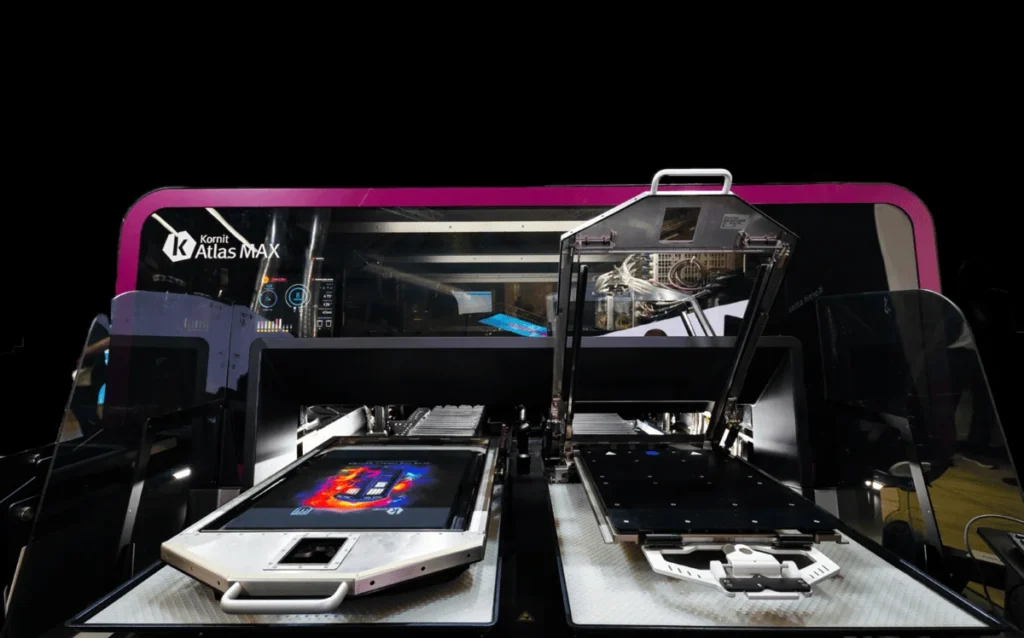
    To help the seller community prepare effectively for the year-end sale season, FlashShip officially launches its Studio-Standard Test Print & Product Shooting Service, providing a complete, end-to-end solution from printing test samples to producing professional product photos and videos. This is not just an additional feature, but an essential part of FlashShip’s strategy to fully support sellers during a period in which every decision can directly impact revenue.

    The Year-End Sale Pressure and the Media Challenge for POD Sellers

    The year-end sale season especially the stretch from Black Friday to Christmas is widely regarded as the golden period of the POD industry. However, alongside the opportunities come significant pressures:

    • Preparation time is extremely tight, as dozens or even hundreds of new designs must be test-printed, color-checked, and evaluated for print quality.
    • E-commerce platforms increasingly prioritize real product photos and real videos to assess product credibility and reduce customer complaints.
    • Click-through rates (CTR) and conversion rates have become a fiercely competitive battleground, as customers are constantly surrounded by ads from countless brands.
    • Advertising costs rise sharply during peak season, forcing sellers to optimize every element of their content especially product images and videos.

    In this context, having a high-quality media set accurate in color, true to the fabric texture, visually appealing, and capable of conveying the essence of the design becomes a critical factor that helps a product stand out among thousands of options. However, not every seller has the time, equipment, or skills to handle test printing, create proper setups, adjust lighting, and produce photos or videos at a professional standard.

    FlashShip’s Studio-Standard Test Print & Product Shooting Service was created to address these exact challenges.

    FlashShip’s Test Print & Product Shooting Service: Optimized From Workflow to Quality

    FlashShip developed this service with a simple philosophy: sellers only need to send their design files everything else is handled by FlashShip’s operations team and professional studio.

    Save Time and Eliminate the Complexity of Self Test-Printing

    For many sellers especially during peak season self test-printing becomes a significant burden. From preparing files, adjusting dimensions, and managing color correction to operating the printer, every step consumes valuable time and carries the risk of errors.

    With FlashShip’s service, this entire workflow is optimized:

    • Designs are test-printed on the same standard printing system used for real customer orders.
    • Colors are calibrated according to FlashShip’s production standards, ensuring the test print closely matches the final fulfilled product.
    • Sellers no longer need to spend time on technical tasks, troubleshoot printing errors, or worry about additional costs caused by failed tests.

    During the year-end sale season, when every day represents a new revenue opportunity, shortening preparation time becomes a major competitive advantage.

    Studio-Grade Media: Clear, Bright, and True to the Product

    In reality, a beautiful design alone is not enough to drive sales if the product images fail to convey that value. Customers only see what appears on their screens: lighting, color accuracy, garment form, fabric texture, and how the design actually looks on the product.

    FlashShip’s shooting service is built to strict studio standards:

    • Lighting is controlled and consistent, minimizing harsh shadows and color distortion.
    • Backgrounds are selected to match various styles from minimalist and modern to festive or lifestyle-oriented.
    • Images clearly showcase the garment’s form, print placement, detail sharpness, and overall color representation.
    • Videos focus on close-up angles that highlight fabric texture, print coverage, and the look and feel when the product is worn or handled.

    The resulting media is created to help customers see the “real product,” not just a mockup. This significantly increases trust and sets sellers apart from listings that rely solely on simulated or digitally generated imagery.

    Optimize Holiday Campaign Performance: Real Media Boosts CTR and Conversion

    Advertising platforms and e-commerce marketplaces increasingly prioritize authentic content. In practice, product photos and videos captured from real items typically deliver:

    • Higher click-through rates compared to mockups or digitally rendered images.
    • Better conversion rates because customers trust the authenticity and quality of the product.
    • Fewer complaints, refunds, and negative reviews, as customer expectations align more closely with what they actually receive.

    With the advantage of media produced directly from FlashShip’s garment blanks and printing lines, sellers gain an additional layer of quality assurance. What customers see in the photos and videos closely matches the product that arrives at their doorstep, enhancing their shopping experience and strengthening the seller’s brand credibility.

    FlashShip-Speed Efficiency: Prioritized Media Processing During Peak Season

    Another key strength of this service is its speed. FlashShip understands that a one-day delay in media production means a one-day delay in bringing a product to market and during peak season, that can cost sellers valuable opportunities.

    For this reason, the Test Print & Product Shooting Service is designed with a priority workflow:

    • Test print requests are received and processed promptly.
    • The shooting and post-production process is optimized to minimize turnaround time.
    • Sellers receive their completed media sets early, allowing them to launch ad campaigns, update listings, or introduce new collections without delay.

    This consistency in processing speed enables sellers to plan more effectively, from the moment they submit their design files to the moment they begin running campaigns.

    Helping Sellers Focus on Selling Instead of Getting Lost in Preparation Work

    One of the core values of this service lies in the fact that FlashShip enables sellers to return to their most essential role: building strategy and driving sales.

    Instead of breaking their time into dozens of technical and operational tasks, sellers can:

    • Focus on developing seasonal, event-based, or niche-specific design concepts.
    • Optimize ad content, short-form video scripts, and brand messaging.
    • Monitor and adjust advertising campaigns based on real performance data.
    • Build long-term brand equity instead of getting stuck in small, time-consuming tasks.

    With the Test Print & Product Shooting Service, FlashShip acts as a behind-the-scenes operations partner, ensuring that all foundational product and media assets are prepared carefully, consistently, and on schedule.

    Limited Slots and Media Support Incentives for Early Registrations

    Due to the nature of the year-end peak season, the volume of test print and product shooting requests increases significantly. To maintain service quality and processing speed, FlashShip is offering a limited number of slots for the Test Print & Product Shooting Service during this period.

    Sellers who register early will benefit from:

    • Priority scheduling for test printing and product shooting.
    • Receiving their media on time or even earlier than expected crucial for late-Q4 marketing campaigns.
    • Opportunities to receive free media support or significant discounts during the service launch period.

    This policy is designed to give early-prepared sellers the best possible advantage, allowing them to stay ahead of the market and fully capture revenue opportunities in the year-end sale season.

    FlashShip as a Trusted Operational Partner for POD Sellers

    The Test Print & Product Shooting Service is not an isolated initiative, but part of the broader service ecosystem FlashShip is building for the POD seller community.

    Across past sale seasons, FlashShip has been recognized for:

    • A stable, high-speed printing and fulfillment system.
    • Transparent order processing with clearly defined operational metrics.
    • High-quality garment blanks that meet the strict expectations of U.S. customers.
    • A support team that is always ready to communicate, assist, and provide solutions for sellers.

    The addition of the studio-grade Test Print & Product Shooting Service reflects FlashShip’s clear direction: not merely functioning as a fulfillment provider, but becoming a long-term partner that supports sellers throughout their entire business journey from design ideation to final product and marketing execution.

    In the year-end revenue race, having a good product, a reasonable price, and the right strategy are all important. However, these factors only truly generate impact when they are communicated through compelling images and videos.

    FlashShip’s Studio-Standard Test Print & Product Shooting Service was launched with a clear objective: to help sellers shorten their preparation time, elevate media quality, and strengthen their competitiveness on e-commerce platforms during the peak season.

    Sellers who are interested can contact FlashShip directly to reserve a slot and receive detailed consultation on the workflow, turnaround time, and media support policy available during the service launch period. Slots during peak season are always limited, and early preparation is often the deciding factor between merely participating in the sale season and truly breaking through in revenue.

    Registration link: https://tinyurl.com/intestspao


  • Why Does DTG Printing Deliver Sharper, More Detailed Image Quality?

    Why Does DTG Printing Deliver Sharper, More Detailed Image Quality?

    DTG (Direct to Garment) printing is becoming the most preferred printing technology in the POD industry thanks to its ability to reproduce images with exceptional sharpness, smooth color transitions, and high realism. As U.S. customers increasingly demand better print quality, understanding why DTG stands out and how to optimize your designs for this technology is the key for POD sellers to increase conversion rates, reduce refunds, and build a long-term, trustworthy brand.

    DTG Printing

    What Is DTG Technology?

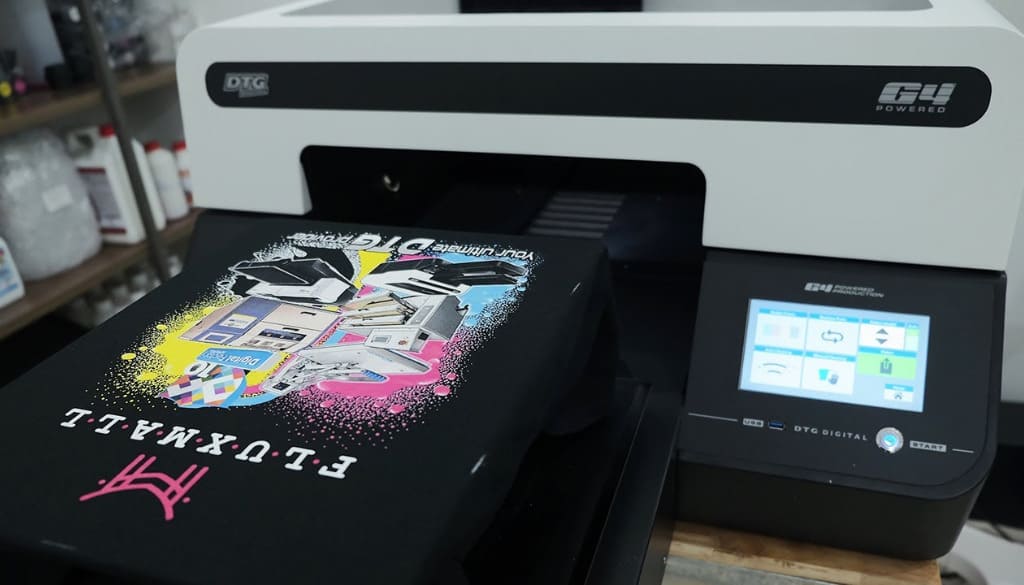
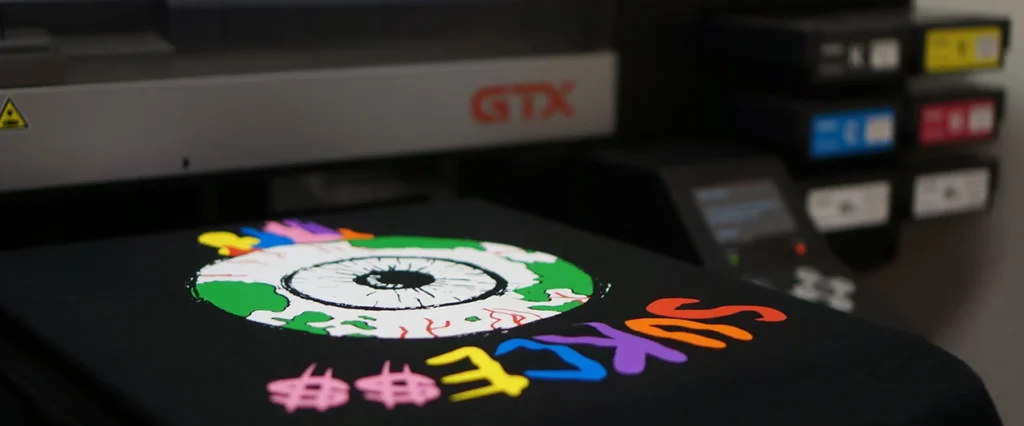
    DTG (Direct to Garment) is a printing method that uses specialized digital inkjet technology to spray ink directly onto the fabric surface.

    Imagine the color printer in your office except instead of printing on paper, it prints on a T-shirt, and instead of standard office ink, it uses eco-friendly, water-based ink formulated specifically to bond with cotton fibers.

    The basic DTG workflow includes:

    1. Fabric Pre-Treatment: The shirt is sprayed with a special solution that helps the fibers absorb ink better, prevents bleeding, and enhances color vibrancy.
    2. Digital Printing: The printhead moves back and forth, spraying ultra-fine micro-droplets of ink using the CMYK color system (plus white ink for dark garments) to recreate the artwork.
    3. Heat Curing: The printed shirt is placed in a heat press or industrial dryer to cure the ink, ensuring it bonds firmly with the fabric and achieves long-lasting wash durability.

    Unlike screen printing (which requires making screens) or DTF (which prints onto a film before transfer), DTG prints directly onto the garment. This “direct” characteristic is the key to the superior sharpness and detail we will explore below.

    6 Reasons Why DTG Prints Are Sharper Than Other Technologies

    DTG Printing

    In the race for print quality within the POD market, Direct-to-Garment (DTG) consistently holds the top position for realism and sharpness. DTG is far more than simply “printing on a shirt” it is a precise combination of chemistry, mechanical engineering, and advanced image-processing software. Below are the six technical factors that allow DTG to outperform other printing methods in terms of clarity and detail.

    Exceptional Ability to Reproduce Fine Details

    DTG’s greatest strength lies in its ultra-precise digital printheads, capable of reaching up to 1200 dpi. Unlike screen printing (limited by mesh density) or vinyl/decal printing (which struggles with very small cuts), DTG can perfectly render:

    • Ultra-thin outlines: Strokes as small as 1–2 pixels remain clean and continuous without breaking.
    • Small typography: Tiny quotes, signatures, or taglines under logos still appear sharp and easy to read.
    • Complex textures: Challenging effects such as realistic fur, glow lighting, smoke, and mist are vividly reproduced thanks to DTG’s precise micro-ink control.
    • Layered compositions: For multi-layer Fantasy or Anime designs, DTG separates layers clearly, creating visual depth that heat-transfer methods cannot achieve.

    Wide Color Range – Smooth Gradients with No Banding

    One major frustration for sellers using DTF or screen printing is “banding” – visible striping in gradient areas. DTG eliminates this problem completely. Thanks to its direct color-blending technology, DTG produces ultra-smooth gradients with no harsh transitions between tones. This is especially important for top-selling niches such as pet portraits, family illustrations, and scenic artwork, where maintaining depth and 3D realism is essential.

    Ultra-Fine Ink Spraying Technology

    Modern DTG printers use micro-spray technology, ejecting millions of picoliter-sized ink droplets in a randomized dot matrix.

    • No jagged edges: The edges of the printed artwork appear smooth, completely eliminating the stair-step pixelation seen in older digital printing methods.
    • High resolution: The dense pixel structure ensures the print looks naturally sharp both from afar and up close, without graininess or ink bleeding.

    Excellent for Full-Front and Large Artwork Printing

    With film-based technologies (such as DTF or decals), printing a large design (e.g., 12×16 inches) often creates a thick, uncomfortable “armor plate” on the wearer’s chest. In contrast, DTG allows sellers to freely create full-front designs, wide backgrounds, or large, detailed artworks while still maintaining breathability.

    Even with oversized prints, DTG ensures consistent sharpness across both the edges and the center of the artwork, without blurring, fading, or losing detail at the corners.

    How Does DTG Compare to DTF in Terms of Sharpness?

    DTF (Direct to Film) has recently become a strong competitor due to its lower cost. However, when it comes to sharpness and visual aesthetics, DTG and DTF serve very different purposes.

    Criteria DTG (Direct to Garment) DTF (Direct to Film)
    Image Foundation The image is reproduced by dyeing the fabric fibers. The image is a plastic (PET) film layer transferred onto the fabric.
    Detail Reproduction Extremely high. Excellent for fine details < 1mm, smoke effects, fog, and vintage textures. High, but very small details or thin lines may be lost during film peeling or may not adhere properly.
    Gradient Performance Smooth. Transitions from dark to light blend seamlessly into the shirt color. Decent. However, gradients that fade to transparency often show visible halftone dots, making the transition less smooth.
    Visual Aesthetic Looks “real” and premium similar to high-end boutique apparel. Looks glossy or plastic-like. Colors are vibrant but often feel artificial (sticker-like).
    Edge Sharpness Soft but precise edges that blend naturally into the fabric texture. Very crisp edges sometimes too sharp, creating a stiff visual appearance.

    Which Types of Designs Should Sellers Choose to Maximize DTG Quality? 

    DTG Printing

    Owning modern printing technology is only the necessary condition. To achieve a flawless final product, the quality of the input design file is the sufficient condition. In the POD industry, there is one unchanging rule: “Garbage in, garbage out.” If the source file is poor, the printed result will never look good.

    Below is a checklist of six golden factors every seller must master to optimize design files for DTG printing:

    Use High-Resolution Design Files – The “300 DPI Rule”

    Resolution is the critical factor that determines print sharpness.

    • The golden standard: Always design and export your artwork at 300 DPI (Dots Per Inch) at the actual print size (e.g., 12×16 inches).
    • Absolutely avoid: Downloading low-quality images (72 DPI) from the internet and upscaling them. This only increases the fake file size without adding real detail, resulting in prints that look pixelated and blurry.
    • Pro tip: Work with the correct artboard size from the beginning. The sharper the original file, the more data the DTG printer has to accurately reproduce the artwork.

    Avoid Extremely Thin Strokes

    Although DTG is well-known for handling fine detail, ink and fabric fibers still have physical limitations.

    • The risk: Strokes thinner than 1 pixel may not provide enough surface area for ink adhesion, causing them to disappear or appear faint after pre-treatment.
    • The solution: Ensure that all linework and small text have a minimum thickness of 1.5px–2px. This not only improves print clarity but also enhances long-term durability after multiple washes.

    Prioritize PNG with Transparent Background or High-Quality TIFF 

    The file format directly affects how the printer processes the background.

    • PNG (Portable Network Graphics): This is the most commonly used format in POD. Always use PNG 24-bit or 32-bit to preserve a transparent background. This is crucial for achieving smooth smoke, fog, glow, or shadow effects that blend naturally into the shirt color.
    • TIFF: If your design file is large and you need to preserve every bit of color data, TIFF is a professional, high-fidelity option.

    Increase Color Contrast

    Computer screens emit light (RGB), while T-shirts absorb light (CMYK). This means printed designs often appear slightly darker or more muted than what you see on screen.

    • Technique: Before exporting your file, “compensate” by increasing Saturation and Contrast by about 10–15%.
    • Effect: This is especially useful for printing on dark garments (black, navy). It helps the print “pop,” appear more vibrant, and prevents the artwork from blending into the fabric background.

    Choose the Right Garment Blank – The “Foundation” Factor

    DTG works based on ink absorption into fabric fibers. Therefore, the fabric material determines 50% of the final print quality.

    • Top Priority: 100% Cotton Natural cotton fibers absorb water-based DTG ink best, producing the most accurate and vibrant colors.
    • Ring-Spun Cotton: A premium type of cotton with a smoother, softer surface and minimal lint. The flatter the fabric surface, the sharper the print.
    • FlashShip Recommendations: To optimize both profit margin and print quality, sellers should consider:
      • Bella+Canvas 3001: Extremely smooth surface; exceptional DTG results.
      • Gildan 64000 (Softstyle): A budget-friendly option that still delivers good DTG quality.
      • Comfort Colors 1717: Thick, vintage-style garment, currently a hot trend, with excellent DTG ink absorption.

    Avoid “Overcrowded” Designs – Make Use of Negative Space

    Do not try to cram too many elements into a small print area.

    • The problem: A large, fully ink-covered (solid block) design can feel thick, heavy, and suffocating when worn creating an “armor plate” effect.
    • The solution: Make intentional use of negative space the unprinted areas that reveal the garment’s natural fabric color. This not only makes the design look cleaner, more artistic, and visually breathable, but also keeps the shirt softer, reduces ink usage, and lowers printing costs (if the print provider charges based on ink volume).

    In an increasingly competitive POD market where U.S. customers place strong emphasis on product experience choosing a high-quality printing technology like DTG is no longer an “optional upgrade”; it has become a mandatory standard. DTG delivers sharp prints, smooth details, high realism, and excellent color retention all of which directly impact 5-star review rates, refund rates, and seller profit margins.

    If you want to optimize your cotton product lineup, elevate your print quality to brand standards, or need design guidance tailored for DTG, the FlashShip team is always ready to support you. Contact our hotline at (+84) 943 024 337 for detailed consultation.