Tag: Ecommerce Fulfillment

  • What advantages does multi-line production fulfillment offer to sellers?

    What advantages does multi-line production fulfillment offer to sellers?

    In an increasingly competitive Print-on-Demand market, fulfillment is no longer just about printing and shipping it has become a core factor that determines a seller’s ability to scale and maintain profitability. One of the standout models in 2026 is multi-line production fulfillment, a solution that optimizes order processing speed, reduces the risk of overload, and enhances operational flexibility. So, what is multi-line production fulfillment, and why is it considered a key competitive advantage for POD sellers on platforms like Etsy, TikTok Shop, and Amazon? This article will give you a complete overview and show you how to leverage this model for sustainable scaling.
    production fulfillment

    What is Multi-Line Production Fulfillment?

    In the context of cross-border eCommerce in 2026 where standards are becoming increasingly stringent the concept of multi-line production fulfillment is no longer a luxury term but a survival standard for any POD business aiming for sustainable growth.

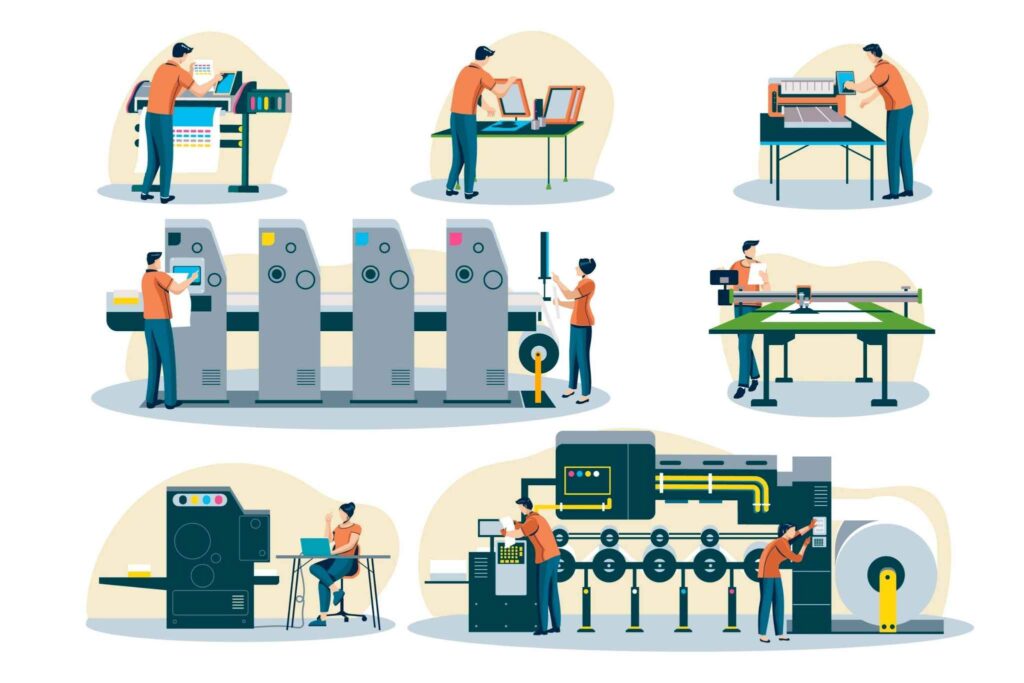
    At its core, multi-line production fulfillment is an industrial-scale operational ecosystem in which a fulfillment provider establishes and activates multiple production lines running in parallel. These lines are flexibly structured and allocated across four core dimensions:

    • Multiple lines using the same technology: Instead of operating just one or two machines, the facility runs dozens of high-end DTG printers in parallel. When order volume surges, these lines share the workload, distributing pressure to maintain consistent speed.
    • Diverse printing technologies: A comprehensive system incorporates multiple technologies to serve different product niches. This includes DTG (premium, soft-hand feel embedded into fabric), DTF (cost-optimized with Basic DTF or Standard DTF flows), high-resolution UV printing for acrylic/custom shapes, laser engraving for wood products, and sublimation for all-over print items, tote bags, and home decor.
    • Multiple geographic locations: Production infrastructure is not confined to a single location but strategically distributed across key logistics hubs (e.g., US East, US West, or EU hubs).
    • Integrated matrix structure: The seamless combination of all these elements forms a large-scale production network, automated and intelligently orchestrated through advanced API systems.

    A “world of difference” compared to the traditional model

    To make it easier to visualize, the difference between a traditional printing provider (single-line or single-factory model) and multi-line fulfillment can be compared to transportation infrastructure:

    • Single-line (Single-route model): When orders come in, everything must line up and wait in sequence. Even a minor issue such as a clogged printhead, staff absence, or running out of blank apparel can immediately bring the entire operation to a halt. The inevitable result is production bottlenecks, SLA violations, and delayed tracking updates.
    • Multi-line (Multi-route model): In this model, the flow of orders is continuous, with built-in redundancy. If one production line goes down for maintenance, the system instantly reroutes orders to backup lines. With multiple “lanes” available, there is no risk of supply chain disruption.

    Thanks to this structure, multi-line fulfillment enables intelligent order allocation. The system automatically routes orders to the facility closest to the customer’s location and selects the most suitable production line based on the defined pricing strategy. As a result, businesses can eliminate production bottlenecks, optimize costs, and maximize order fulfillment speed.

    Advantage #1: Reducing the Risk of Peak-Season Overload

    Anyone who has experienced peak seasons like Q4 sales, Black Friday, or the surge of early-year holidays understands the nightmare of “production overload.” When order volume increases by 10x or even 50x compared to normal days, single-line printing facilities can quickly collapse.

    Shortages of blank apparel (especially popular items like Gildan G5000 women’s t-shirts or seasonal hoodies and sweatshirts), overworked machines leading to breakdowns, and exhausted staff can push production times from 2–3 days up to 7–10 days.

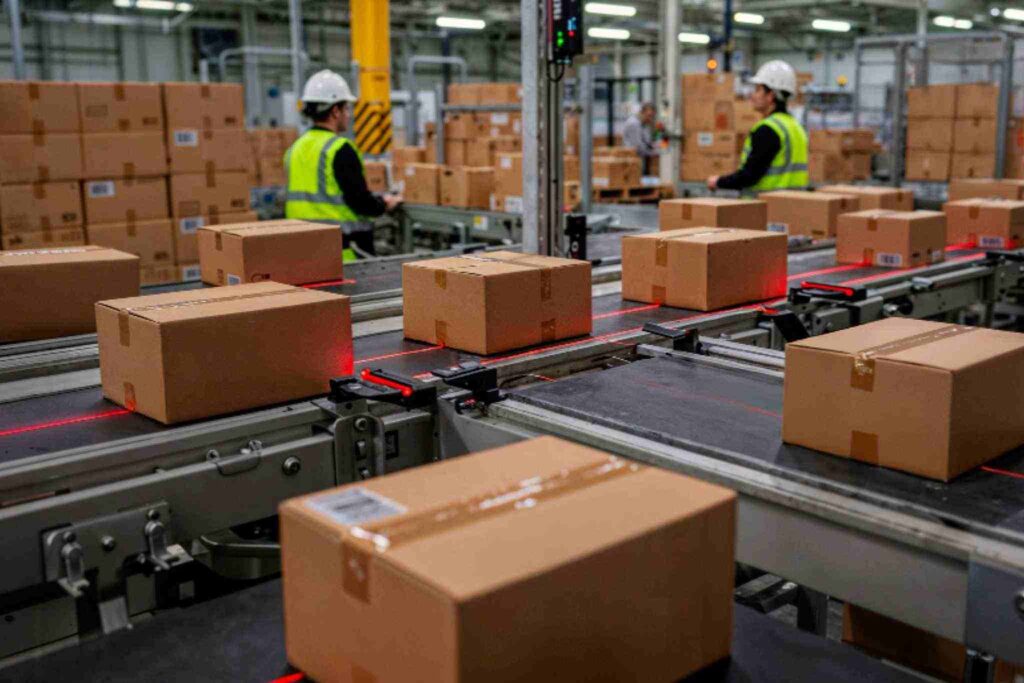
    A multi-line system is designed to solve this problem at its core. With intelligent allocation, massive order volumes are divided and distributed across multiple production lines, ensuring smooth and consistent processing.

    Moreover, a strong multi-line fulfillment partner can maintain continuous operations even during extended Asian holidays like Lunar New Year thanks to large-scale production facilities based in the U.S. This ensures your order flow is never interrupted, allowing you to fully capture peak-season revenue while competitors are forced to pause their ads due to factory shutdowns.

    Advantage #2: Accelerating Ad Scaling Speed

    Scaling is the golden moment every POD seller strives for. When you hit a winning campaign, increasing your ad budget to thousands of dollars per day becomes completely normal. However, the speed of ad scaling is directly proportional to operational pressure.

    If your backend (order processing system) cannot keep up with your frontend growth, you are essentially “burning your own house down.” Orders surge, but production can’t keep up, tracking numbers are delayed, and late delivery rates spike. The immediate consequences are customer complaints, one-star reviews, and rising dispute/chargeback rates. Ultimately, your payment gateways (such as PayPal, Stripe) or ad accounts may get restricted or even suspended.

    This is especially critical with the rapid rise of TikTok Shop US, where strict SLA requirements demand order processing within just 2 business days a major challenge for many sellers.

    With multi-line fulfillment, these concerns are eliminated. A large-scale production infrastructure allows the system to flexibly increase capacity, redistribute workloads to available lines, and handle sudden spikes in order volume. Production time is minimized, and tracking numbers are generated quickly. Meeting strict SLA standards on platforms like TikTok Shop is no longer a burden allowing you to confidently scale ads 10x or even 20x while keeping your accounts healthy and cash flow moving efficiently.

    Advantage #3: Flexible Technology & Cost Optimization

    One of the biggest mistakes sellers make is applying the same cost standard to every product. Price-sensitive customers don’t require premium print quality, while high-end buyers especially those purchasing gifts for occasions like Valentine’s Day or anniversaries are willing to pay more for flawless results. A rigid, single-line production approach causes sellers to lose their competitive edge either on pricing or product quality.

    Multi-line fulfillment gives sellers full control to optimize margins for each product niche:

    • Maximize profits with entry-level products: Want to launch simple t-shirt designs to attract traffic? Route these orders to a cost-optimized production line. The significantly lower base cost allows you to set highly competitive prices, outperform competitors on marketplaces while maintaining your desired profit margins.
    • Build a premium brand with high-end products: For customers ordering complex designs or special print placements (e.g., sleeve prints), route them to DTG production lines. Powered by advanced machines like Kornit Apollo, these lines deliver pixel-perfect prints, vibrant colors embedded smoothly into the fabric, and long-lasting durability. This superior quality helps maximize Customer Lifetime Value (LTV), encouraging repeat purchases.

    Beyond apparel, large-scale fulfillment systems also integrate production lines for niche products making it easy to build upsell and cross-sell funnels. Customers buying t-shirts can be offered complementary products such as tote bags, mugs, home decor items, keychains, or unique gift products like glass-acrylic ornaments and custom shape standees.

    With this approach, you can build a diversified eCommerce “ecosystem” with just a single operational partner.

    Advantage #4: Backup & System Reliability

    In supply chain operations, Murphy’s Law always applies: “Anything that can go wrong will go wrong.” Issues such as defective ink, clogged printheads, localized power outages, or sudden shortages of specific blanks are constant risks.

    For a single-line printing provider, a single machine failure can freeze the entire operation. Sellers are left helpless watching orders get canceled while the system continues to report delays.

    The invaluable advantage of a multi-line system lies in its robust backup mechanism. If one production line goes down for maintenance, the automated system immediately reroutes orders to backup lines, ensuring that production timelines are not delayed even by an hour. This risk distribution is the foundation for maintaining an exceptionally low error rate.

    Moreover, reputable fulfillment partners often provide sample printing and free product photography support. This allows sellers to verify quality across different production lines and finalize marketing assets before scaling campaigns ensuring maximum safety for their investment.

    Advantage #5: Aligning with Fulfillment Trends in 2026
    production fulfillment

    The Print-on-Demand market in 2026 no longer has room for shortcuts. New challenges such as stricter intellectual property (IP and trademark) enforcement, the rise of sustainable consumption, and increasingly high expectations from U.S. buyers are reshaping the entire landscape.

    Sellers can no longer rely on “guerrilla-style” tactics with unreliable printing providers. Building a transparent supply chain with US-based production and multi-line capabilities is the only viable path to a sustainable POD business.

    This approach not only ensures speed and quality, but also delivers flexibility the ultimate advantage for adapting to constant changes in eCommerce platform algorithms.

    Multi-line production fulfillment is not just an operational upgrade it represents a fundamental shift in the business mindset of modern POD sellers. As the market increasingly prioritizes delivery speed, operational stability, and customer experience, relying on a single production line becomes a major barrier to scaling.

    In contrast, a multi-line fulfillment system empowers sellers to stay in control under all circumstances from handling large order volumes and optimizing costs for each product, to maintaining consistent timelines even during unexpected disruptions. It also provides the foundation for confidently executing multiple strategies at once, such as testing new products, expanding into new niches, and increasing ad spend without the risk of system breakdowns.

    In the long run, competitive advantage will not come from how many designs you have, but from how strong your backend system is in supporting operations and scaling. Therefore, choosing a multi-line production fulfillment model is the key for POD sellers to achieve sustainable growth and go further in 2026 and beyond.
  • Why is POD fulfillment not just a printing provider, but a strategic operations partner?

    Why is POD fulfillment not just a printing provider, but a strategic operations partner?

    In the highly competitive eCommerce landscape of 2026, fulfillment is no longer just about “printing and shipping.” For POD sellers, fulfillment is increasingly becoming a critical factor that directly impacts scalability, customer experience, and long-term profitability. However, a common reality is that many sellers still perceive fulfillment as merely an “outsourced printing service” rather than a strategic operations partner. This difference in mindset marks the boundary between a store that achieves sustainable growth and one that constantly struggles with delayed orders, product errors, returns, and unexpected costs.

    So, what makes POD fulfillment more than just a printing provider? And why is choosing the right fulfillment partner even more important than selecting products or running ads? 

    fulfillment POD.

    Why do many sellers still view fulfillment as just a “printing service”?

    To understand why this mindset needs to change, we must look at its root causes. For many years, the Print-on-Demand (POD) model has been promoted as a “low-investment, no-operations” business. This has unintentionally led many sellers to develop a misleading perception of the production stage and its true role.

    Obsessed with base cost and the illusion of profit margins

    When entering the industry, most sellers especially beginners tend to focus 100% on the frontend: how to optimize advertising costs (CPA) and how to increase conversion rates (CR). When looking at their P&L (Profit and Loss statement), the easiest variable to cut, in their eyes, is the base cost.

    They search for printing providers offering slightly cheaper t-shirts or hoodies sometimes just a few cents lower—treating fulfillment as nothing more than a place to “receive files and print.” However, they often overlook the massive hidden costs that come with these “low-cost printers”: printing errors, incorrect colors, peeling after just one wash, and excessively long shipping times. The small difference of a few cents in base cost becomes meaningless when you have to issue refunds or worse, face payment gateway restrictions due to a high dispute rate.

    Fragmentation in supply chain knowledge

    Many sellers come from backgrounds in marketing, advertising, or design. Their strengths lie in identifying trends and creating designs that resonate with market demand (for example, major national events like America 250 or holidays such as St. Patrick’s Day and Valentine’s Day).

    However, they often lack hands-on experience in supply chain management, quality control (QC), and international logistics. Without a deep understanding of backend operations, they tend to downplay the role of fulfillment treating it as merely a “production tool” rather than a comprehensive operational ecosystem.

    The “Hit-and-Run” mindset

    A portion of sellers still operate with a short-term, opportunistic approach engaging in copyright or trademark infringement, or targeting high-risk niches. With this mindset, they have little interest in building a brand or optimizing Customer Lifetime Value (LTV).

    As a result, they don’t seek a long-term partner. Instead, they look for a printing provider willing to “turn a blind eye,” produce anything, and ship it out as quickly as possible. However, with increasingly strict and frequently updated platform policies, this path is becoming narrower and less sustainable.

    The core difference between a “Vendor” and an “Operational Partner”

    To scale from a few thousand dollars in revenue to tens or even hundreds of thousands per month, sellers must clearly understand the distinction between a Vendor (supplier/printing provider) and an Operational Partner.

    First, in terms of commitment and risk-sharing.

    A traditional printing provider operates on a simple transactional basis “you pay, we print.” You submit the file, and they print it. Even if your file has low resolution or incorrect color settings, they will still proceed and ship the product. If customers complain, the seller bears the full responsibility.

    In contrast, a strategic operational partner acts as a protective filter. Their system and QC team will immediately flag any issues with the design file and proactively assist in making adjustments to ensure the final product meets the highest quality standards. They also share risk with you through clear warranty policies, as well as transparent resend/refund processes when errors originate from the production side.

    Second, in terms of technology and automation capabilities.

    Traditional printing providers often handle orders manually through Excel files or email with unclear tracking processes. In contrast, an operational partner offers a complete technology ecosystem. From API integrations directly connected to platforms like Shopify, WooCommerce, and Etsy, to more demanding marketplaces such as TikTok Shop US, everything is streamlined. Order synchronization, tracking number updates, and wallet management are all processed in real time with full automation.

    Third, in terms of product development (R&D).

    A traditional printing provider typically offers only a limited range of basic blanks, with little to no change over time. In contrast, a strategic partner continuously researches the market and updates its catalog with high-margin niche products and the latest trends.

    Instead of focusing solely on t-shirts, they provide upsell and cross-sell solutions such as Custom Shape Standing (acrylic/wood standees), glass-acrylic ornaments, home decor, tote bags, and keychains. They understand that helping sellers expand their product offerings ultimately drives mutual revenue growth.

    How does POD fulfillment become a strategic operational partner?

    When you elevate your fulfillment provider to the level of a true “partner,” your entire business structure is strengthened by a solid operational backbone. Below is how a strategic partner like FlashShip integrates into and enhances your value chain:

    Providing a multi-tier production infrastructure to optimize costs for each niche

    A true partner does not force sellers to apply a single standard across all customer segments. FlashShip designs its production infrastructure to align with each seller’s pricing strategy. A typical example is the allocation of different production lines:

    • Basic DTF: Ideal for highly price-competitive campaigns, helping sellers minimize base costs while maintaining stable, acceptable print quality for low-cost products.
    • Standard DTF: The perfect balance between cost and quality, suitable for stores with long-term growth strategies ensuring customer satisfaction while maintaining healthy profit margins.
    • DTG Premium: Powered by high-end machines like Kornit Apollo, delivering retail-grade print quality with vibrant colors and a soft, embedded feel in the fabric. This is the key to selling higher-priced products and building a sustainable brand.

    The flexibility to choose between production lines allows sellers to optimize cash flow and position their brand more precisely than ever before.

    Solving the “SLA time constraint” challenge on demanding eCommerce platforms

    By 2026, the rise of TikTok Shop US and increasingly strict requirements from Amazon have made order processing time (SLA) within just 2 business days a “nightmare” for small-scale printers or China-based dropshipping suppliers.

    At this point, a strategic operational partner stands out by owning production facilities directly in the US. Localized manufacturing not only effectively solves TikTok Shop’s strict SLA requirements but also significantly shortens shipping times to just a few days delivering an experience as fast as Amazon Prime for your customers.

    Ready to support your team during peak seasons and holidays

    Q4 or periods of disruption like Lunar New Year (when many Asian factories shut down for extended holidays) are the ultimate tests of a partner’s capability. A typical printing provider may become overwhelmed, with order delays stretching for weeks.

    In contrast, a strategic partner operates continuously through holidays to ensure your business flow remains uninterrupted. They leverage data forecasting to pre-stock best-selling blanks (such as Gildan G5000L for women or popular hoodie/sweatshirt styles during colder seasons). This ensures that even when you scale ads to 1,000 or 5,000 orders per day, production can still run smoothly with an exceptionally low error rate.

    What can sellers achieve with the right fulfillment partner?

    fulfillment POD

    The results of a strong partnership are always measured by real, tangible metrics. By choosing the right fulfillment partner, POD sellers can unlock four game-changing advantages:

    Protecting your advertising accounts and payment gateways

    Dispute rates and chargebacks are the number one enemies of POD sellers. The main causes often stem from slow delivery times or poor product quality. With fast US-based production and advanced printing technology from a reliable operational partner, customer complaints can be minimized.

    As a result, payment platforms such as PayPal, Stripe, and Google Merchant Center will assess your account as more trustworthy significantly reducing the risk of fund holds or unexpected account suspensions.

    Maximizing Customer Lifetime Value (LTV)

    When a customer buys a St. Patrick’s Day t-shirt and receives it quickly with sharp prints and comfortable fabric there’s a high chance they will return to purchase more gifts for occasions like Easter, Mother’s Day, or America 250 from your store.

    Moreover, with guidance from your fulfillment partner, you can build effective cross-sell funnels: bundling a t-shirt with a matching tote bag, or upselling a keychain to increase your Average Order Value (AOV).

    Freeing up time to focus on core competencies

    Instead of waking up every morning to check faulty files, argue with printing providers, or handle customer complaints about lost shipments, sellers can delegate all these burdens to a reliable fulfillment system.

    This frees up valuable time for your team to focus on what truly matters: researching US buyer behavior, optimizing SEO strategies, creating content, and planning event-based marketing campaigns. Your frontline can concentrate on scaling and growth because your backend is already solid and dependable.

    Criteria for choosing a fulfillment partner worthy of being an “operational partner”

    It’s easy to say but with hundreds of fulfillment providers on the market, how do you choose the right one? Below is a set of key criteria to help sellers evaluate the true capability of a POD fulfillment system:

    • Production infrastructure in the target market: If your primary market is the U.S., your fulfillment provider must have US-based production facilities. This directly impacts shipping speed, compliance with eCommerce platform requirements, and reduces the risk of customs or border delays.
    • Diversity in printing technologies and pricing tiers: Does the provider offer multiple options? Are they capable of handling special print placements like sleeve prints to enhance design uniqueness?
    • A rich product ecosystem: Beyond apparel, can they supply high-margin niche products such as home decor, acrylic ornaments, or custom-shaped items?
    • Technology system (Tech & API): Is the management dashboard user-friendly? How seamless is multi-platform integration? How quickly are tracking numbers updated?
    • Transparency in SLA commitments and error rates: Request real data on average production time and reprint/error rates. A confident partner will openly share these metrics and provide clear compensation policies.
    • Hands-on customer support: Does the support team have a business mindset? Do they rely on generic template responses, or do they actively analyze issues and work with you to find solutions when problems arise? Are they willing to provide free samples so you can verify product quality and create marketing content yourself?

    In an increasingly competitive Print-on-Demand market, fulfillment is no longer just a “printing service” that processes orders it has become a strategic operational partner that directly impacts a seller’s growth speed and long-term sustainability. From ensuring product quality and optimizing delivery times to protecting account health and enhancing customer experience, every critical factor is closely tied to the capabilities of the fulfillment provider.

    Choosing the right POD fulfillment partner not only helps sellers minimize operational risks but also unlocks strong scaling opportunities across platforms like Amazon, Etsy, and TikTok Shop. On the other hand, a poor choice can disrupt the entire business system—no matter how strong your marketing strategy or product is.

    Therefore, instead of simply looking for the lowest-cost provider, POD sellers should prioritize fulfillment partners that offer true collaboration, operational transparency, and long-term support. This is the foundation for building a stable POD business, optimizing profitability, and achieving sustainable growth in 2026 and beyond.