
Understanding the value of your product in the Print on Demand (POD) business is not just a basic preparation step-it’s a strategic factor that determines whether your advertising truly connects with customers. An ad campaign is only effective when the viewer feels the meaning and emotion behind the product, not just its image or price.
This article will help you discover how to identify the true value of your POD product and turn it into an “emotional weapon” that captivates customers in every marketing campaign.

Understanding Your Product and Target Audience
Before spending a single dollar on advertising, the first thing every POD seller must do is understand their product and target audience. This is the foundation that determines whether any advertising strategy will be effective or not.
Understanding the True Value of Your POD Product
The value of a Print on Demand (POD) product doesn’t lie in the T-shirt or ceramic mug itself – it lies in the story and emotion it conveys. To advertise effectively, you must clearly define your USP (Unique Selling Point) – what makes your product truly stand out.
Ask yourself: What makes my product special?
- Uniqueness: A design that reflects individuality – something customers can’t find anywhere else.
- Emotional Value: Tied to a memory or a special occasion such as birthdays, Mother’s Day, or a meaningful gift expressing affection.
- Personalization: Allows customers to print their names, photos, or messages — transforming an ordinary item into a one-of-a-kind keepsake.
When you grasp these values, your advertising message will hit the emotional “sweet spot” of your audience, prompting faster buying decisions.
Defining Your Target Customer Persona
The biggest mistake is trying to sell to everyone. In the POD industry, your product only becomes appealing when it’s shown to the right audience. Start by researching and categorizing your potential niches:
- Emotional Niche: Customers searching for meaningful gifts for family, couples, or friends.
- Professional Niche: Buyers proud of their careers – nurses, teachers, engineers, soldiers, and more.
- Hobby Niche: Communities passionate about fishing, sports, pets, reading, or travel.
- Seasonal Niche: Shoppers who increase spending during holidays like Christmas, Halloween, and Valentine’s Day.
By analyzing each group’s behavior, search keywords, and purchasing habits, you can refine your ad targeting, reduce wasted budget, and achieve exceptional conversion rates.
Popular Advertising Platforms for POD
In reality, there’s no universal formula that works for every product. Instead, a smart POD seller must carefully analyze their goals, product characteristics, and budget to determine the most effective marketing channel. Below is a detailed breakdown of the most popular advertising platforms for POD sellers today.
Facebook Ads
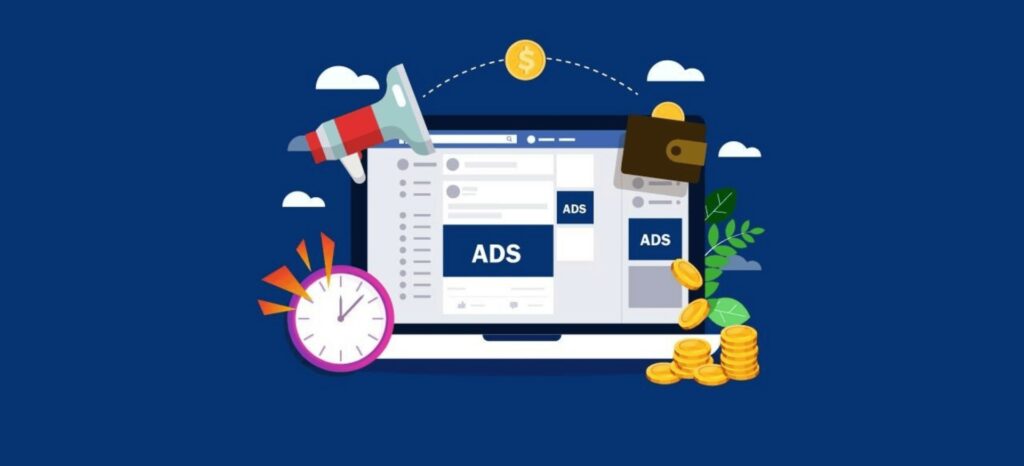
With its massive user base and advanced targeting capabilities, Facebook Ads remains one of the most powerful tools for the POD industry. The platform allows you to reach customers precisely based on their interests, behaviors, demographics, and even life events.
Ideal goals: Facebook Ads is best suited for generating quick sales, testing new designs through A/B testing, and is particularly strong in remarketing campaigns aimed at visitors who have already interacted with your store.
Effective ad formats:
- Single Image Ads: Simple, fast to set up, and perfect for quickly gauging market interest.
- Carousel Ads: Showcase a collection of products or tell a visual story through multiple images – ideal for displaying variations of a design.
- Video Ads: Build strong emotional connections through storytelling. Using mockup videos or user-generated content (UGC) can significantly boost conversion rates.
- Pro Tip:
Always use lifestyle mockups – product images placed in real-life contexts – instead of plain blanks. This helps customers better visualize the product, enhances emotional appeal, and naturally increases your click-through rate (CTR).
Google Ads
If Facebook Ads helps you create demand, then Google Ads helps you capture existing demand. This platform places your products right in front of users who are actively searching for them.
- Search Ads: Display text-based ads when users type in high-intent keywords such as “gift t-shirt for dad” or “custom printed mug.”
Shopping Ads: Show images, prices, and product names directly on search results, linking users straight to your product pages on platforms like Shopify or Etsy. - Keyword Strategy: Focus on long-tail keywords to reduce competition and increase accuracy.
For example, instead of targeting the broad term “t-shirt,” aim for more specific phrases like “t-shirt for Corgi dog lovers.”
TikTok Ads
Considered a “goldmine” for 2025, TikTok offers massive opportunities to reach a younger audience (ages 18–35) at a lower CPM (cost per thousand impressions) compared to other platforms. Its strength lies in short, engaging, and highly shareable videos.
- Effective Content: Unboxing clips, product transformation videos, and trend-based content are the most impactful formats.
- Recommended Strategy: Collaborate with content creators or micro-influencers (under 50,000 followers) to enhance credibility and authenticity. These partnerships not only build trust but also help your products gain stronger organic visibility.
Pinterest Ads
Pinterest isn’t just a social network – it’s a massive visual search engine where users actively seek inspiration and shopping ideas. This platform is a must-have if you sell visually appealing products such as canvas prints, posters, pillows, blankets, or home décor items. Optimize your images in a vertical 2:3 ratio and craft keyword-rich descriptions to attract the right audience. With consistent, eye-catching visuals and proper SEO optimization, Pinterest can become a long-term traffic and conversion channel for your POD business.
Email Marketing
Acquiring new customers is always more expensive than retaining existing ones — that’s why email marketing remains one of the most cost-effective strategies for POD sellers. Never overlook your list of past buyers or users who have interacted with your brand. Use automation platforms like Klaviyo or Omnisend to send new product updates, exclusive discount codes, and abandoned cart reminders. This approach helps increase repeat purchase rates, nurture brand loyalty, and build a sustainable community of long-term customers who keep coming back to your store.
The Process of Running Effective POD Ads

Below is a step-by-step roadmap to help you launch high-performing and sustainable POD advertising campaigns that drive real results.
Step 1: Market Research and Strategic Niche Selection
The foundation of a successful advertising campaign lies in choosing the right market. Before jumping into design, take time to analyze and identify a niche that has strong demand but manageable competition. Use powerful tools such as Google Trends, Insight Factory, or Etsy Rank to track what’s trending. For instance, during the year-end season (October–November), keywords related to “veterans’ gifts,” “Thanksgiving décor,” or “fall home decoration” see a significant surge in search volume. Tapping into the right market trend – or the “gold vein” – will give your campaign a strong head start.
Step 2: Create Emotionally Engaging Designs and “Speaking” Mockups
In POD advertising, visuals are your ultimate weapon, the deciding factor in whether users stop scrolling or keep going. A creative design that triggers emotion and is displayed through a professional mockup can reduce your cost per click (CPC) by 30–40%. Prioritize lifestyle mockups, showing real people interacting with your product in natural settings (such as family gatherings, couples, or friends). Ensure that your design text is readable, your colors are vibrant but harmonious (no more than three main tones), and your overall composition creates a strong visual impact that drives clicks and engagement.
Step 3: Build a High-Converting Landing Page
Your ads do only half the job – the other half depends on your landing page. A high-converting page must load quickly, have a user-friendly layout, and provide all the details needed for customers to make a purchase decision.
Essential elements include:
- An attention-grabbing headline with your main keyword.
- 3–5 lifestyle mockups showing the product from different angles.
- A detailed description of materials, printing quality, and delivery time.
- A clear call-to-action (CTA) button such as “Buy Now” or “Order Today.”
Don’t forget trust-building elements like customer reviews and ratings, as well as urgency triggers such as a countdown timer or “limited stock” notice to boost conversions.
Step 4: Set Up Ads and Allocate Budget Strategically
If you’re new to POD advertising, start small and strategic. Launch your initial campaign with a modest daily budget of $10–$30, testing 3–5 different designs to gauge performance. Closely monitor your key metrics during the first 24–48 hours, focusing on Click-Through Rate (CTR) and Add-to-Cart actions. Keep the ads that maintain a CTR above 2% and have the lowest CPC (Cost per Click). Once you identify the winners, begin scaling gradually – increase the budget by about 20–30% every two days to optimize performance without disrupting algorithm stability.
Step 5: Analyze Data and Continuously Optimize
Advertising is a process of constant testing and refinement. Always keep track of your most critical metric, ROAS (Return on Ad Spend), to assess the financial health of your campaign. Regularly perform A/B testing by experimenting with different headlines, visuals, and CTAs to discover what drives the best results. Finally, set up remarketing campaigns to re-engage visitors who viewed your products but didn’t complete their purchase. This strategy helps you convert interest into sales, maximizing your ad efficiency and building long-term profitability.
Common Mistakes in Running POD Ads
Print on Demand (POD) advertising holds enormous profit potential, but it can also become a financial trap for inexperienced sellers. Pouring money into ads without seeing results usually stems from fundamental yet critical mistakes. Recognizing and correcting these errors is the first step toward building a sustainable and high-performing advertising strategy.
Ignoring Niche Research and Customer Behavior
This is the most common and costly mistake. Many new sellers simply jump on trending designs without ever asking themselves, “Who is actually going to buy this?” They launch ads with vague targeting, resulting in high curiosity clicks but almost zero conversions.
The solution: Before spending a single dollar, build a detailed buyer persona. Ask key questions:
- How old are they?
- Where do they live?
- What are their interests or professions?
- Which social media platforms do they spend time on?
The better you understand your audience, the easier it becomes to craft ad messages that speak directly to their emotions and motivations, driving real engagement and sales.
Running Ads Without an Optimized Product Page
You can create an outstanding ad, but if it leads customers to a poorly optimized product listing, all your effort – and ad spend – will go to waste. A sales page with blurry images, vague or missing descriptions (about materials, sizes, or shipping), and no reviews will instantly destroy customer trust. Most visitors will leave within seconds.
Solution: Treat your product listing as your final salesperson. Invest time in writing compelling descriptions, uploading high-quality lifestyle mockups, and encouraging past buyers to leave reviews. A well-structured, professional landing page is what determines whether your ad spend turns into actual revenue or disappears into thin air.
Poor Control of Testing Budget
Another common mindset mistake is believing that “the more you test, the better.” Many new sellers spread their limited budget across 10–20 designs at once, making the data for each one too shallow to draw meaningful conclusions. As a result, they waste money without identifying any clear winning design.
Solution: Follow the strategy of “test less, but deeper.” Start with 3–5 of your most promising designs and allocate a focused budget to them. This approach gives you sufficient data – impressions, CTR, and CPC – to analyze accurately and identify the true “winning” design worth scaling.
Forgetting the “Goldmine” of Remarketing
Statistics show that most visitors leave a website without buying anything. Ignoring this audience means leaving huge profits on the table. Remarketing is the profit engine that brings these potential customers back to complete their purchase.
Solution: From day one, install tracking tools such as Facebook Pixel or Google Tag Manager. These tools allow you to build custom audiences, such as users who added products to their cart or viewed specific listings, and target them with personalized reminder ads that re-engage interest and drive conversions.
Focusing Only on Short-Term Revenue
The mindset of “as long as I get sales, I’m happy” is a dangerous trap. A campaign may generate plenty of orders, yet still be deeply unprofitable if your ad spend is too high. Failing to calculate your profit margin and ROAS (Return on Ad Spend) can quickly drain your budget without you even realizing it.
Solution: Treat your POD business like a financial equation, not just a creative pursuit. Regularly track the ratio between revenue and ad costs to ensure healthy margins. And don’t hesitate to pause a campaign – even if it’s generating sales – if it fails to meet your target profit threshold. Long-term growth only comes from profitable scalability, not short-lived wins.
Secrets to Running Effective POD Ads in 2025
The Print on Demand (POD) market in 2025 is more crowded and competitive than ever. To not only survive but truly thrive, sellers must adopt a comprehensive strategy – one that combines data-driven decision-making, creative storytelling, and operational excellence. Below are the key principles to help you optimize your advertising campaigns and dominate the POD market.
Stay Ahead of Trends with Seasonal Advertising
The POD market experiences explosive growth during major holidays and seasonal events. Occasions such as Valentine’s Day, Mother’s Day, Halloween, Christmas, and Veterans Day are all golden opportunities to drive significant revenue spikes. However, success only comes to those who plan ahead.
Strategy: Start planning and preparing your seasonal campaigns at least 30–45 days in advance. This window is crucial for researching trending niches, testing new designs, and refining your ad messaging.
For instance:
- Valentine’s Day campaigns should kick off by mid-December to capture early gift shoppers.
- Black Friday preparations should begin in early October to secure ad placement and dominate visibility before competitors enter the field.
Early preparation ensures your campaigns are optimized, your mockups polished, and your ads ready to convert when the shopping frenzy hits.
Build Unshakable Trust with UGC
In an era where consumers have become increasingly “immune” to overly polished ads, User-Generated Content (UGC) has emerged as the ultimate weapon. Authentic product review videos, unboxing photos, and real feedback from customers or small content creators can boost click-through rates (CTR) by 3–5 times compared to traditional advertising.
Action Step: Don’t hesitate to send sample products to your loyal customers or niche influencers and encourage them to share genuine reviews. This authenticity builds trust, creates social proof, and drives stronger purchase decisions than any scripted ad ever could.
Make Data-Driven Decisions
Gut feeling is the enemy of efficiency. Every element in your ad – from visuals to copy – must be validated through data. Continuously run A/B tests to compare 2–3 variations of headlines, images, or call-to-action (CTA) buttons, and identify the combination that performs best.
At the same time, ensure tracking tools like Meta Pixel and Google Analytics are properly installed. These tools allow you to analyze user behavior in detail, from clicks to add-to-cart actions to completed purchases, giving you the insights needed to optimize performance and maximize ROI.
Optimize Logistics
A brilliant ad campaign can collapse entirely if operations and shipping fall behind. A poor post-purchase experience not only kills repeat business but also generates negative reviews that damage your brand long term. A fast, reliable fulfillment partner is essential. Ensuring rapid production and delivery, along with a transparent order-tracking system, allows you to scale your ad budget confidently without worrying about operational bottlenecks.
Put Emotion at the Center of Design
Ultimately, in POD, the product itself is your best advertisement. A successful design tells a story and forges an emotional connection. Focus on creating items that make buyers feel, “This was made for me”- whether through a meaningful quote, a symbol tied to a passion, or imagery that evokes family love or gratitude for a profession. Designs that touch the heart generate the strongest, most natural word-of-mouth.
Start today by analyzing your products carefully, understanding their core value, and precisely defining your target audience before launching any ad campaign. Every POD product carries its own story, and only when you fully grasp that story can your advertising truly resonate with buyers.
FlashShip is always by your side throughout your POD business journey, from providing premium print blanks and advanced production technology, to delivering within 1 business day, shipping domestically across the U.S. in as fast as 2 days, and offering a smart fulfillment system that makes order management and tracking effortless.
We are not just a fulfillment provider, but a strategic partner dedicated to helping POD sellers optimize operations, improve advertising performance, and scale sustainably.
If you need detailed consultation about products, designs, or account registration, contact us via hotline (+84) 943 024 337 or visit FlashShip.net for professional and dedicated support.
Leave a Reply