Author: Phuong Hoai

  • How to Place a Logo on a T-Shirt Properly

    How to Place a Logo on a T-Shirt Properly

    The placement of a logo on a T-shirt is not just a small design detail, it’s a strategic factor that determines whether your product truly stands out and stays memorable in the customer’s mind. A precisely positioned, balanced, and sharp logo reflects the professionalism of the seller while elevating the overall brand value. Conversely, even a slight misalignment or printing error can make the entire design look unbalanced and less appealing. This article will help you master the principles of proper logo placement, choose the right proportions and dimensions, and turn every T-shirt into a product that carries your brand’s unique identity.
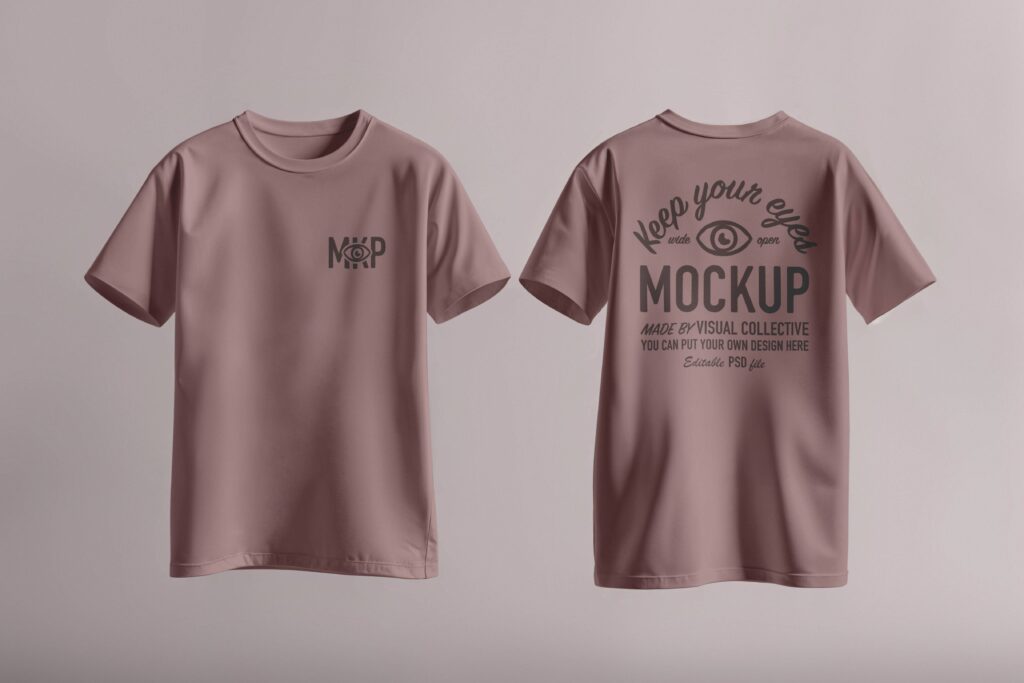
    Logo T-Shirts

    Why is placing the logo in the right position on a T-shirt so important?

    Before diving into technical specifications, it’s essential to understand why this matters so much. This isn’t just a random design rule, it’s built on proven principles of design balance and marketing psychology that directly impact how customers perceive and remember your brand.

    • Building Professionalism and Trust: Imagine receiving two T-shirts. One has its logo neatly and evenly placed on the familiar left chest area, while the other has its logo positioned too low near the stomach or too high near the shoulder. Instantly, the second shirt gives off the impression of a defective or carelessly made product. The logo’s position serves as the first visual cue of your brand’s precision and quality.
    • Enhancing Aesthetics and Visual Balance: The human body isn’t a flat surface, which means logo placement must be calculated so it appears natural and balanced when worn. Standard logo positions (like the left chest) have been established over decades because they are “golden spots” for the eye, visually pleasing, easy to notice, and harmonious with the overall garment.
    • Strengthening Brand Recognition: A logo placed in a visible and familiar position helps customers remember your brand more easily. When your customer wears that shirt in public, it becomes a piece of free advertising. Conversely, if the logo is placed in an awkward or hidden spot, you miss out on this valuable marketing opportunity.
    • Influencing the Perceived Value of the Product: A product that shows attention to even the smallest details, such as logo positioning, conveys a sense of quality and craftsmanship. Customers are often willing to pay more for a product that reflects professionalism and genuine care from the seller.

    In short, proper logo placement isn’t optional, it’s a must for any serious POD seller aiming to build a sustainable and respected brand.

    Common Logo Placement Positions on T-Shirts

    Each logo placement creates a different visual impression and serves a distinct purpose. POD sellers need to understand the meaning, advantages, disadvantages, and practical applications of each position to choose the most suitable one for their product.

    Left Chest
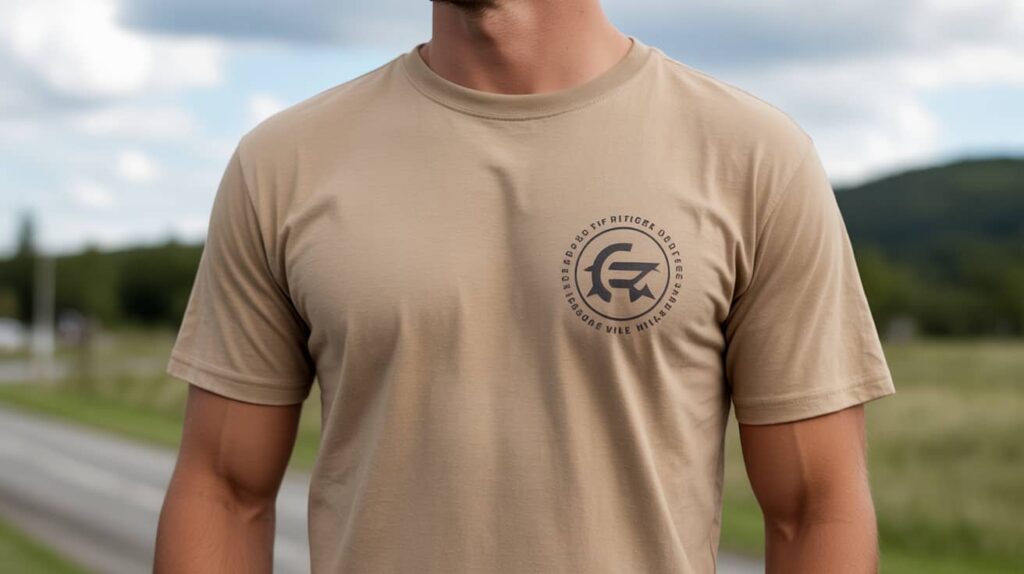
    Left Chest

    This is the most classic and safest placement in the world of T-shirt printing. When people think of a logo on a shirt, this is almost always the position that comes to mind. The logo typically measures between 8–10 cm, placed neatly at heart level and slightly shifted to the left of the shirt’s center line.

    Advantages: It creates a refined, professional, and well-balanced look. The left chest position is highly recognizable yet not too flashy, perfect for brand-building (POD branding), company uniforms, or formal event apparel. It conveys trust, professionalism, and credibility both for the wearer and the brand.

    Disadvantages: The limited space makes it challenging to display logos with complex designs, multiple elements, or long taglines. This placement works best for simple, clean icon or wordmark logos that can be easily recognized at a glance.

    Center Chest

    If you want your design to be the focal point of attention, the center chest placement is a must. This area is ideal for text-based logos, bold symbols, or statement slogans. The common print size for this position ranges from 20–28 cm in width.

    Advantages: A centrally placed logo naturally draws the viewer’s attention, making it perfect for fashion-forward T-shirts, promotional items, or expressive designs that showcase personality and attitude.

    Disadvantages: This position requires careful consideration of proportions. A logo that’s too large or features colors with excessive contrast against the shirt can easily disrupt balance, making the overall look heavy and less refined.

    Sleeve

    Printing a logo on the sleeve is an increasingly popular trend, especially for sportswear, streetwear, and team shirts. It’s a great way to add a distinctive brand element without interfering with the main design on the front or back of the shirt.

    Advantages: It creates a unique and subtle highlight, showing the brand’s attention to detail and making the T-shirt more visually interesting. You can even print logos on both sleeves to create a balanced and cohesive look.

    Disadvantages: The print area is quite limited, so the logo should be simple, concise, and sharp to maintain clarity and recognizability.

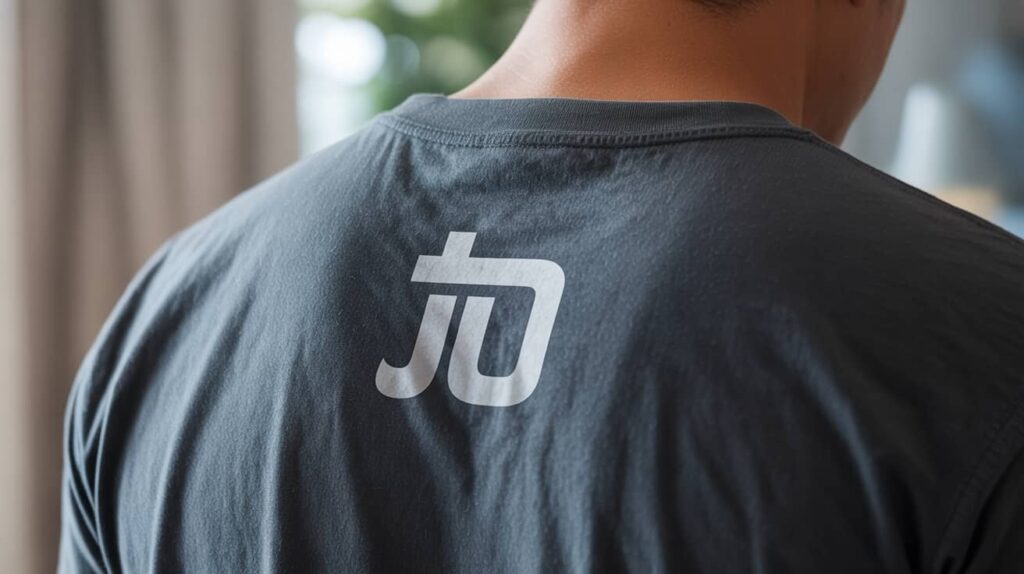
    Back Neck (Behind the Collar)
    Back Neck

    The back neck area may seem small, but it carries significant branding power. Commonly used to print a logo or brand name instead of a traditional tag, this position adds a premium and polished touch to the garment.

    Advantages: It subtly enhances brand recognition, even when the wearer is seen from behind. This placement is often associated with high-quality fashion brands, helping your T-shirt convey a more elevated and professional image.

    Disadvantages: The position can be easily overlooked — especially if the customer has long hair or wears an outer layer that covers the back of the neck.

    Full Back (Center Back)

    When you need a large area to showcase a message, image, or promotional artwork, the center back placement serves as the perfect canvas.

    Advantages: It creates a powerful visual impact and leaves a lasting impression from behind. This placement is ideal for event shirts, team-building apparel, staff uniforms (where clear information is needed), or POD products designed around a specific theme or campaign.

    Disadvantages: Printing on such a large area generally costs more. Additionally, aligning a big design precisely in the center back requires high printing accuracy to avoid distortion or imbalance that could affect the final product quality.

    Other Creative Placements:

    • Oversized Front Logo: A large design that extends beyond the central chest area, commonly seen in streetwear fashion.
    • Side Print: A logo printed vertically along one side of the shirt, creating a unique and dynamic effect.
    • Hem Tag: A small logo or tag placed at the bottom hem of the shirt, similar to branding details found on premium fashion labels.

    Guide to Placing a Logo on a T-Shirt Using Design Software

    After choosing the right placement, how can you accurately represent it in your design file? The answer lies in creating a mockup. A well-prepared mockup not only helps you visualize the final product but also serves as the reference file your POD provider will use for printing.

    Professional Workflow with Adobe Photoshop:

    This is the most powerful tool for creating realistic and precise mockups.

    • Find or create a high-quality mockup template:Use real T-shirt images with high resolution to ensure clarity and accuracy.
    • Use Rulers and Guides:Go to View > Rulers (Ctrl/Cmd + R) to display the rulers.Drag guides from the rulers to mark the standard logo positions mentioned in section 2 (for example, create a guide 10 cm below the neckline).This ensures consistency across all your designs.
    • Use Smart Objects:Place your logo design file inside a Smart Object.This allows you to resize or adjust the logo without losing quality and to apply realistic effects (such as shadows or fabric textures) naturally.
    • Position the Logo Accurately:Move the Smart Object layer containing your logo to align it precisely with the guides.
    • Save the File with Standard Settings:Export your final design file as a PNG with a transparent background at 300 DPI to ensure print-ready quality.

    Simpler Online Tools (Canva, Placeit):

    Canva

    For those who aren’t familiar with Photoshop, these tools offer an excellent and user-friendly alternative.

    • Placeit: Provides thousands of T-shirt mockup templates featuring real models and backgrounds. Simply upload your logo, and the platform will automatically place it on the shirt. Most placements follow standard positions, but you can still adjust the size and location within the allowed range.
    • Canva: You can upload a T-shirt image, then add your logo and position it where you want. Use Canva’s alignment tools to ensure the logo is perfectly centered or properly aligned to your desired layout.

    How to Ensure Your Printed Logo Isn’t Blurry, Misaligned, or Pixelated

    Placing your logo in the right position means nothing if the final print comes out blurry, distorted, or off-color. Below are the key technical factors every POD seller must master to guarantee professional print quality.

    Resolution

      • Rule #1: Always design and export your files at 300 DPI (Dots Per Inch) — the gold standard in printing to ensure crisp, high-quality images.
      • How to calculate it: Don’t just rely on the DPI value — pay attention to the actual pixel dimensions.
      • For example, if you want to print a logo 10 cm wide (approximately 4 inches) on the left chest:
    • Minimum pixel width = 4 inches × 300 DPI = 1200 pixels.
      • That means your logo file should be at least 1200 pixels wide to maintain sharpness when printed at 10 cm.

    File Formats

    • Raster (Bitmap): These include formats such as PNG, JPG, and GIF. They are made up of individual pixels, which means that when you enlarge a raster image, it can become blurry or pixelated.
      • When to use: Ideal for complex designs, photographs, or images with many colors. Always prefer PNG with a transparent background when using raster files for logos.
    • Vector: These include formats such as AI, EPS, and SVG. Vector files are created using mathematical equations and curves, allowing them to be scaled infinitely without any loss of quality.
      • When to use: This is the best format for logos. Whenever possible, design and store your logo in a vector format to ensure perfect sharpness at any print size.

    Color Space

    • RGB (Red, Green, Blue): This color model is used for digital displays such as computer monitors and smartphones. Colors in RGB mode tend to appear brighter and more vibrant.
    • CMYK (Cyan, Magenta, Yellow, Key/Black): This color model is used for printing.
    • Why it matters: If you design in RGB but print using CMYK, the colors may appear duller or inaccurate in the final product. To achieve the most accurate color results, always set your design software’s color space to CMYK from the very beginning.

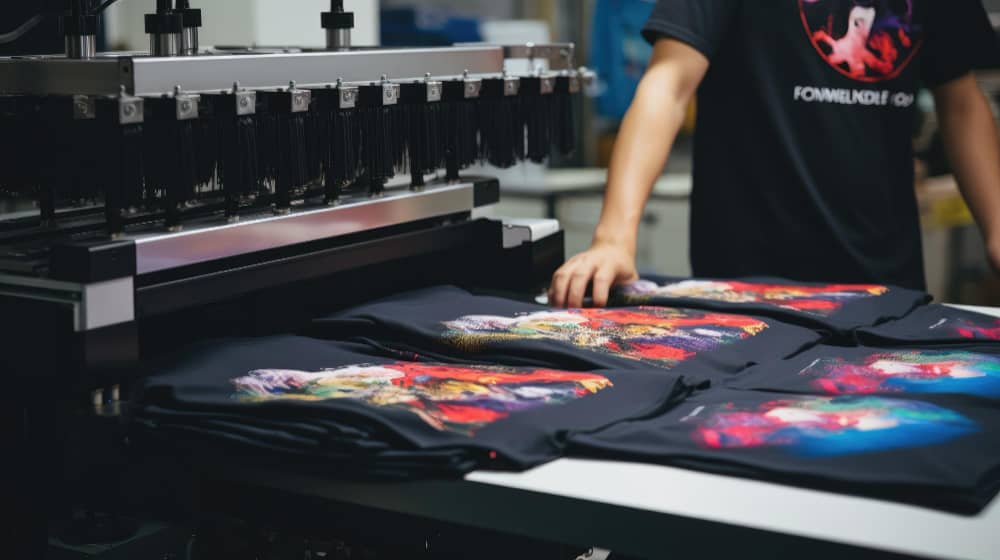
    Printing Methods for Logos on T-Shirts
    DTFF

    Understanding different printing technologies helps you choose the right POD provider and know the limitations of each method.

    Direct to Garment (DTG) Printing

    • How it works: Similar to an inkjet printer printing directly on paper, a DTG printer sprays ink directly onto the fabric fibers.
    • Advantages: Can print complex, full-color designs with no color limitations. Perfect for POD models as it allows printing one item at a time. The ink absorbs into the fabric, creating a soft and natural feel.
    • Disadvantages: Higher cost per piece compared to screen printing. Works best on 100% cotton fabrics for optimal color vibrancy.

    Screen Printing

    • How it works: Uses a mesh screen (stencil) to push ink through onto the fabric — one screen per color.
    • Advantages: Very cost-effective for large runs. Produces vivid, durable colors that last through many washes.
    • Disadvantages: Not suitable for POD due to high setup costs for each design. Difficult to print multi-color or gradient designs.

    Direct to Film (DTF) Printing

    • How it works: The design is printed onto a special PET film, then heat-pressed onto the shirt.
    • Advantages: A rapidly growing modern method. Works on multiple fabric types (cotton, polyester, blends). Delivers sharp, vibrant colors with high durability. Suitable for both small and large orders.
    • Disadvantages: The print surface may feel slightly more plastic-like compared to DTG.

    Heat Transfer Vinyl (HTV) Printing

    • How it works: Colored vinyl sheets are cut into shapes and heat-pressed onto the garment.
    • Advantages: Extremely durable, with clean and solid colors. Ideal for simple designs, 1–2 color logos, names, or numbers.
    • Disadvantages: Not suitable for complex or multi-color designs.

    Notes When Printing Logos for Branding or POD Business Purposes

    • Consistency Is Key: Build a clear brand guideline that defines the logo’s placement, size, and color across all products. Consistency creates a professional and easily recognizable brand image.
    • Always Order Samples: This is non-negotiable. Never sell a product you haven’t held in your hands. Samples allow you to verify the position, size, print quality, and actual colors before launching the design.
    • Consider Fabric and Shirt Color: A logo that looks great on a white shirt may “disappear” on black fabric. Prepare different logo variations (for example, a white logo for dark shirts and vice versa). Fabric types, cotton, polyester, or tri-blend, can also affect color accuracy and sharpness.
    • Work With a Reliable POD Provider: A trustworthy partner provides accurate design templates, clear file requirements, and modern printing technology to ensure the final product matches your mockup perfectly.
    • Don’t Overlook the Overall Design: The logo is only one part of the whole. Make sure it complements other design elements on the shirt (if any) and aligns with your brand’s overall aesthetic and identity.

    Placing the logo in the right position not only makes a T-shirt more visually balanced and aesthetically pleasing but also helps reinforce the brand identity of POD sellers. A shirt with a well-positioned, sharp, and properly scaled logo creates a professional impression, making it easier for customers to remember the brand and trust the product’s quality. From the design and mockup stages to selecting the printing method, every step must be executed carefully to ensure the logo remains crisp, vibrant, and long-lasting over time.

    For detailed consultation on logo printing techniques, proper placement, and choosing the right blank T-shirt for each POD product line, please contact (+84) 943 024 337 or visit seller.FlashShip.net. The FlashShip team is always ready to support you on your journey to building a professional and successful POD brand.
  • FBA vs FBM: Which One Is Better for POD Sellers?

    FBA vs FBM: Which One Is Better for POD Sellers?

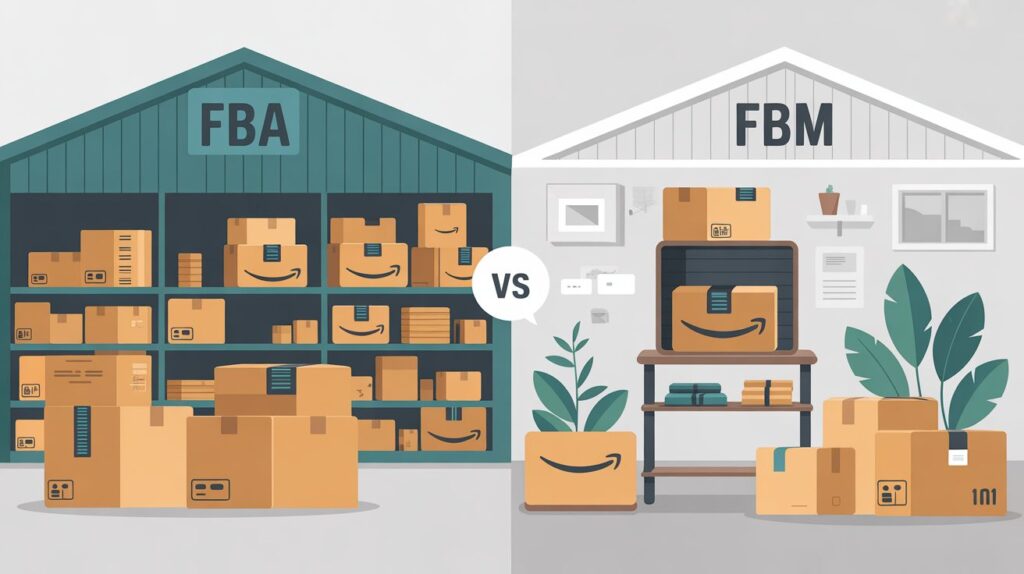
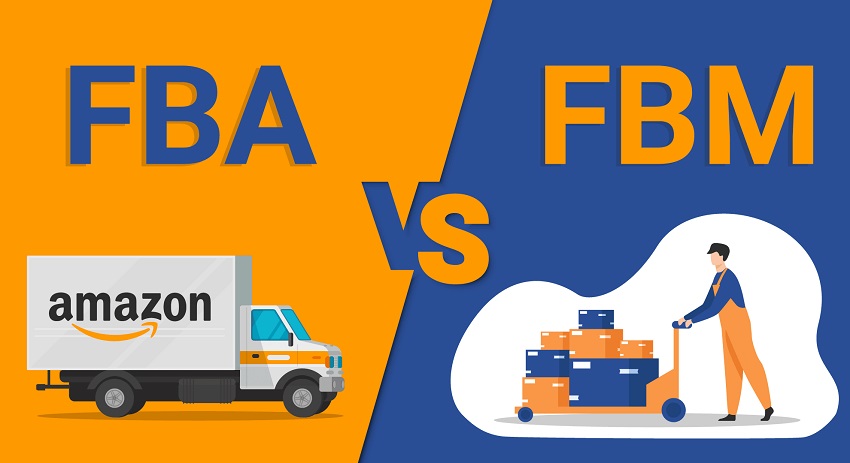
    When entering Amazon’s massive e-commerce marketplace, one of the most important decisions POD sellers must make is choosing an order-fulfillment method. The two most common options are FBA (Fulfillment by Amazon) and FBM (Fulfillment by Merchant). Each model has its own advantages and drawbacks that directly impact your costs, brand control, customer experience, and ultimately your profit.

    This article takes a deep dive into a detailed, side-by-side comparison of FBA and FBM specifically tailored for POD sellers to help you make the most informed decision for your store.

    FBA & FBM

    What is FBA (Fulfillment by Amazon)?

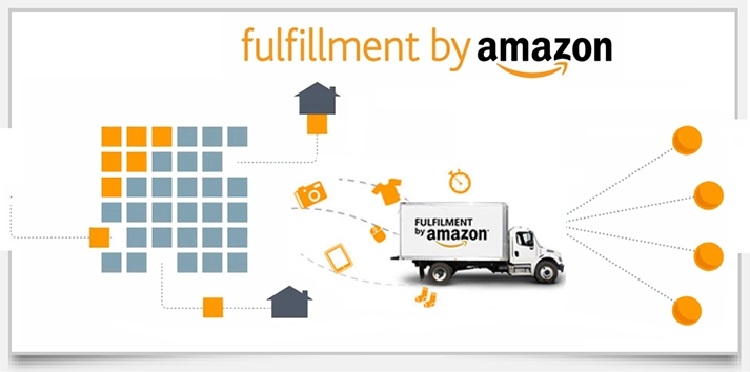
    Fulfillment by Amazon (FBA) is a service provided by Amazon that allows sellers to store their products in Amazon’s fulfillment centers. When a customer places an order, Amazon handles the entire fulfillment process on the seller’s behalf from picking, packing, and shipping to managing customer service and returns.

    In simple terms, with FBA, you only need to focus on sourcing products, marketing, and sending your inventory to Amazon’s warehouses. The rest will be taken care of by the e-commerce giant.

    How FBA Works with the POD Model

    For POD (Print on Demand) sellers, the FBA process operates a bit differently compared to traditional product sellers. Since POD items are only printed after an order is placed, you can’t send large quantities of unprinted inventory to Amazon’s warehouses. Instead, the process typically goes as follows:

    • 1. Pre-produce a small batch: You’ll need to forecast demand and pre-produce a limited quantity of your best-selling POD products (for example, T-shirts with your top designs) from your supplier (such as FlashPOD).
    • 2. Ship products to Amazon’s fulfillment centers: Once the items are printed and packaged according to Amazon’s standards (with proper labeling and barcodes), you’ll send the batch to Amazon’s fulfillment centers.
    • 3. Amazon stores and fulfills orders: Amazon stores your products, and when a customer places an order from your storefront, the company immediately handles the fulfillment and delivery on your behalf.

    Advantages of FBA for POD Sellers

    What is FBA

    • Prime Badge and Fast Shipping: This is FBA’s biggest competitive edge. Products fulfilled through FBA automatically qualify for the Prime badge, meaning Amazon Prime members enjoy free two-day shipping. This superior delivery speed plays a crucial role in influencing purchase decisions.
    • Higher Chance of Winning the “Buy Box”:  Amazon’s A9 algorithm favors FBA listings when determining which product wins the “Buy Box” (the “Add to Cart” or “Buy Now” button). Winning the Buy Box significantly boosts product visibility, conversion rates, and overall sales.
    • Saves Time and Effort: Amazon takes care of the entire operational process from warehousing, packing, and shipping to 24/7 customer support and return handling. This allows you to free up time and focus on core business activities such as design research, marketing, and business expansion.
    • Access to Amazon’s Massive Customer Base: With Amazon’s reputation and extensive logistics network, your products can easily reach millions of loyal customers around the world.
    • Simplified International Selling: Through the FBA Export program, Amazon enables you to ship products to customers in over 100 countries and regions without the hassle of dealing with complex customs procedures yourself.

    Disadvantages of FBA for POD Sellers

    • Inventory Risk: This is the biggest challenge of FBA for POD sellers. You must produce products in bulk before receiving actual orders, which goes against the “print-on-demand” nature of the POD model. If a design doesn’t sell well, you’ll face inventory buildup and long-term storage costs.
    • High and Complex Fees: FBA’s fee structure can be quite complicated, including storage fees (based on volume and duration), fulfillment fees (based on size and weight), return processing fees, and other additional charges. These costs can significantly eat into your profit margins if not calculated carefully.
    • Strict Product Preparation Requirements: Amazon enforces strict guidelines for how products are packaged, labeled, and shipped to their fulfillment centers. Noncompliance may result in shipment rejection or additional fees.
    • Loss of Brand Control: All products are packaged in Amazon-branded boxes, reducing your ability to create a unique branded unboxing experience for customers.
    • Challenges in Quality Control: Since you don’t directly handle each order, maintaining consistent product quality and ensuring that every item meets your standards becomes more difficult.

    What is FBM (Fulfillment by Merchant)?

    FBA for POD

    Fulfillment by Merchant (FBM), also known as Merchant Fulfilled Network (MFN), is a model in which the seller is fully responsible for the entire order fulfillment process after a product is sold on Amazon. This includes storing inventory, packing, shipping, and handling customer service.

    With FBM, your Amazon storefront functions as a sales channel, while all backend operations are managed by you or a third-party logistics provider (3PL).

    How FBM Works with the POD Model

    The FBM model aligns perfectly with the nature of the Print-on-Demand (POD) business:

    • 1. Upload Products: You create mockups and list your products on your Amazon store.
    • 2. Customer Places an Order: When a customer makes a purchase, the order details are sent directly to you.
    • 3. Forward the Order to Your POD Supplier:
      You then forward the order information (design, product type, and customer details) to your POD partner (such as FlashPOD).
    • 4. Printing and Shipping: Your POD partner prints, packages, and ships the product directly to the customer under your brand name.
    • 5. Customer Updates and Support: You are responsible for updating the tracking information on Amazon and managing all customer inquiries or support requests.

    Advantages of FBM for POD Sellers

    • No Inventory Risk: This is the biggest advantage of FBM for POD businesses. You only produce products after receiving an order, eliminating upfront inventory investment and storage-related risks entirely.
    • Full Brand Control: You have complete control over your product packaging. You can use custom boxes, bags, thank-you cards, or marketing inserts that reflect your brand identity, creating a unique unboxing experience and strengthening customer connection.
    • Higher Profit Margins: By avoiding FBA’s various fees, you can retain a larger portion of your profit per sale. You only need to pay Amazon’s referral fee, along with production and shipping costs to your POD partner.
    • Operational Flexibility: You’re not bound by Amazon’s strict product-preparation requirements. You can work with multiple fulfillment partners and easily switch between them as your business needs evolve.
    • Direct Customer Interaction: Handling customer service yourself allows you to better understand your buyers’ needs and feedback, helping you refine your products and improve your service quality over time.

    Disadvantages of FBM for POD Sellers

    • Operational Burden and Time-Consuming Tasks: You are fully responsible for managing the entire fulfillment process. Although your POD partner handles production and shipping, you still need to monitor orders, update tracking information, and resolve any issues that arise. As your order volume grows, this workload can quickly become overwhelming.
    • Slower Shipping Speed: It’s difficult to offer two-day delivery like Amazon Prime. Longer shipping times can lower your conversion rate, especially among customers accustomed to Amazon’s fast delivery standards.
    • No Prime Badge: Without the Prime badge, your listings may appear less attractive and trustworthy to many shoppers, reducing your competitive edge.
    • Lower Chances of Winning the “Buy Box”: Amazon’s algorithm tends to favor FBA sellers, making it harder for FBM sellers to win the Buy Box and gain top visibility on product pages.
    • Full Responsibility for Customer Service: You must maintain Amazon’s high standards for response times and customer satisfaction. Any delay or mistake could negatively affect your account health and seller performance metrics.

    Detailed Comparison: FBA vs. FBM

    To get a clear picture, let’s place FBA and FBM side by side and compare them across the most important criteria for POD sellers.

    Criteria FBA (Fulfillment by Amazon) FBM (Fulfillment by Merchant)
    Fulfillment Process Automated – Amazon handles everything Managed by the seller or a fulfillment partner
    Shipping Speed Very fast (2–3 days, Prime) Depends on the shipping carrier
    Service Fees High – includes storage, handling, and return fees Lower – only pay for production and shipping
    Brand Control Limited Full control (branding, packaging, inserts)
    Inventory Requires pre-printed stock – risk of unsold inventory No inventory – printed on demand
    Suitability for POD Difficult – conflicts with print-on-demand nature Highly suitable – flexible workflow
    Customer Experience Excellent – trusted Prime service Depends on fulfillment quality
    Profit Margin Lower due to high fees Higher margins per sale
    Scalability Easy to scale with minimal operational effort Requires strong fulfillment systems to scale effectively

    Which service is better for sellers: FBA or FBM?

    POD Sellers

    After a detailed analysis, there isn’t an absolute winner. The right choice isn’t whether FBA or FBM is universally “better,” but which model best fits your current stage and business strategy.

    When Should You Choose FBM?

    FBM is the ideal and safest choice for most POD sellers especially for beginners.

    • Startup Stage: When you’re just starting out with limited capital and little data on best-selling designs, FBM allows you to test the market without the risk of holding inventory. You can upload hundreds or even thousands of designs to gauge customer reactions.
    • Focus on Brand Building: If your goal is to build a strong POD brand with a loyal customer base, FBM gives you the flexibility to create a consistent brand experience from the product and packaging to customer service.
    • Selling Niche Products: For products with modest but steady sales volume, maintaining an FBM model helps you optimize profits while keeping operations simple and efficient.
    • Prioritizing Profit Margins: FBM lets you retain a higher profit per unit sold, which is especially valuable when you’re in the capital-building phase of your business.

    When Should You Consider Using FBA?

    FBA is an advanced strategy, best suited for sellers with experience and reliable sales data.

    • When You Have a “Hero” Product: After a period of selling via FBM, you may identify certain designs or products that consistently perform well. At this stage, you can confidently pre-produce a small quantity of these bestsellers and send them to Amazon’s FBA warehouses.
    • When You Want to Scale Sales for Bestsellers: By switching your “hero” products to FBA, you can leverage the power of the Prime badge and the higher likelihood of winning the Buy Box—both of which can elevate your sales to the next level.
    • During Major Sale Seasons: In peak shopping periods such as Black Friday, Cyber Monday, or Christmas, delivery speed becomes a key factor. Having your products ready in FBA warehouses allows you to meet surging demand and seize golden sales opportunities.
    • When You Want to Scale and Reduce Workload: If you’re overwhelmed by daily order management and wish to focus more on strategy and growth, outsourcing your fulfillment to FBA is a smart and efficient move.

    Hybrid Strategy

    A smart approach adopted by many successful POD sellers is to combine both FBA and FBM.

    • Use FBM for your entire product catalog: This allows you to test new designs and sell niche products without the risk of holding inventory.
    • Use FBA for a few “best-selling” products: Select proven top-selling items, produce a small batch, and send them to Amazon’s fulfillment centers to take advantage of Prime benefits and boost sales.

    By doing so, you maintain the flexibility and low-risk nature of the traditional POD model while leveraging Amazon’s powerful marketing and logistics system to maximize profitability.

    Choosing between FBA and FBM doesn’t just affect your fulfillment process it directly impacts customer experience and your overall profitability as a POD seller. Each model offers distinct advantages: FBA delivers speed, convenience, and customer trust, while FBM provides greater flexibility in production control, cost optimization, and personal brand building.

    Understanding each model’s characteristics, applying them strategically, and partnering with a reliable fulfillment provider are the keys to sustainable growth in the competitive POD market.

    Contact us at (+84) 943 024 337 or visit seller.FlashShip.net for expert consultation, fast quotations, and tailored fulfillment strategies to help your POD brand thrive with FlashShip.

  • NOTICE OF WORKING SCHEDULE DURING COLUMBUS DAY 2025

    NOTICE OF WORKING SCHEDULE DURING COLUMBUS DAY 2025

    COLUMBUS DAY

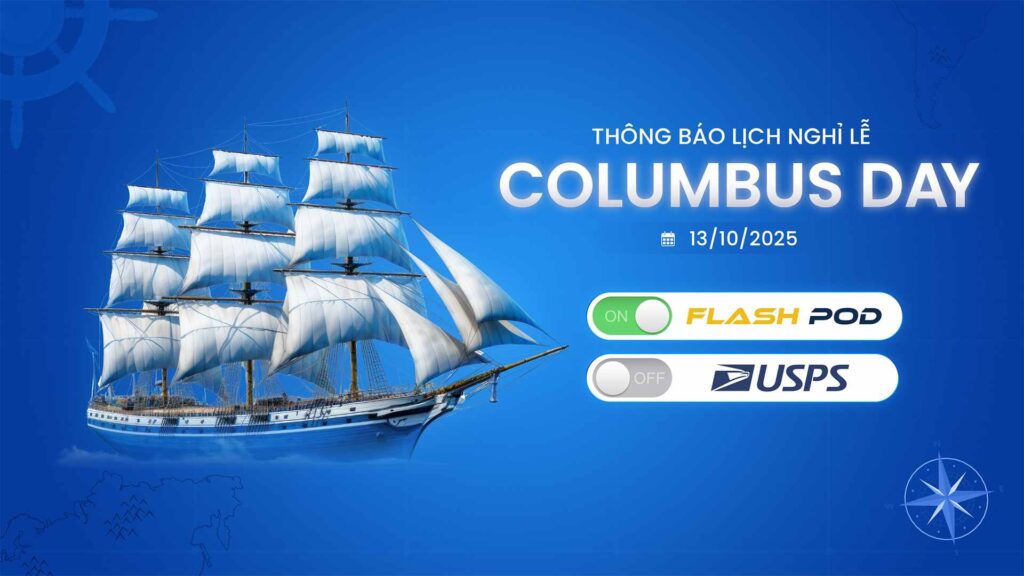
    To ensure that the production, order processing, and shipping activities of all Sellers remain uninterrupted during the holiday, FlashShip would like to inform our Sellers and Partners of the official working schedule for Columbus Day 2025 (October 13, 2025 – U.S. Time) as follows:

    Operating schedule of related parties:

    • USPS: Services for pickup and delivery will be temporarily suspended on Columbus Day.
    • FlashShip: Will continue normal operations, including production, printing, and order processing throughout the holiday.

    The temporary suspension of USPS services is a standard federal policy applied nationwide across the United States during public holidays. However, the FlashShip team will continue production and prepare all orders in advance, ensuring they are ready for shipment as soon as USPS resumes operation.

    Notes for Sellers

    Orders created or completed on October 13, 2025, will be processed by FlashShip and handed over to USPS immediately once their service resumes. Please note that due to the holiday schedule, shipping times may be slightly longer than usual. Sellers are advised to proactively update their customers and adjust their sales plans accordingly to maintain the best shopping experience.

    FlashShip remains committed to ensuring smooth and uninterrupted operations, guaranteeing that every order is processed quickly, accurately, and efficiently throughout the busy holiday season.

    If you have any questions regarding the working schedule or order processing timelines, please contact the FlashShip support team directly via hotline (+84) 943 024 337 or (+84) 852 763 445 for timely assistance.

    Sincerely,

    The FlashShip Team

  • Eye-Catching T-Shirt and Ink Color Combos for POD Sellers

    Eye-Catching T-Shirt and Ink Color Combos for POD Sellers

    A successful sales season doesn’t just depend on a great design it also comes from the perfect color combination between the T-shirt and the print. A well-balanced print with harmonious and vibrant colors can make your product stand out on e-commerce platforms and leave a strong impression on customers.

    On the other hand, poor color pairing can make even the most beautiful design look dull or lose its visual appeal. This article will help POD sellers master the fundamental principles of color matching, learn how to combine colors effectively, and avoid common mistakes to ensure every product looks striking, professional, and irresistible to buyers.

    Color Matching

    Basic Principles of Color Matching

    Before starting any design, sellers need to understand the fundamental principles of color. A successful POD product isn’t just about composition it’s also about how colors are combined and balanced.

    The Color Wheel and the Relationship Between Colors

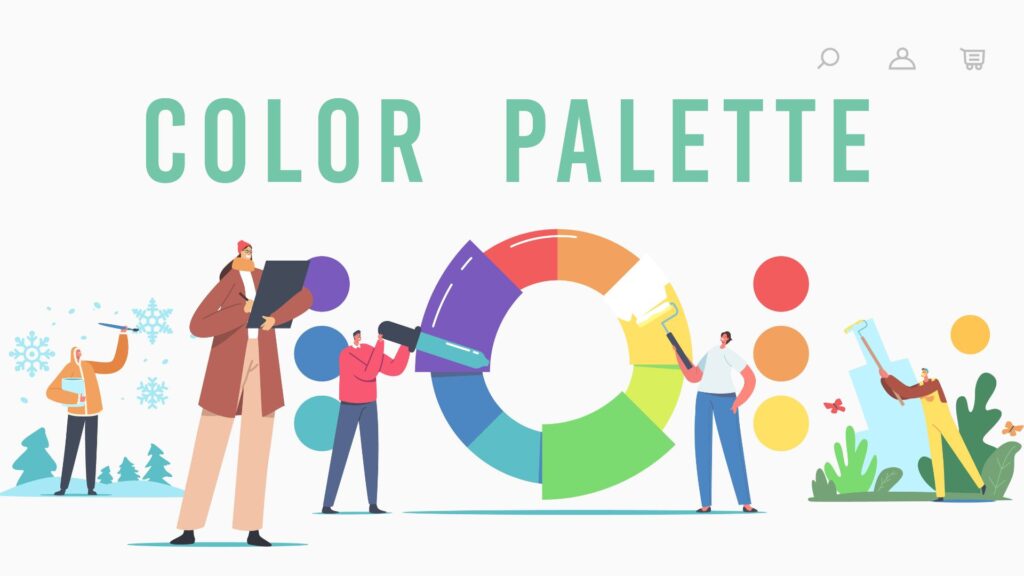
    The Color Wheel is one of the most fundamental and powerful tools in graphic design. It’s not just an abstract diagram but a visual map that illustrates the relationships between color hues, helping designers identify harmonious color combinations and contrasting tones to create visual impact.

    The color wheel is composed of:

    • Primary Colors: Red, Yellow, and Blue the three base colors that cannot be created by mixing other colors.
    • Secondary Colors: Orange, Green, and Purple formed by mixing two primary colors (e.g., Yellow + Blue = Green).
    • Tertiary Colors: Created by mixing a primary color with a neighboring secondary color (e.g., Red + Orange = Red-Orange).

    Understanding how colors interact on the color wheel is the key foundation that enables you to confidently choose the right ink and garment colors for each product campaign.

    Common Color Matching Rules

    Based on the color wheel, designers have developed timeless color combination principles that ensure both visual appeal and strong aesthetic balance.

    • Complementary Colors: This method pairs two colors that sit opposite each other on the color wheel (e.g., Blue–Orange, Yellow–Purple). It creates strong contrast and visual energy, making your design vibrant and eye-catching. This approach works especially well for youth-oriented products or energetic niches such as sports and music.
    • Analogous Colors: This scheme uses two to three colors that sit next to each other on the color wheel (e.g., Yellow, Yellow-Orange, Orange). It produces a harmonious, soothing, and natural look — ideal for designs inspired by nature, relaxation themes, or brands that aim to convey warmth and friendliness.
    • Triadic Colors: This rule uses three colors evenly spaced around the color wheel, forming an equilateral triangle. It provides color diversity and balance while maintaining harmony. The result is a lively, cheerful, and dynamic look that attracts attention without overwhelming the viewer.
    • Monochromatic Colors: This technique applies different shades, tints, and tones of the same color. It’s a safe, elegant, and modern choice often used in minimalist or premium designs. Monochromatic palettes highlight design details without creating visual clutter.

    The Psychological Impact of Colors in POD Design

    Colors hold invisible power  they directly influence emotions and buying behavior. Understanding their meanings allows sellers to create products that are not only visually appealing but also communicate the right message.

    • Red: Evokes energy, passion, and a sense of urgency. Perfect for Valentine’s Day designs, sports themes, or discount campaigns.
    • Blue: Represents trust, calmness, and professionalism. Ideal for business, technology, or ocean-inspired niches.
    • Yellow: Conveys happiness, optimism, and warmth. Commonly used in products for children or designs that promote positivity.
    • Green: Symbolizes nature, health, growth, and freshness. A top choice for eco-friendly, yoga, or healthy lifestyle niches.
    • Black: Reflects strength, luxury, and sophistication. Black shirts are always a popular base as they make bright ink colors stand out beautifully.
    • White: Minimalist, pure, and easy to pair. White shirts serve as a perfect canvas to highlight complex or multi-colored designs.

    Popular T-Shirt and Ink Color Combinations

    Color Palette

    Once you understand the basic principles, pairing T-shirt and ink colors becomes much easier. Below are some of the most common and effective combinations that POD sellers should know to create products that are both eye-catching and aesthetically pleasing.

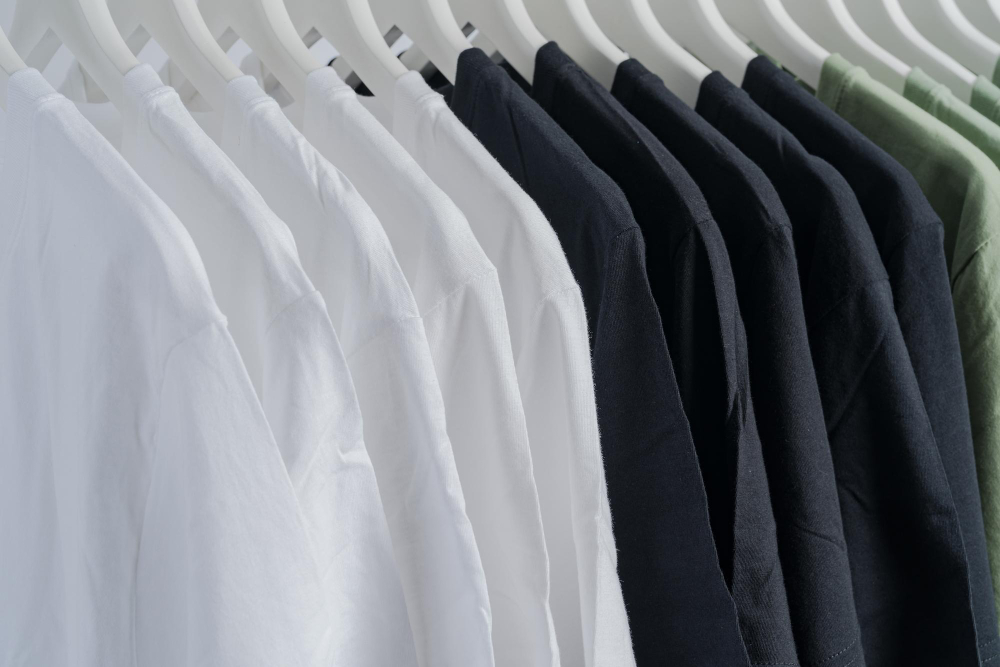
    Light-Colored Shirts – Dark Ink: The Golden Formula for Clarity

    This is one of the safest and most effective rules in T-shirt printing, especially in the POD industry. A light-colored base (white, beige, ash gray, or pastel) acts as a perfect canvas, allowing dark ink designs to appear crisp, legible, and detailed. This formula ensures that your message or artwork is communicated as clearly as possible.

    Timeless combinations include:

    • White / Ash Gray shirts: Perfectly match with black, navy, burgundy, or bottle green ink.
    • Light Beige / Sand shirts: Look exceptionally elegant when paired with dark brown, olive green, or black ink.
    • Pastel shirts (pink, mint, light yellow): Create a soft yet effective contrast with black or charcoal gray ink.

    This color pairing is particularly ideal for typography designs, logos, or intricate line-art graphics, giving your products a professional look that appeals to a wide range of customer tastes.

    Dark-Colored Shirts – Light Ink: A Bold Statement of Contrast

    If you want your design to stand out and capture attention instantly, reverse the previous formula. When using dark-colored shirts such as black, navy, or charcoal, light-colored inks will “pop” dramatically, creating a striking visual effect. This is a fantastic choice for graphic, retro, or bold brand designs that aim to express personality and confidence.

    Highly effective combinations include:

    • Black shirts: The perfect base for white, bright yellow, neon green, or vibrant pastel inks.
    • Navy shirts: Pair beautifully with off-white, gold, or coral ink.
    • Burgundy / Olive shirts: Look unique and sophisticated when printed with cream or light beige ink.

    This color scheme delivers maximum contrast especially effective with modern printing technologies like DTG or DTF, where a white underbase helps bright inks appear vivid and long-lasting.

    Tone-on-Tone: A Minimalist Trend of Subtle Sophistication

    Tone-on-tone (same hue, different shade) is a color-pairing technique highly favored by premium and minimalist fashion brands. Instead of creating contrast, it achieves harmony and refinement by using variations of the same color family. The result is a stylish, elegant, and tastefully understated look.

    Examples:

    • Light Beige shirt: Printed with deep coffee-brown ink.
    • Olive shirt: Paired with a darker moss-green print.
    • Navy shirt: Features a logo or text in sky blue (baby blue).

    This color pairing is ideal for minimalist, lifestyle, or vintage niches, as well as brands that want to project a refined, modern, and effortlessly classy image.

    Complementary Color Pairing: Bold and Full of Energy

    For sellers who love to experiment and want their products to truly stand out, complementary colors (opposite pairs on the color wheel) are your secret weapon. This combination creates a “visual explosion” dynamic, vibrant, and impossible to ignore.

    Striking examples:

    • Mustard Yellow shirt: Printed with deep purple ink.
    • Burnt Orange shirt: Looks stunning with navy blue designs.
    • Green shirt: Made edgy and modern with fuchsia pink details.

    A key tip is to balance proportions to avoid overwhelming the viewer. Let the shirt color serve as the dominant background and use the contrasting ink color as an accent to draw smart, intentional attention.

    Following Seasonal Trends and Special Occasions

    A smart strategy for POD sellers is to align color choices with seasonal trends or major holidays. This helps your products feel timely, relevant, and emotionally connected to buyers’ purchasing moods.

    • Spring: Opt for light and refreshing hues like mint green, peach pink, and lavender purple.
    • Summer: Embrace bright, tropical tones such as coral orange, teal, and lemon yellow.
    • Autumn: Choose warm, cozy colors like earthy brown, terracotta, mustard yellow, and olive green.
    • Holiday Seasons: Stick with signature palettes  red, green, and white for Christmas; orange, black, and purple for Halloween; or red and pink for Valentine’s Day.

    These choices not only keep your catalog trendy but also make it easier for customers to find products that perfectly fit seasonal and festive occasions.

    Common Mistakes When Matching Shirt and Ink Colors

    Colored

    Even experienced sellers can make mistakes when it comes to color selection, especially in large-scale printing. Below are the most common errors and how to fix them.

    Lack of Contrast

    This is one of the most common yet fundamental mistakes. When the ink color and the shirt color are too similar in tone, the design becomes dull, hard to read, and almost invisible- especially when customers only glance at your product for a few seconds.

    • Bad examples: Light gray ink on a heather gray shirt, navy ink on a black shirt, or cream ink on a white shirt.
    • Pro fix: Before sending your file to print, always check the design in grayscale mode. If you can still clearly distinguish details and text, the contrast level is good. Also, remember the golden rule: dark ink on light fabric, and light ink on dark fabric.

    Incorrect Color Mode (RGB vs. CMYK)

    This is a critical technical error often overlooked by beginners. Computer and phone screens display colors in RGB mode (Red, Green, Blue), an additive color system based on light. However, most industrial printers use CMYK (Cyan, Magenta, Yellow, Black) – a subtractive color system based on ink.

    • The result: That bright neon blue on your screen may turn into a dull, lifeless green once printed.
    • How to fix: Always set your workspace color mode to CMYK in your design software (Photoshop, Illustrator, etc.) from the very beginning. Before mass production, request a print sample from your supplier to ensure the final colors match your expectations.

    Printing Light Ink on Dark Fabric Without a White Underbase

    On dark-colored shirts, fabric fibers tend to absorb ink-especially light colors. Without proper preparation, the print colors can appear dull, faded, and far less vibrant than the original design.

    • How to fix: Always ensure that your printing process includes a white underbase beneath the design. This layer acts like a primer on a wall, preventing the fabric color from affecting the printed ink. It helps the final colors appear vivid, accurate, and true to the design. Be sure to discuss this detail carefully with your print provider before production.

    Inconsistent Colors Across Product Lines

    When offering the same design across multiple product types (T-shirts, hoodies, sweatshirts), it’s common to notice slight differences in base fabric colors, even when labeled as the same shade. This happens because different products may be made from different materials (e.g., 100% cotton vs. 50/50 cotton-poly blend) or sourced from different manufacturers.

    • How to fix: To maintain color consistency, try to source all blanks for a given design from the same manufacturer (for example, use only Gildan or only Bella+Canvas for a specific design). Additionally, refer to the official physical color swatches from the manufacturer instead of relying solely on digital images for the most accurate color assessment.

    Following Color Trends That Don’t Match Your Niche

    Jumping on color trends (like neon, tie-dye, or metallic tones) can be a smart move  but it can also backfire if the trend doesn’t align with your target audience.

    • Example: A T-shirt store targeting office workers who prefer minimalist styles will struggle to sell a neon green collection, even if it’s the “color of the year.”
    • How to fix: Always ask yourself, “Would my customers actually wear this color?” Define a core color palette that truly reflects your brand’s style and niche. You can test trendy colors on a few limited-edition products first before making a larger investment.

    Color Matching Tips for POD

    POD Design

    To achieve the best results in color coordination, sellers need to balance theory with practical application. Below are some actionable tips to help you optimize your designs and boost sales performance.

    Use Smart Mockups to “Test Before You Sell”

    A flat design file on your software screen can never fully represent how the final product will look in real life. That’s where mockups come in  they act as the bridge between concept and reality.

    • Why it matters: Mockups help you visualize how colors appear under different lighting conditions, how the print interacts with fabric folds, and how the design looks on an actual model. This is a crucial step to catch issues with contrast, placement, or proportions before launching your product to the market.
    • Effective tools: Platforms like Placeit offer an extensive library of lifestyle mockups, while built-in tools such as Canva Smart Mockup or FlashShip Mockup Tool let you preview designs quickly and conveniently within your workflow.
    • Pro tip: Don’t stop at just one mockup. Create at least 3–5 versions using your best-selling shirt colors (e.g., black, white, sport gray) and one trendy color. This not only helps you find the most optimal combination but also gives customers more attractive options to choose from in your product listings.

    Build a Brand Color Palette to Strengthen Recognition

    As your store grows, selling random, unconnected designs becomes less effective than building a cohesive and recognizable brand identity and your color palette is the heart of that identity.

    • Long-term benefits: A consistent color palette helps customers instantly recognize your products among thousands of competitors. It conveys professionalism, trust, and makes your future design process much simpler and more efficient.
    • How to build it: Start by clearly defining your niche. For example, a pet niche brand can use cheerful pastel tones, while a veteran-focused brand would be better suited to strong, earthy hues like olive green, charcoal gray, black, and white.
    • Pro tip: Create a simple brand style guide that defines 3–5 core colors and how they should be used. This becomes a valuable asset when scaling your business or outsourcing design work, ensuring your brand stays consistent and recognizable.

    Stay Ahead of Market Color Trends

    Fashion is always evolving  and color is the most dynamic element of that change. Keeping up with color trends ensures your products remain fresh, relevant, and aligned with modern customer preferences.

    Reliable references: Major organizations like Pantone and Adobe regularly release their “Color of the Year” and annual trend reports. By following these, sellers can anticipate next year’s aesthetics and plan their designs ahead of key shopping seasons.

    Suggested color trends for 2025–2026:

    • Digital Blue: A vibrant shade of blue symbolizing technology, artificial intelligence, and creative innovation in the digital era.
    • Terra Clay: A warm terracotta tone that evokes a sense of sustainability, authenticity, and connection to nature.
    • Cyber Lime: A bold neon lime color that reflects optimism and the energetic spirit of the younger generation.

    Pro tip: You don’t have to make trendy colors your main shirt base. Instead, try using them as accent ink colors on neutral shirts (black, white, gray) to create designs that are both safe and fashion-forward.

    Respect Cultural and Market Differences

    When selling on international platforms like Etsy or Amazon, color is no longer just a matter of aesthetics, it becomes a cultural language.

    • Meanings can vary greatly: In the United States, the combination of red, white, and blue symbolizes patriotism. In many Asian countries, red represents luck and prosperity, while white is often associated with mourning or funerals.
    • Pro tip: Before launching an ad campaign targeting a specific country, take a few minutes to research “the meaning of [color name] in [country name].” This small step can help you avoid cultural missteps and create products that resonate emotionally with local buyers.

    Understand Printing Technologies and Fabric Materials

    A perfect design can be ruined if produced using the wrong printing method or fabric type. Each printing technology has its own strengths and limitations:

    • DTG (Direct-to-Garment): Delivers vibrant colors and high detail on 100% cotton shirts. However, printing on dark fabrics costs more due to the need for a white underbase.
    • DTF (Direct-to-Film): A rising star in the industry, offering extremely vivid and durable prints that work on various materials cotton, polyester, and blends.
    • Sublimation: Produces permanent, non-peeling colors that fuse directly into the fabric fibers, but is limited to light-colored polyester garments.

    Pro tip: Don’t hesitate to consult your print provider. Ask the key question: “For this design and fabric type, which printing method will produce the most accurate and vibrant result?” The advice you receive from printing experts is invaluable to ensuring your final product looks exactly as you envision.

    Color pairing between T-shirts and inks isn’t merely about visual appeal it’s a strategic element that helps POD sellers create distinctive, recognizable, and better-selling products. An attractive design starts with understanding color principles, choosing the right tones for your niche, and maintaining strict control over the printing process to ensure accurate, vibrant colors.

    Remember, in the POD industry, every small detail can make a big difference. When your color combinations are on point, your products won’t just look great in mockups — they’ll stand out beautifully in real life when they reach your customers.

    Contact us at (+84) 943 024 337 or visit seller.FlashShip.net for detailed consultation, quick quotations, and to start building your sustainable POD brand with FlashShip today.

  • Side-Seamed vs. Tubular T-Shirts: Which One Should You Choose?

    Side-Seamed vs. Tubular T-Shirts: Which One Should You Choose?

    In the Print on Demand (POD) business, choosing the right garment type can significantly impact your product quality and profit margin. Between side-seamed T-shirts and tubular T-shirts, which one is the better option for POD sellers? This article will help you understand the differences, as well as the pros and cons of each type, so you can select the most suitable blank for your business model.

    T-shirtt

    Side-Seamed T-Shirts

    When searching for the perfect blank product, POD sellers often face a trade-off between cost and quality. Side-seamed T-shirts represent the high standard of quality in the apparel industry. This is not just a technical feature – it’s a statement of brand positioning and a reflection of respect for the customer experience.

    Refined Construction That Makes the Difference

    At its core, a side-seamed T-shirt is made by cutting separate fabric panels for the front and back, then skillfully stitching them together with two vertical seams along the sides. This production method closely follows the natural shape of the human body – which is not a straight cylinder. The two-panel construction creates a foundation for a T-shirt that fits more naturally and elegantly, contouring to the body’s curves with precision.

    For manufacturers, this structure allows better control over the garment’s form throughout the cutting, sewing, and printing processes. Each shirt maintains a high level of consistency in size and shape, minimizing production errors and ensuring the final product that reaches the customer meets premium quality standards.

    T-shirt

    Outstanding Advantages for POD Sellers

    • Superior Fit and Durability: The greatest advantage of side-seamed T-shirts lies in their structured form and flattering silhouette. The two side seams act as a sturdy framework, clearly defining the shoulders, waist, and hips. More importantly, this construction prevents twisting or distortion after multiple washes, one of the most common complaints customers have about low-quality T-shirts. A shirt that retains its original shape not only satisfies customers but also reinforces your brand’s reputation for lasting quality.
    • Broader Customer Appeal: Another strategic benefit is that side-seamed T-shirts are often available in separate fits for men and women (unisex retail fit or specific gender fit). Instead of a “one-size-fits-all” approach, these versions are tailored to highlight the natural contours of each gender. This creates a more premium and personalized shopping experience a crucial differentiator on competitive POD marketplaces like Etsy, Amazon, TikTok Shop, and Shopify, where customers increasingly seek the perfect fit.
    • Optimized Printing Surface for POD Techniques: In the POD industry, print quality is everything. Side-seamed T-shirts offer a key technical advantage: a flat, stable printing surface. Because the fabric panels are cut separately before sewing, positioning and aligning the design on the print table becomes highly precise. This is especially critical for Direct-to-Garment (DTG) printing, where even a 1–2 cm misalignment can ruin the entire layout. The stable surface ensures consistent ink absorption, sharper color details, and perfectly aligned designs every time.
    • Enhanced Customer Satisfaction: When customers receive a shirt that fits well and maintains its shape, it immediately elevates their perception of your brand. Choosing side-seamed T-shirts is a strategic way to position your POD products in the premium category. Industry favorites such as Bella+Canvas 3001, Next Level 3600, and AS Colour 5001 all use this construction method. By selecting these high-quality blanks for your store, you align your business with successful global POD brands and establish a professional, trustworthy image.

    Operational Considerations to Keep in Mind

    Naturally, superior quality often comes with a higher cost. Side-seamed T-shirts typically cost about 5–10% more than tubular ones made from the same material, due to their more complex manufacturing process. In addition, production time may also be slightly longer. These are factors that sellers should carefully evaluate when setting prices and managing inventory, especially during high-demand sales seasons.

    However, this price difference can be seen as a worthwhile investment in customer satisfaction and long-term brand reputation.

    Tubular T-Shirts

    In the Print on Demand (POD) industry, balancing production costs with retail pricing is always a key consideration. Tubular T-shirts have emerged as a cost-effective solution, ideal for large-scale production with fast turnaround times. Although they may not offer the same refined fit as side-seamed shirts, tubular T-shirts maintain a strong presence in the market thanks to their operational efficiency and cost advantages.

    High Efficiency Through Simplified Construction

    The key difference of tubular T-shirts lies in their production process. Instead of cutting and sewing separate fabric panels, the entire body of the shirt is knitted as a single continuous tube. From these tubular fabric rolls, manufacturers simply cut sections to the standard length of each size, then attach the collar and sleeves.

    This method eliminates the complex side-seam stitching process, significantly saving materials, reducing labor costs, and shortening production time. Such optimization provides a strong price advantage, making tubular T-shirts the go-to choice for product lines targeting the mass-market segment.

    POD (2)

    Key Operational Advantages

    • Cost Optimization and Higher Profit Margins: The most obvious advantage of tubular T-shirts is their lower blank cost. For POD sellers, this opens up two strategic directions: offering more competitive pricing to attract price-sensitive customers, or maintaining a standard retail price to increase profit margins per unit sold. This makes tubular T-shirts an excellent option for new stores or entry-level product lines looking to balance quality and affordability.
    • High Productivity and Readiness for Peak Seasons: The fast production speed of tubular T-shirts is a major advantage for fulfillment operations. Printing facilities and suppliers can easily handle large-volume orders within short timeframes especially during high-demand seasons such as Q4, Black Friday, or flash sales. A stable and scalable supply chain allows sellers to confidently run marketing campaigns without the risk of product shortages or delays.
    • Comfort from Seamless Design: The absence of side seams provides a smoother, more comfortable wearing experience, particularly during physical activities. The continuous fabric structure eliminates friction and pressure points, making tubular T-shirts ideal for unisex basics, uniforms, or product lines where comfort is the top priority.
    • Trusted by Classic Brands: Many long-established and widely used blank apparel brands in the global POD industry feature tubular construction. Well-known models such as Gildan 5000, Gildan 2000, and Fruit of the Loom Heavy Cotton are staple choices trusted for their consistency, reliability, and availability across multiple fulfillment networks.

    Limitations to Be Aware Of

    • Risk of Shape Distortion After Washing: The biggest drawback of tubular T-shirts is their less stable structure. Without side seams to hold the fabric in place, the material tends to twist slightly after a few washes, causing the shirt to lose its original shape and diminishing the customer’s long-term wearing experience.
    • Less Flexible and Less Flattering Fit: The cylindrical construction results in a relatively straight and “boxy” silhouette that does not contour to the body’s natural curves. This makes tubular T-shirts less suitable for premium fashion brands or product lines that prioritize a fitted, body-flattering look.
    • Challenges in Print Alignment Accuracy: For DTG (Direct-to-Garment) and DTF (Direct-to-Film) printing, achieving perfectly symmetrical alignment on the curved surface of a tubular shirt can be difficult, especially for larger sizes. The risk of slight off-center placement is a production concern that POD sellers should monitor closely to maintain consistent product quality.

    Comparison Between Side-Seamed and Tubular T-Shirts

    Criteria Side-Seamed T-Shirts Tubular T-Shirts
    Construction Made from two fabric panels sewn together with side seams Knitted as a single continuous tube, no side seams
    Fit & Shape Structured, fitted, and retains shape after washing Straight form, may twist slightly after washing
    Cost 5–10% higher More affordable, cost-efficient
    Wearing Comfort Snug, body-contouring, flattering silhouette Loose, roomy, unisex comfort
    Production Time Slightly longer due to sewing process Faster, ideal for large-scale fulfillment
    Suitability for POD Printing Easier to align designs, more accurate prints Slight risk of misalignment on larger prints
    Representative Brands Bella+Canvas 3001, Next Level 3600 Gildan 5000, Fruit of the Loom Heavy Cotton
    Premium Level High-end, professional, suitable for branded collections Basic, budget-friendly, ideal for testing new designs

    Which Type of T-Shirt Should You Choose for POD?

    In the Print on Demand (POD) business, selecting the right type of T-shirt not only affects the customer’s wearing experience but also directly impacts your operational efficiency and profit margins. The two most common types today side-seamed T-shirts and tubular T-shirts each come with their own advantages and limitations, making them suitable for different business goals and strategies.

    When to Choose Side-Seamed T-Shirts

    Side-seamed T-shirts are the ideal choice for sellers looking to build a distinctive POD brand, position their products in the premium segment, and focus on customer experience. The two-panel construction, joined by seams running along both sides, gives the shirt a more structured, form-fitting shape that maintains its silhouette and resists twisting after multiple washes.

    Thanks to their flat and stable fabric surface, these shirts are particularly well-suited for POD printing methods such as DTG (Direct to Garment) and DTF (Direct to Film), where precise print placement is crucial. Buyers on marketplaces like Etsy or Shopify tend to prefer shirts with a tailored, premium look and feel, making side-seamed T-shirts a perfect option for sellers aiming to create a professional impression and build long-term brand value.

    Side-seamed shirts are also great for fashion-forward or lifestyle niche products such as graphic tees, profession-based designs, or art-inspired collections.

    Recommended Blanks:

    • Bella+Canvas 3001 / 3001CVC: Soft fabric, slightly fitted form, excellent for DTG printing.
    • Next Level 3600: Smooth texture, true-to-size fit, delivers sharp and vibrant prints.
    • AS Colour 5001: Premium quality, trusted by many international POD brands.

    When to Choose Tubular T-Shirts

    In contrast, tubular T-shirts are a practical choice for sellers who prioritize fulfillment speed and production cost optimization. With their seamless tubular construction, these shirts eliminate side stitching, streamline the manufacturing process, and boost productivity while reducing overall costs.

    This type of T-shirt is especially suitable for sellers handling high-volume sales on platforms like Amazon, eBay, or TikTok Shop, where customers tend to value affordability and fast shipping over a highly structured fit. Tubular T-shirts are also an effective option for market testing, launching new designs, or running short-term promotional campaigns with competitive pricing.

    They work best with simple designs front, back, or sleeve prints that do not require precise form alignment.

    Recommended Blanks:

    • Gildan 5000: Thick, durable fabric, ideal for mass-market sales.
    • Gildan 2000: Softer texture, unisex fit.
    • Fruit of the Loom Heavy Cotton: Easy to print on and consistently available during peak seasons.

    In summary, side-seamed T-shirts deliver greater brand value and a premium feel, while tubular T-shirts excel in cost efficiency and production speed. Sellers should consider combining both types strategically to suit different customer segments, product lines, and business goals. This balanced approach helps maximize profit while maintaining harmony between quality, pricing, and user experience in today’s competitive POD market.

    Choosing the right type of T-shirt is a crucial step for POD sellers to optimize product quality, control costs, and enhance the overall buying experience. Once you understand the differences between side-seamed T-shirts and tubular T-shirts, it becomes much easier to select the blank that best fits your brand’s identity and target market.

    If your goal is to develop a premium product line, elevate your brand image, and focus on customer experience, side-seamed T-shirts are a worthwhile investment. On the other hand, if you aim to scale production, speed up fulfillment, and compete on price during peak seasons, tubular T-shirts will help you achieve higher operational efficiency and profitability.

    For detailed consultation on blank selection, fulfillment strategies, and cost optimization solutions for your Print on Demand business, please contact FlashShip at (+84) 943 024 337 or visit seller.FlashShip.net.

  • The Ultimate Guide to Basic T-Shirt Fits Every Seller Should Know

    The Ultimate Guide to Basic T-Shirt Fits Every Seller Should Know

    For POD sellers, choosing the right garment fit not only enhances the look of the design but also ensures comfort, flatters the wearer’s body shape, and helps build long-term customer loyalty. This article provides a comprehensive overview of basic T-shirt, hoodie, and sweater fits, along with guidance on how to select the most suitable form and practical styling tips to help POD sellers optimize the customer experience and achieve sustainable sales growth.

    Basic T-Shirt Fits: The Foundation of Every POD Wardrobe

    Shirt,

    T-shirts are the “king” of the POD industry an essential item in every store. The variety of T-shirt fits allows you to reach a wide range of customers with different styles and preferences.

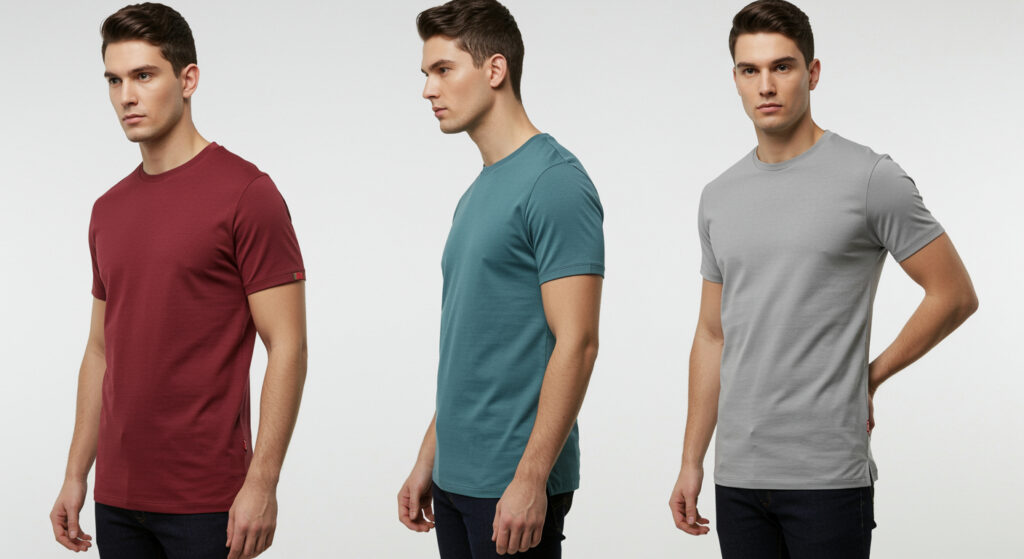
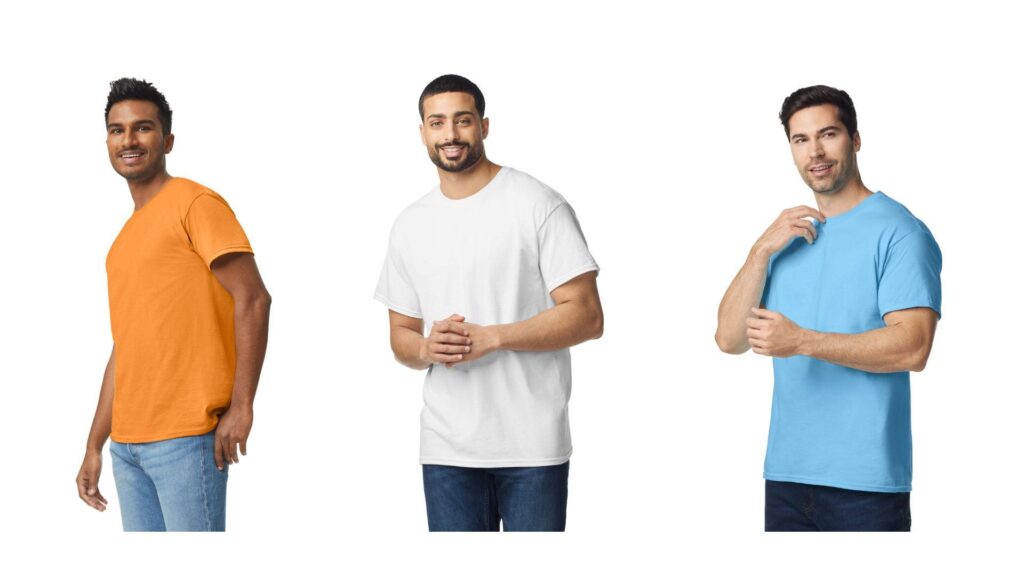
    Classic Fit

    • Features: The Classic Fit is the earliest and most traditional T-shirt silhouette, offering a relaxed and comfortable feel for the wearer. It features straight cuts along the shoulders, chest, and sleeves, running evenly from top to bottom without any tapering or shaping at the waist. This fit is universally flattering, suitable for all body types and ages especially those who appreciate simplicity, tradition, and comfort.
    • Target customers: Middle-aged buyers, individuals with fuller body shapes, or anyone who prefers a classic, unfussy style.
    • POD seller tip: With the Classic Fit, focus on simple and refined designs such as logos, slogans, or small graphics placed on the left chest area. Vintage or retro-inspired designs are also an excellent choice. Avoid large, full-coverage prints, as they can make the shirt appear bulky and less flattering.

    Regular Fit

    • Features: The Regular Fit is an upgraded version of the Classic Fit, tailored to provide a more fitted silhouette while still ensuring comfort. The waist is slightly tapered, and the sleeves and shoulders are cut more neatly, creating a well-balanced overall look. This is the most common T-shirt fit today, suitable for the majority of consumers.
    • Target customers: Almost all customer groups from young adults to working professionals especially those with an average or slightly slim build.
    • POD seller tip: The Regular Fit is a “safe playground” for any design idea. You can freely experiment with large front prints, bold typography designs, or even all-over prints. Just make sure your design maintains good visual balance across the shirt.

    Slim Fit

    • Features: The Slim Fit is designed to contour closely to the body, especially around the chest, waist, and sleeves. This fit accentuates the wearer’s physique, offering a sleek, dynamic, and modern appearance. The fabric often includes good stretchability to maintain comfort and ease of movement.
    • Target customers: Individuals with a balanced or athletic build particularly young customers and those who favor sporty, fashion-forward styles.
    • POD seller tip: For Slim Fit shirts, place your designs strategically to draw attention to key body areas such as the chest and shoulders. Subtle, minimalist graphics or vertical stripes can help elongate the body and create a slimmer look. Avoid overly complex or cluttered designs that may disrupt the clean aesthetic.

    Oversized

    • Features: The Oversized fit is designed to be significantly larger than the wearer’s actual size, with broad shoulders, loose sleeves, and a baggy torso. This style embodies a strong streetwear and hip-hop influence, expressing freedom, individuality, and confidence.
    • Target customers: Young people, streetwear and hip-hop enthusiasts, or anyone who wants to stylishly conceal body imperfections.
    • POD seller tip: The Oversized fit is a perfect “canvas” for bold, eye-catching designs. Large graffiti prints, oversized typography, and abstract art graphics stand out beautifully on this style. You can also experiment with unconventional print placements, such as on the back or sleeves, to enhance the street-style aesthetic.

    Basic Hoodie and Sweater Fits

    Basic-Hoodie

    As the weather gets colder, hoodies and sweaters become must-have items in every customer’s shopping cart. Understanding the different fit types will help you cater to the diverse needs of the market.

    Classic/Regular Fit Hoodie/Sweater

    • Features: Similar to T-shirts, the Classic/Regular Fit for hoodies and sweaters offers comfort and a balanced fit. The garment has a moderate width and hip-length cut, making it ideal for everyday wear.
    • Target customers: A wide range of customers anyone looking for a warm, practical, and easy-to-style hoodie or sweater.
    • POD seller tip: This fit is highly versatile and works well with almost any design from college logos and inspirational slogans to fun and playful graphics.

    Oversized Hoodie/Sweater

    • Features: The Oversized fit delivers a trendy, bold, and ultra-comfortable look. It has become a favorite among young consumers, especially in recent years as streetwear fashion continues to rise in popularity.
    • Target customers: Young people, those who embrace an active and modern lifestyle, and couples who enjoy matching outfits.
    • POD seller tip: Take advantage of the generous space this fit offers to showcase creative, standout designs. Anime artwork, gaming characters, or bold statement quotes are perfect choices. You can also experiment with unique print placements for added visual impact.

    Zip-up Hoodie

    • Features: The Zip-up hoodie is a versatile variation of the traditional hoodie, featuring a front zipper closure. It allows the wearer to easily adjust the level of openness, making it suitable for various weather conditions.
    • Target customers: Individuals who value convenience, flexibility, and often engage in outdoor activities.
    • POD seller tip: When designing for Zip-up hoodies, pay attention to the center zipper line. Opt for small prints on the left chest or larger designs on the back. Some sellers get creative with symmetrical designs on both sides of the zipper for a unique visual effect.

    Cropped Hoodie/Sweater

    • Features: The Cropped hoodie or sweater has a shorter length—typically reaching the waist or just above it. This fit offers a youthful, stylish, and flattering look, especially when paired with high-waisted bottoms.
    • Target customers: Young women with a slim waist who enjoy trendy and fashion-forward styles.
    • POD seller tip: Keep designs minimal and refined for this form. Small text, floral motifs, or cute icons work perfectly to complement the chic, playful aesthetic of cropped fits.

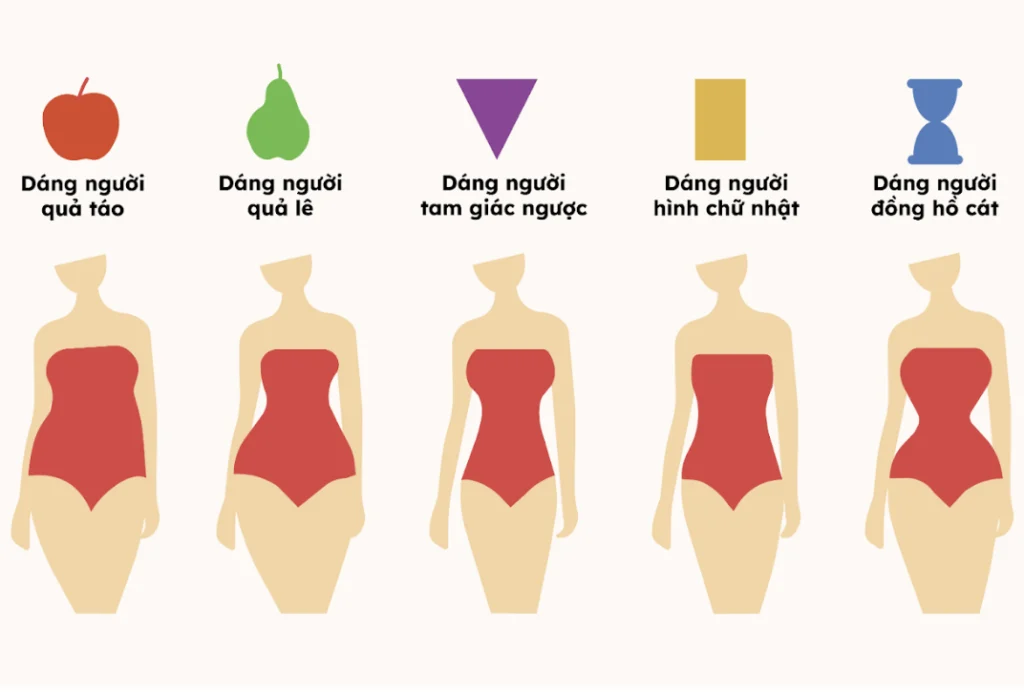
    How to Choose the Right Shirt Fit for Each Body Type – A Must-Know for POD Sellers

    Body Type

    Advising customers on the most suitable shirt fit not only helps increase conversion rates but also builds trust and enhances your brand’s credibility.

    Pear-Shaped Body (Wider hips, narrower shoulders)

    • Recommended: T-shirts, hoodies, and sweaters in Regular Fit or Oversized styles. These fits help balance the upper body. Shirts with shoulder details such as epaulets or designs that draw attention to the chest area can help emphasize the upper part of the body.
      Avoid: Tight Slim Fit styles that accentuate the difference between shoulders and hips.

    Inverted Triangle Body Shape

    • Recommended: Regular Fit T-shirts, hoodies, or sweaters with simple designs around the shoulders and chest. Darker colors on the upper body can also help create a slimmer shoulder appearance.
      Avoid: Padded shoulders, horizontal stripes across the shoulders, or Oversized fits that may make the upper body appear bulkier.

    Rectangle Body Shape

    • Recommended: Slim Fit or Regular Fit styles to create more body definition. Cropped tops are also a great choice to highlight the waistline.
      Avoid: Loose Classic Fit shirts that may make the body appear flat and lacking in curves.

    Apple-Shaped Body

    • Recommended: T-shirts, hoodies, and sweaters in Regular Fit or Oversized styles made from soft, drapey fabrics. V-neck tops can help create a more elongated and refined look for the upper body.
      Avoid: Slim Fit or Cropped styles, as well as designs with excessive detailing around the midsection.

    Hourglass Body Shape

    • Recommended: This is the most versatile body type, suitable for nearly all shirt fits. However, Slim Fit or Regular Fit styles are ideal for accentuating the natural curves of the body.
      Avoid: Overly loose Oversized fits that may conceal the well-defined waistline.

    Styling Tips for Each Shirt Fit: Golden Insights for POD Sellers

    TIPS

    Offering styling suggestions helps customers visualize the final look more easily and make faster purchase decisions. You can also use these tips to create engaging blog posts or social media marketing content.

    For T-Shirts

    • Classic Fit / Regular Fit: Pair with jeans, chinos, or shorts — a timeless combination that never goes out of style. For women, tucking it into an A-line or midi skirt adds a feminine touch.
    • Slim Fit: Combine with skinny jeans, joggers, or tapered trousers for a sleek, active, and polished look.
    • Oversized: The “no-pants” look with short shorts is a favorite among women, while men can pair it with joggers or cargo pants to create a bold streetwear outfit.

    For Hoodies / Sweaters

    • Classic Fit / Regular Fit: Layer over a shirt and pair with jeans or chinos for a preppy, polished style perfect for school or casual office settings.
    • Oversized: Match with leggings or skinny jeans to balance the proportions. Women can also pair it with a tennis skirt or pleated skirt for a trendy twist.
    • Zip-up Hoodie: Wear over a basic T-shirt with track pants and sneakers for a sporty, casual vibe.
    • Cropped: Pair with high-waisted jeans, wide-leg pants, or high-waisted skirts a combination that subtly shows off the waist and elongates the legs for a flattering silhouette.

    With the wide variety of apparel fits in the POD fashion industry, understanding each type of silhouette not only helps sellers create better-fitting and more aesthetic products but also enhances the wearer’s experience, builds a professional brand image, and strengthens customer loyalty. A design is only truly perfect when placed on the right shirt fit—one that accurately reflects the wearer’s style and personality.

    Whether you’re selling on Etsy, Amazon, TikTok Shop, or Shopify, choosing the right fit—from T-shirts and hoodies to sweaters—will help you develop an effective product strategy, reduce return rates, and achieve consistent, sustainable sales growth.

    If you’re looking for a reliable POD fulfillment partner that provides high-quality blanks, true American-standard fits, and comprehensive operational services, FlashShip is your ideal choice. With a professional team and a complete ecosystem that covers printing, order processing, and fast U.S. shipping, we’re ready to accompany you on your journey to building a sustainable POD brand.
    Contact us at (+84) 943 024 337 or visit seller.FlashShip.net for detailed consultation, quick quotations, and to start growing your own brand with FlashShip today.

  • How to Choose the Right Printing Technology for POD Success

    How to Choose the Right Printing Technology for POD Success

    In Print on Demand (POD) business, printing technology is the very ‘soul’ of the product. A beautiful design becomes meaningless if the wrong printing method is chosen, leading to inaccurate colors, peeling, or poor durability. Therefore, understanding and selecting the right printing technology not only helps sellers optimize costs but also improves product quality, builds customer loyalty, and drives sales growth. This article will share the key factors to consider, introduce popular printing technologies, and guide you in choosing the most suitable option for each POD business need.

    DTF

    Factors to Consider When Choosing a Printing Technology

    Before diving into the details of each method, it’s important to equip yourself with a framework for evaluation. There is no single technology that is ‘the absolute best’- only the one that is ‘most suitable’ for your specific needs. Ask yourself the following questions:

    Product Type

    There is no single printing technology that is the “king” of all. Each method is designed to shine on specific materials and product types. Choosing the wrong one can result in poor print quality, peeling, or inaccurate colors.

    • Cotton Apparel (T-shirts, Hoodies, Sweatshirts): With its natural, breathable fibers, cotton is the “home ground” of Direct-to-Garment (DTG) printing. Water-based inks penetrate deep into the fabric, producing prints that are soft, sharp, and breathable. In addition, Digital Transfer Film (DTF) printing is also a highly flexible and effective option, delivering vibrant colors even on dark fabrics.
    • Polyester Products (Sportswear, Mugs, Phone Cases): This is the exclusive domain of Sublimation printing. Under high heat, the ink transforms into gas and bonds permanently with the polyester fibers or the polymer coating of the product. The result is vivid, permanent colors that cannot peel off, with a completely natural surface feel.
    • Accessories and Other Materials (Tote Bags, Caps, Canvas): With such material diversity, DTF proves superior thanks to its ability to “handle” almost any fabric, from coarse canvas to blended textiles. For large-volume orders with simple designs, Screen Printing remains an economical solution.

    Order Quantity

    Your business model will determine which printing technology delivers the highest cost efficiency.

    • Small or Single Orders (Typical POD Model): Digital printing methods such as DTG and DTF are the perfect choices. They require no upfront setup costs, allowing you to print each product with a unique design without increasing the overall cost. This is the true essence of Print on Demand.
    • Bulk Orders: When dealing with hundreds or even thousands of units using the same design (e.g., company uniforms, event shirts), Screen Printing becomes highly effective. Although the initial setup cost for creating screens is relatively high, the cost per product decreases significantly afterward, maximizing profit for large-scale orders.

    Colors and Design Details

    How complex is your design? The printing technology must be capable of faithfully reproducing your creative vision.

    • Multicolor, Complex Images, Gradient Effects: DTG and DTF are the true champions. Similar to a high-end inkjet printer, they can reproduce millions of colors and photographic details with vibrant accuracy.
    • Simple, Few-Color, Vector Designs: Screen Printing delivers exceptionally sharp, durable color blocks with excellent coverage. However, since each color requires a separate screen, this method is less suitable for highly multicolored designs.
    • Designs Requiring Absolute Sharpness: Sublimation and DTG generally produce the most detailed and crisp results, making them ideal for high-quality graphic designs.

    Durability and User Experience

    A beautiful design that fades after just a few washes can ruin your brand. Durability and the hand-feel of the print are key factors in creating a premium customer experience.

    • Top Durability: Sublimation leads the way in durability since the ink becomes a permanent part of the product. High-quality Screen Printing and DTF also offer strong durability, excellent stretch resistance, and minimal cracking.
    • User Experience: Customers love the soft, breathable feel of DTG prints (on light fabrics) and Sublimation. In contrast, Screen Printing and DTF create a thin film layer on the fabric’s surface, but modern advancements have made these layers thinner and more comfortable.

    Cost and Profitability

    Ultimately, every decision comes down to economics. You need to balance production costs with the perceived value for customers.

    • Modern Technologies (DTG/DTF): The cost per product may be higher due to equipment and material expenses, but they allow you to sell at higher prices thanks to superior quality and the ability to fulfill single-item orders.
    • Traditional Technology (Screen Printing): Extremely low cost per unit when printing in bulk, making it ideal for highly price-competitive markets. However, for small orders, the cost per product is often higher compared to other printing methods.
    • Pricing Strategy: Don’t just chase the lowest production cost. Ask yourself: How much are your customers willing to pay for a product with excellent, long-lasting print quality? Investing in better printing technology is ultimately an investment in brand value and customer loyalty.

    Popular Printing Technologies in POD

    Printing

    Direct to Garment (DTG) Printing

    This is considered the “backbone” technology of the POD apparel industry, especially for cotton T-shirts.

    How it Works: Similar to an inkjet printer for paper, a DTG printer sprays water-based ink directly onto the fabric surface. The ink penetrates into each fiber and is then cured with a heat press. For dark-colored fabrics, a layer of white underbase ink is applied first so that the design colors appear more vibrant.

    Advantages

    • Exceptional image quality: Perfectly reproduces complex, multicolor, and photo-realistic designs.
    • Unlimited colors: Print millions of colors without additional costs.
    • Soft hand-feel: Ink penetrates the fabric, giving a natural, breathable, non-bulky finish.
    • Ideal for single orders: No setup costs, making it perfect for the POD model.

    Disadvantages

    • Best only on cotton fabrics: Works optimally on fabrics with high cotton content (at least 80%).
    • High ink cost: Especially the white underbase layer for dark garments, which increases production cost.
    • Limited print areas: Difficult to print on complex areas like sleeves or collars.

    Best Suited For

    • T-shirts, hoodies, and sweatshirts made of 100% cotton or cotton blends.
    • Designs involving photographs, artworks, or detailed graphics with gradients.
    • Fashion brands focusing on premium print quality and a soft, natural feel.

    Digital Heat Transfer Printing (DTF – Direct to Film)

    DTF is a rising star, often called a “game-changer” in the POD industry thanks to its incredible versatility.

    How it Works: The design is first printed onto a special PET film (known as DTF film) using DTF inks. A layer of hot-melt adhesive powder is then applied to the back of the wet print and cured. Finally, the film is placed onto the garment and heat-pressed, transferring the design from the film to the fabric.

    Advantages

    • Prints on any fabric: Cotton, polyester, fleece, leather, canvas—you name it, DTF works! This is a major advantage over DTG.
    • Vivid, sharp colors: The white adhesive underbase makes colors pop on any fabric, even dark ones.
    • High durability: Prints are stretchable, resistant to cracking, and remain vibrant after multiple washes.
    • Competitive cost: Often cheaper than DTG when printing on dark fabrics.
    • Flexible placement: Easily applies to small logos or detailed areas like sleeves and collars.

    Disadvantages

    • Less natural hand-feel than DTG: Creates a thin film layer on the fabric surface, which can feel slightly “plastic” and less breathable compared to DTG.

    Best Suited For

    • All types of apparel (T-shirts, windbreakers, polyester sportswear, hats, tote bags, etc.).
    • Logos, slogans, and vector graphics requiring sharpness and vibrant colors.
    • Sellers looking to expand their product range beyond cotton T-shirts.

    Sublimation Printing (Dye-Sublimation)

    This technology dominates the field of printing on polyester fabrics and hard-surface materials with a polymer coating.

    How it Works: The design is first printed onto special sublimation transfer paper using sublimation inks. The paper is then placed on the product and pressed under high heat and pressure. The heat transforms the ink from a solid directly into a gas, allowing it to bond deeply with the molecular structure of the material. Once cooled, the ink solidifies and becomes a permanent part of the product.

    Advantages

    • Permanent durability: Prints never fade, peel, or crack because they become part of the fibers.
    • Extremely vibrant colors: Produces sharp, vivid images with a wide color gamut.
    • Completely natural feel: The product surface feels untouched by printing, remaining fully breathable.
    • Edge-to-edge printing (All-Over Print): Easily enables designs that cover the entire surface.

    Disadvantages

    • Material limitations: Only works on polyester (or high-polyester blends) and hard surfaces with a polymer coating.
    • Color limitations: Works best on white or light-colored substrates. Since sublimation inks are translucent, they will not show well on dark backgrounds.

    Best Suited For

    • Sportswear and jerseys (polyester fabrics).
    • Mugs, tumblers, ceramic tiles, phone cases (with sublimation coating).
    • All-over-print products such as leggings, blankets, and towels.

    Digital Embroidery (Embroidery)

    Embroidery

    Embroidery is not “printing,” but it is an essential premium decoration method in POD.

    How it Works: A computerized embroidery machine reads a digitized design file and uses needles and threads to recreate the design directly on the fabric surface.

    Advantages

    • Premium, professional look: Adds a luxurious and high-value appeal to products.
    • Extremely durable: Embroidered threads last longer than most printing inks.
    • Unique 3D effect: Creates depth and texture unmatched by any printing technology.

    Disadvantages

    • Detail limitations: Cannot reproduce very fine details, gradients, or photographic images.
    • Higher cost: Requires more time and materials compared to printing.
    • Size restrictions: Best suited for medium-to-small designs such as logos or text.

    Best Suited For

    • Caps, beanies, polo shirts, jackets, and backpacks.
    • Simple logos, icons, and text-based designs.
    • Premium branding and corporate uniforms.

    Other Technologies

    • UV Printing: Uses ultraviolet (UV) light to instantly cure ink during printing. Ideal for hard surfaces such as phone cases, wood, metal, and acrylic.
    • Screen Printing: A traditional method that uses stencils (screens) to push ink through a mesh. Extremely cost-effective for large orders but less suitable for POD due to high setup costs.

    Guide to Choosing the Right Printing Technology

    At this point, you have all the essential information. Now it’s time to put it together and make your final decision

    Quick Comparison of POD Printing Technologies

    Criteria DTG (Direct to Garment) DTF (Direct to Film Transfer) Sublimation Printing Embroidery
    Fabric Type Best on cotton Works on all fabrics Polyester, polymer-coated materials Most fabric types
    Fabric Color Any color (best on light fabrics) Any color White / Light colors Any color
    Design Complexity Very high (photos, gradients) High (vivid colors) Very high (photo-quality) Low (logos, text)
    Surface Feel Soft, absorbed into fabric Slightly raised, flexible Completely natural Raised, 3D textured
    Durability Good (requires proper care) Very good, stretch-resistant Permanent, never fades Extremely durable
    Cost / Single Orders Medium – High (dark garments) Medium Medium High
    Best Products Cotton T-shirts, hoodies T-shirts, jackets, sportswear, hats Sportswear, mugs, phone cases, all-over prints Caps, polo shirts, jackets

    Guidelines for Choosing by Product Type

    • If you sell cotton T-shirts for young customers with artistic, complex designs: Top Choice: DTG. It will perfectly reproduce your artwork with the soft hand-feel that customers love.
    • If you want to offer a wide range of products-T-shirts, hoodies, polyester windbreakers, tote bags:  Top Choice: DTF. This “all-in-one” technology allows you to expand your product catalog flexibly without switching suppliers.
    • If you focus on sportswear, gym apparel, or personalized products such as mugs and phone cases: Top Choice: Sublimation. Its durability and vibrant colors on polyester are unmatched.
    • If you aim to build a premium, minimalist fashion brand focusing on logos and durability: Top Choice: Embroidery. An embroidered logo on a cap or the chest of a polo shirt instantly elevates the product’s value.

    Choosing the right printing technology is the key for POD sellers to create high-quality products, optimize costs, and enhance the customer experience. By understanding the essential factors and mastering the strengths and limitations of each method, you can easily select the most suitable printing solution for your business model.

    For more detailed consultation on printing technologies, fulfillment strategies, and how to optimize POD sales performance, please contact FlashShip via hotline (+84) 943 024 337 or visit seller.FlashShip.net. Our team is always ready to provide fast, professional support and accompany you on the journey of building and growing a sustainable POD brand.

  • FLASHSHIP VERSION 2 – A New Experience for the POD Seller Community

    FLASHSHIP VERSION 2 – A New Experience for the POD Seller Community

    FlashShip officially launches its Web Version 2 on October 1, 2025 marking a significant milestone in its journey of supporting the global Print on Demand (POD) seller community. After operating with Version 1 and gathering extensive user feedback, FlashShip has developed Version 2 with the goal of delivering enhanced experiences that help sellers optimize operations, accelerate order processing, and boost profitability in the upcoming peak season.

    V2

    A New Milestone in FlashShip’s Growth Journey

    Founded with the mission of supporting the POD seller community from production and printing to operations and international shipping FlashShip has always placed the seller experience at its core. Through continuous improvements, the platform has proven its stability and efficiency in fulfilling POD orders.

    The launch of the upgraded web version on October 1, 2025, is not merely a change in interface but a strategic leap forward, bringing FlashShip closer to its goal of becoming the leading global POD fulfillment platform where every seller can confidently run their business without worrying about logistics.

    Key Highlights of the FlashShip Updated Version

    New Interface – Modern and Intuitive

    The updated version features a streamlined, modern, and user-friendly design. Sellers can easily navigate, access information, and manage orders in just a few simple steps.

    Direct Registration on FlashShip.net

    The registration process has been simplified to the maximum. In less than a minute, sellers can create an account directly on the website and begin their POD business journey.

    “Latest Updates” Section – Instant Information

    Sellers no longer have to worry about missing hot news, promotions, or policy changes. All critical updates are delivered instantly in the “Latest Updates” section, enabling sellers to plan their business more proactively.

    Smart Operations Reports

    One of the most notable features of the new version is the advanced reporting function. The system automatically compiles order data, analyzes sales performance, and presents results in clear, visual charts. This tool empowers sellers to make faster, more accurate decisions, optimizing both marketing costs and operations.

    Ultra-Fast Order Creation – Just 3 Steps

    The upgraded version streamlines the order creation process down to just three simple steps. Once completed, orders are processed immediately, significantly reducing handling time compared to before. This is especially critical during the Q4 peak season, where every second can make a decisive impact on sales.

    The Significance of This Upgrade for the POD Seller Community

    In the fiercely competitive world of POD, speed and user experience are critical factors. The FlashShip Updated Version delivers strategic advantages for sellers:

    • Accelerated Operations: From registration to order creation and performance tracking, every step has been streamlined to save time.
    • Cost Optimization: Sellers no longer need to invest in additional tools, as the system already integrates reporting and management features.
    • Enhanced Professionalism: A modern interface, clear reporting, and smooth processes help sellers operate their stores like professional businesses.
    • Long-Term Partnership: Guided by the philosophy “From Passion to Product, From Product to Profit,” FlashShip is committed to continuous improvement, providing sellers with the most optimized fulfillment tools.

    More Than Just Fulfillment – FlashPOD as a Sales Enabler

    FlashShip emphasizes that this upgrade goes beyond enhancing the fulfillment experience. The greater goal is to position FlashPOD as a comprehensive business partner, empowering POD sellers to:

    • Easily access international markets.
    • Reduce technological and logistical barriers.
    • Focus on design, creativity, and building their personal brand.
    Ready for the Q4 Peak Season with FlashShip

    The launch of the new version in October is no coincidence. This is the time when POD sellers enter the peak season with a series of major events: Halloween, Black Friday, Cyber Monday, Christmas, and New Year.

    With the upgraded system, FlashShip is confident in its ability to support the seller community by accelerating order processing, minimizing operational risks, and driving revenue growth in the final quarter of the year.

    The release of FlashShip Updated Version 2 on October 1, 2025, is not just a technical upgrade it is a reaffirmation of FlashShip’s commitment to standing alongside the global POD seller community.

    Every new feature has been researched and developed based on real seller needs, with one ultimate goal: making POD business easier, more efficient, and more profitable.

    FlashShip will not stop at this new version. Guided by a philosophy of sustainable development and a seller-centric approach, we will continue to improve and upgrade our systems, delivering increasingly optimized and comprehensive fulfillment solutions to the POD community.

    Experience it now: seller.flashship.net

    If you don’t know how to place an order, watch the video tutorial here.

  • Mockup Guide for POD: Meaning, Benefits and Strategy

    Mockup Guide for POD: Meaning, Benefits and Strategy

    In the Print on Demand (POD) business, product images play a crucial role in attracting customers and driving purchase decisions. A beautiful design alone is not enough—you need an impressive and professional presentation to make your products stand out on e-commerce platforms like Amazon, Etsy, TikTok Shop, Walmart, or Shopify.

    This is where mockups become an essential tool. So, what exactly is a mockup, what benefits does it bring to POD sellers, and how can you use mockups effectively? Let’s explore all the details with FlashShip in this article.

    PODseller

    What is a Mockup?

    A mockup is a simulated product image created to showcase a design in a real-world context. Instead of producing a physical sample, taking photos, and going through complex editing, you simply place your design onto a pre-made product image to visualize exactly how the final product will look once completed.

    In the POD industry, mockups are commonly used to:

    • Display t-shirts, hoodies, mugs, posters, and more with pre-applied designs.
    • Experiment with different styles and colors without production costs.
    • Help customers clearly visualize the product, thereby increasing conversion rates.

    Examples of Mockups:

    • T-shirt mockup: An image of a plain white t-shirt, where the seller simply adds their design to the chest or back area.
    • Mug mockup: A photo of a mug placed on a desk, featuring an image or quote designed by the seller.
    • Canvas print mockup: A wall art displayed in a beautifully decorated living room setting.

    Key highlight: Mockups make your products look professional and realistic—just like actual photos even before you produce a single physical sample.

    Exploring the Most Popular Types of Mockups for POD Sellers

    Understanding and choosing the right type of mockup for each purpose not only makes your product images look more professional but also serves as a smart marketing strategy. For any POD seller, mastering the four mockup types below is key to attracting customers across multiple platforms.

    Static Mockups

    This is the most common type of mockup static images that you often see on e-commerce websites. They can be simple flat lay product photos or images featuring models wearing or using the product in a specific setting.

    Example:

    • A neatly folded t-shirt placed alongside a few vintage accessories.
    • A smiling model wearing a hoodie that showcases your design.

    When to use: Static mockups are ideal for product thumbnails, bulk uploads on websites like Etsy and Amazon, and basic social media posts.

    Advantages:

    • Quick and efficient: Extremely easy to create using online tools, allowing you to upload hundreds of designs to your store with minimal effort.
    • Website-friendly: Lightweight file sizes improve page load speed, enhance user experience, and boost SEO performance.
    • Beginner-friendly: No advanced design skills required, making it accessible even for those just starting out.

    Disadvantages:

    • Limited interaction: As static images, customers cannot rotate or view the product from different angles, which may sometimes make the presentation feel a bit “flat.”

    Dynamic Mockups

    Dynamic mockups take product presentation to the next level. These are short videos or GIFs that showcase the product in motion  for example, a 360-degree rotation video of a mug or a short clip of a model turning around to show the complete design on a t-shirt or hoodie.

    When to use:

    Dynamic mockups are the ultimate weapon for video ad campaigns and posts on Instagram Reels, TikTok, or Facebook Stories platforms where moving content is prioritized and highly engaging.

    Advantages:

    • Strong visual impact: In a sea of static images, dynamic mockups instantly grab attention and keep viewers engaged for longer.
    • Builds trust: Allows customers to view the product from multiple angles, helping them better visualize the real-life item.

    Disadvantages:

    • Requires technical skills and resources: Creating dynamic mockups is more complex and may require paid tools or basic video editing skills. The files also tend to be larger in size.

    Template-Based Mockups

    These are specialized files designed for professional software such as Adobe Photoshop (.PSD). They are created by expert designers and come with smart layers (Smart Objects). You simply open the file, insert your design into a designated layer, and the software automatically applies effects like lighting, shadows, and fabric folds to create a highly realistic image.

    When to use:

    Use template-based mockups when you want full control over the final image and need exclusive, high-quality visuals to build a premium brand identity.

    Advantages:

    • Maximum creative control: Lets you fine-tune every detail to achieve the most realistic and professional results.
    • Superior quality: Lighting effects, textures, and product curves are rendered perfectly, making it difficult to distinguish from actual product photography.

    Disadvantages:

    • Requires skills: You need basic knowledge of Photoshop or similar software to use these files effectively.

    The Golden Benefits of Mockups for Every POD Seller

    In the highly competitive world of Print on Demand (POD), mockups are more than just a convenient tool they are a strategic lever that helps you optimize every aspect of your store, from cost management to revenue growth. Investing in high-quality mockups can deliver the following outstanding benefits:

    Maximize Savings on Production and Operating Costs

    This is the most immediate and obvious benefit. Imagine the enormous expenses required to print samples, hire models, conduct photoshoots, and handle post-production for hundreds or even thousands of designs.

    With mockups, this entire financial burden is eliminated. Instead of spending thousands of dollars to create samples for 50 t-shirt designs, you only need a small fee for online mockup tools or even free options to produce professional images for your entire product catalog.

    Accelerate Product Launches and Stay Ahead of Trends

    Speed is a critical competitive advantage in the POD industry. When a trend suddenly goes viral on TikTok or a major event like Christmas or Black Friday is approaching, you can’t afford to wait weeks for sample production. Mockups allow you to respond instantly. Within just a few hours, you can create images for an entire new collection and list them for sale seizing opportunities while the market is at its hottest.

    Explode Your Conversion Rates

    Customers often shop with their eyes when buying online. A professional, high-quality mockup helps overcome the biggest barrier: not being able to physically touch or feel the product. By providing a realistic visualization of what it’s like to wear that t-shirt or use that mug, mockups build trust and inspire purchase decisions. This isn’t just intuition according to Statista, 75% of online shoppers admit that product images are the key factor influencing their buying decisions.

    Elevate Your Brand Image to a Professional Level

    Consistency and attention to detail in your visuals can transform your store from a small, casual shop into a trustworthy, professional brand. Using a cohesive mockup style across your website and social media builds a strong brand identity that encourages customers to trust you and return for future purchases. Remember, customers don’t just buy from a “seller” they buy from a “brand.”

    Flexible A/B Testing to Optimize Performance

    Should this design be placed on a black shirt or a white one? Should you feature a male or female model? Mockups allow you to answer these questions using real data instead of guesswork. You can easily create multiple variations of the same design to run A/B tests in your ad campaigns. This helps you identify which visuals resonate most with your target audience, ultimately optimizing marketing performance and reducing costs.

    Mockup Creation Tools for POD Sellers

    POD

    Today, there are countless tools available to help you create mockups, ranging from free to paid options. Below are some of the most popular and highly recommended tools:

    Online Mockup Creation Tools

    These tools are perfect for beginners or anyone looking to save time. All you need to do is upload your design, select a mockup, and the tool will automatically generate the final image for you.

    • Placeit: Known as the “king” of online mockup tools, Placeit offers a massive library with tens of thousands of photo and video mockups, covering a wide range of products and styles. Its intuitive, user-friendly interface allows you to create professional-quality mockups in just seconds. This is a worthwhile investment for any serious POD seller.
    • Smartmockups: A strong competitor to Placeit, now acquired by Canva. Smartmockups provides a large, high-quality library and integrates seamlessly with Canva and Dropbox, making it a convenient option for streamlined workflows.
    • Vexels: In addition to offering vector designs, Vexels also features a robust mockup creation tool, especially well-suited for t-shirts.

    Graphic Design Software

    For those who want full control over their visuals and the ability to create truly unique mockups, graphic design software is the top choice.

    • Adobe Photoshop (PSD Mockups): Considered the gold standard in the design industry, Photoshop allows you to work with high-quality PSD mockup files, which you can find and purchase from sites like Creative Market or Envato Elements. These files utilize Smart Object layers, enabling you to easily replace your design while preserving the product’s natural lighting, shadows, and fabric folds resulting in an ultra-realistic final image.
    • Canva: While not as powerful as Photoshop, Canva has been steadily improving its Smartmockups feature. It allows you to quickly insert your designs into pre-made mockup templates directly within Canva’s editor, making it a convenient tool for creating marketing assets on the fly.

    How to Use Mockups Effectively in Your POD Business

    Mockup

    Having powerful mockup tools is only the first step. To transform these images into a true “sales machine,” POD sellers must apply smart, consistent strategies. Below are proven tips to help you maximize the full potential of mockups.

    Choose Mockups That “Tell the Right Story”

    Your mockups should speak directly to your target audience. Don’t select them randomly ensure that the style, colors, and setting of the mockup align perfectly with your design’s message and the audience you are trying to reach.

    Example:

    • A t-shirt design focused on meditation and yoga will be far more compelling if displayed on a mockup featuring a model practicing yoga in a calm, serene environment rather than at a loud, crowded party.
    • Similarly, a family gift product should be paired with a cozy, heartwarming mockup to evoke emotional connections and resonate with buyers.

    Build a Consistent Brand Identity

    Consistency is the key to a professional brand. Choose a specific color filter, lighting style, or signature background and apply it across your entire store.

    This not only makes your shop look polished and professional but also creates a visual signature that helps customers instantly recognize your brand among thousands of competitors.

    Optimize Image Quality and Page Load Speed

    Your product images need to strike the perfect balance between quality and file size. Make sure your mockups are high-resolution and sharp (at least 1500px wide) while being compressed to under 200KB using online tools.

    This ensures your images display beautifully on all devices while keeping your website fast and responsive preventing customer drop-offs and improving your Google search rankings.

    Turn Mockups into Multi-Channel Marketing Assets

    Don’t limit mockups to just your product pages. Transform them into compelling content for your marketing campaigns.

    • Use high-quality mockup images for Facebook, Instagram, and TikTok ads.
    • Get creative with short mockup videos or carousel images that showcase your products from multiple angles.
    • These formats increase engagement and build trust with potential customers.

    Continuously Test and Optimize

    In marketing, there’s no room for guesswork. Conduct A/B testing regularly to discover what works best for your store.

    • Do flat lay mockups or lifestyle mockups convert better?
    • Which shirt color attracts customers the most for a specific design?

    The data you collect will be your compass for smart business decisions, helping you optimize ad spend and drive sustainable profit growth.

    In the highly competitive world of POD, mockups are more than just visual support tools they are a key strategy for making your products stand out and boosting conversion rates. A beautiful, professional mockup not only conveys the value of your product but also elevates your brand image and drives significant sales growth, especially during peak sales seasons like Q4.

    Start today by building a high-quality mockup library, choosing the right tools, and applying the tips shared in this article to optimize every detail. Each mockup isn’t just a product image  it’s a story and emotion you want to deliver to your customers.

    FlashShip is committed to being your trusted partner every step of the way from providing premium blank apparel, advanced printing technology, and lightning-fast production starting from just 1 day, to U.S. domestic shipping from 2 days, all integrated into a smart and easy-to-manage fulfillment system.

    We are more than just a fulfillment service we are a partner dedicated to helping POD sellers grow, scale, and expand into international markets.

    For product consultation, design support, or account registration, contact us today at (+84) 943 024 337 or visit FlashShip.net for personalized assistance.

  • USPS Holiday Surcharge Update 2025 – Year-End Shipping Notice

    USPS Holiday Surcharge Update 2025 – Year-End Shipping Notice

    During the year-end holiday season of 2025, online shopping demand in the U.S. is expected to surge significantly. This sharp increase will lead to a substantial rise in the volume of orders handled by shipping carriers. To maintain operational capacity, the United States Postal Service (USPS) has announced the implementation of a peak-season surcharge on all shipments during this period.

    Accordingly, FlashShip will adjust shipping rates for all “Ship by Seller” orders using USPS services through the FlashShip system, in order to accurately reflect the actual costs in line with USPS regulations.

    USPS

    USPS Peak Season Surcharge 2025

    • Surcharge Amount: USD 0.4 per order
    • Effective Period: October 6, 2025 – January 19, 2026 (VN time)
    • Scope of Application: All Ship by Seller orders using USPS via FlashShip
    • Note: This surcharge is a policy implemented by USPS across its entire U.S. shipping network. FlashShip is only adjusting rates in accordance with the official USPS announcement and is not applying an additional surcharge of its own.

    Reasons for USPS Peak Season Surcharge

    • A significant surge in order volume during Q4 driven by major events such as Halloween, Thanksgiving, Black Friday, Cyber Monday, Christmas, and New Year.
    • Higher operating costs as USPS expands processing capacity, hires additional seasonal staff, and increases overtime to meet demand.
    • Ensuring the maintenance of fast, reliable delivery service throughout the peak season.

    What Sellers Should Do to Adapt

    • Adjust product prices to reflect the $0.4/order surcharge and protect profit margins.
    • Prepare a Q4 sales plan, including product inventory and transparent policy updates for customers.
    • Closely monitor key shipping milestones during the peak season to align marketing strategies effectively.

    FlashShip’s Commitment

    FlashShip will continue to stand by the seller community throughout the peak season. We are committed to:

    • Providing full transparency and timely updates on all USPS policy changes.
    • Maintaining stable U.S. fulfillment services, with production from 1 day and domestic shipping from 2 days.
    • Maximizing support for sellers in optimizing costs and order operations.

    Please note: The 2025 peak season surcharge is entirely implemented by USPS across its shipping network. FlashShip is only adjusting prices in accordance with this policy. Sellers are encouraged to update their pricing promptly to protect profit margins and be fully prepared for the year-end sales season.

    For any questions, please contact the FlashShip fanpage or our Support Team for quick assistance.